Tell us about the job
Takes about a minute. No obligation.
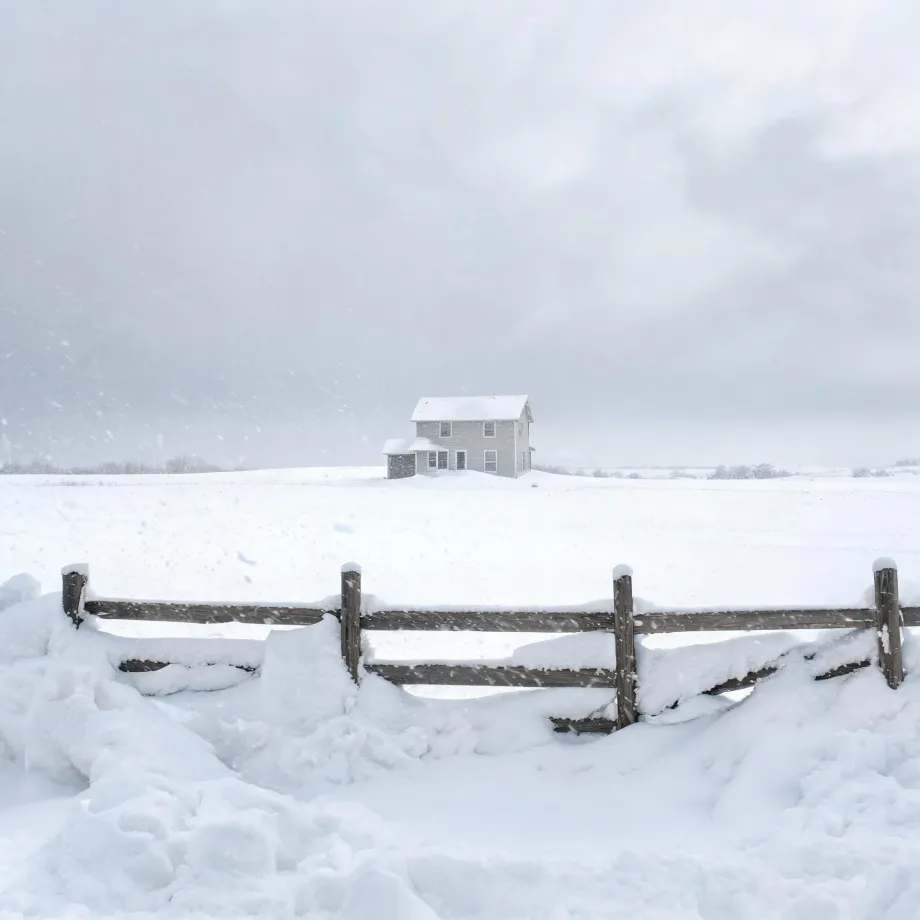
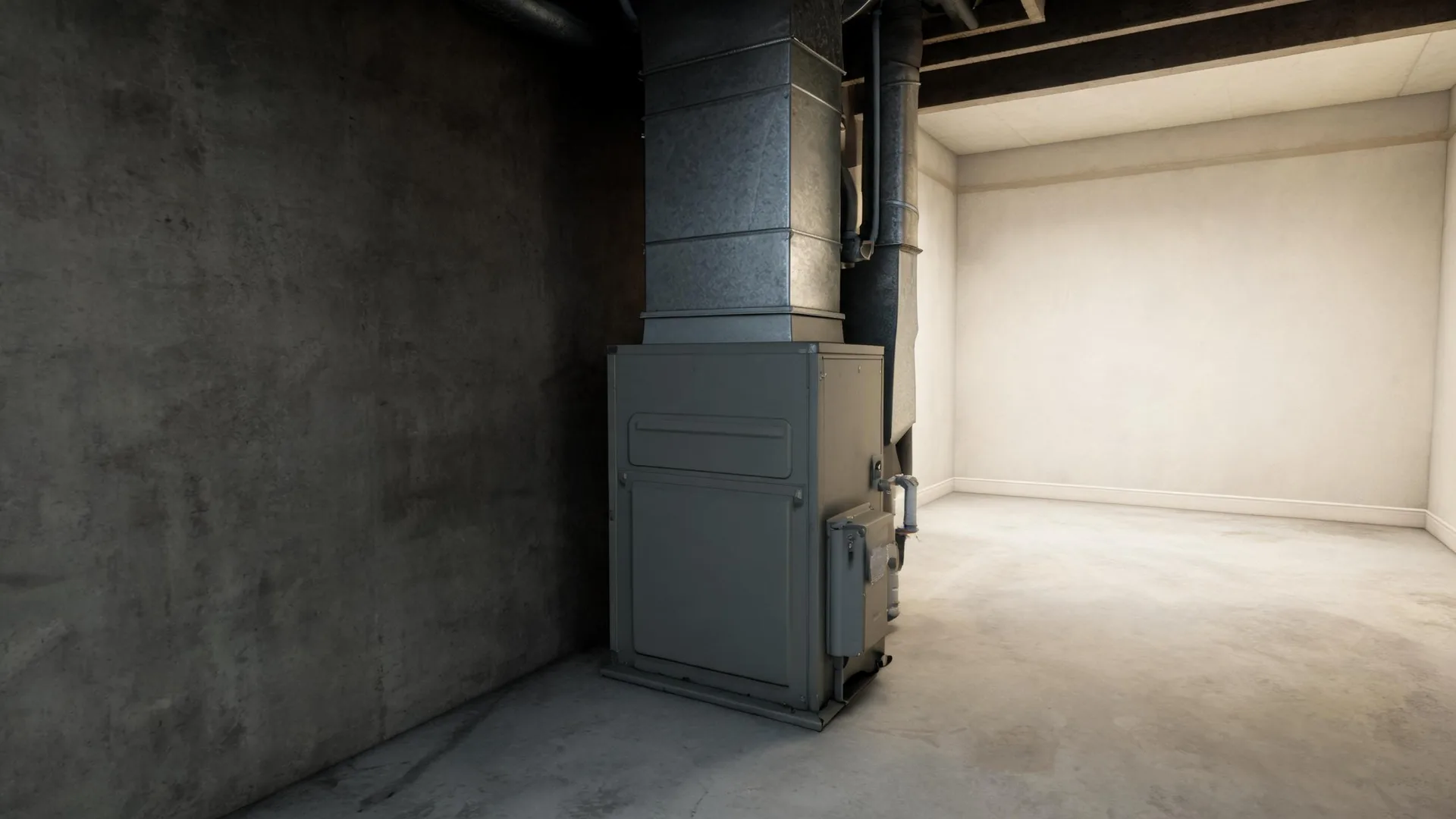
A furnace repair quote in Nance County starts with the burner and the heat exchanger, because those are the parts that have been doing the sustained work. Homes in Nance County, NE run heat about eight months a year, from October through May. By the time a homeowner notices something wrong, the ignition system and the heat exchanger have already cycled through the bulk of the load they will ever carry. A contractor working a repair here pulls and inspects the heat exchanger early, since cracks that develop under long seasonal use show up there before they show anywhere easier to reach.
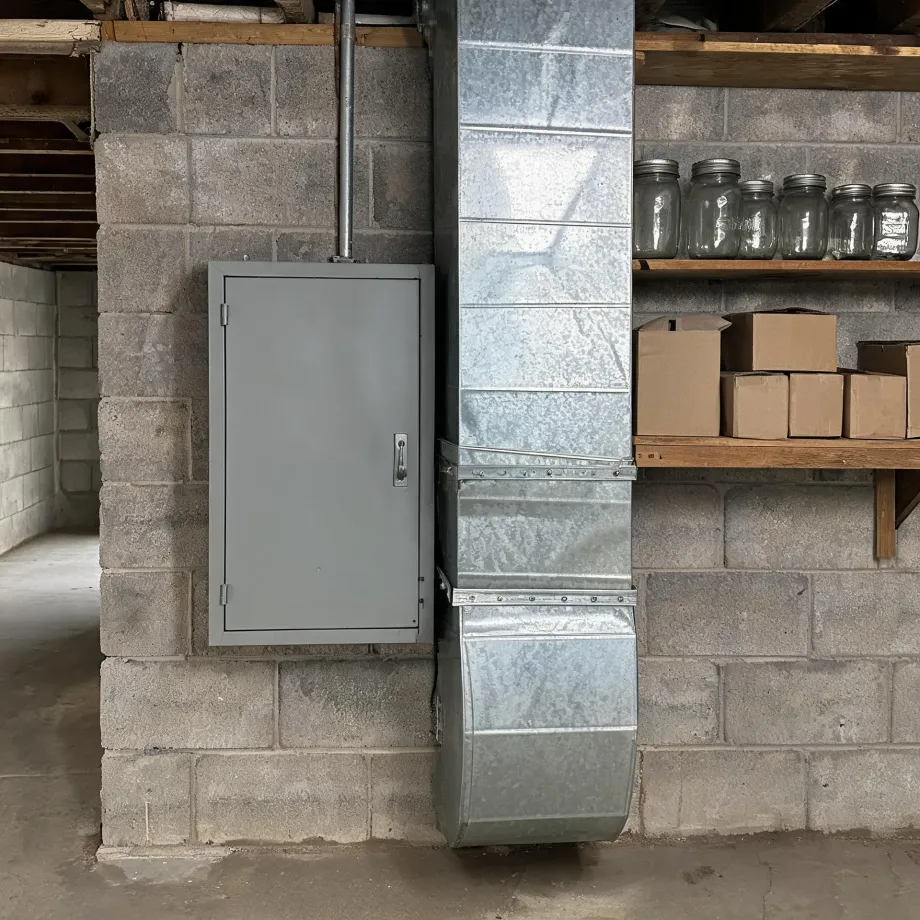
Furnace repair in housing this old has a particular shape: the call starts with a symptom, but what a contractor finds once the unit is open depends on which generation of equipment is actually in there and whether the manufacturer still makes what it needs. Half the homes in Nance County, Nebraska were built in 1950 or earlier (2020-2024 ACS 5-year). That kind of stock has seen multiple rounds of equipment swapped in over the decades, and a furnace sitting in it today may take components that are hard to source or no longer carried by regional suppliers. The age of the house is backdrop; the age and lineage of the furnace itself is what sets the repair scope.
The Parts of a Furnace a Contractor Checks First
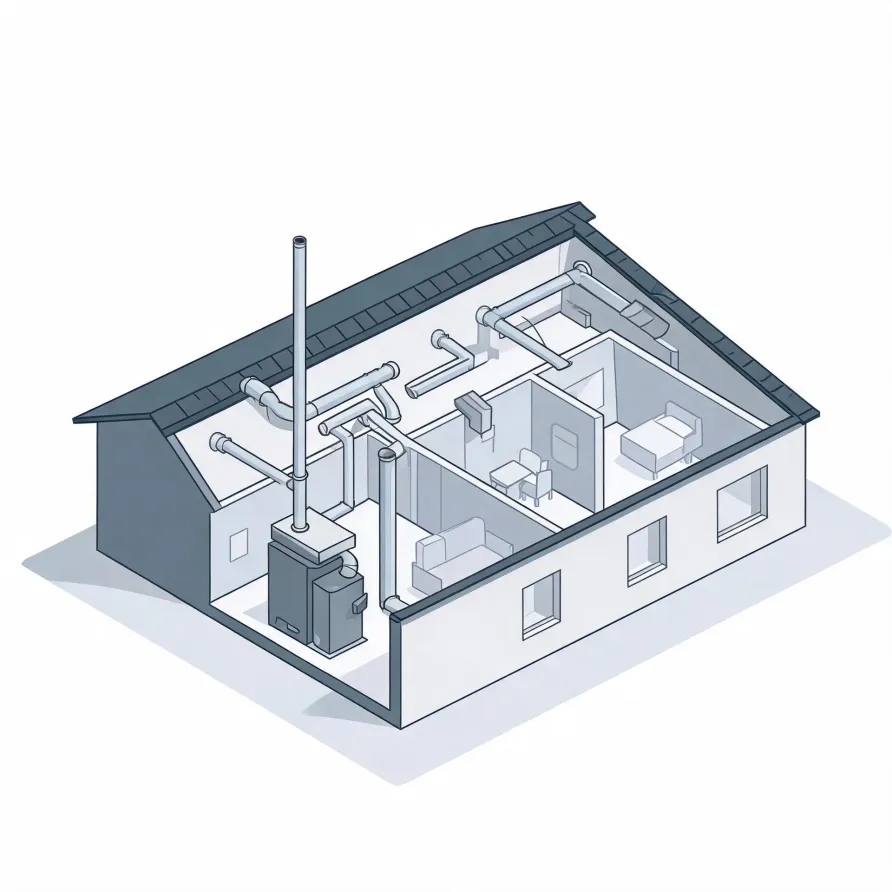
The furnace itself sits in a utility space, basement, or closet and is the piece a contractor goes to first. Inside it, the heat exchanger is the part most likely behind a heating failure or a safety concern, and the burners that feed it are checked right alongside it. The blower motor, housed in the same cabinet, pushes conditioned air out to the rest of the house.
The flue pipe runs from the furnace cabinet up and out of the house, carrying combustion gases away, and any breach there is a priority. The thermostat on an interior wall is the control side of the system. It reads the house and tells the furnace when to fire, so a symptom that looks like a furnace problem sometimes traces back here instead.
The drawing shows a typical layout, and a licensed contractor determines which components apply and what condition they are in for your specific home.
Get matched in Nance CountyNance County, by the numbers
66 severe weather events were recorded in Nance County, Nebraska between 2015 and 2024.
NOAA National Centers for Environmental Information, Storm Events Database, bulk CSV export, events 2015-01-01 through 2024-12-31.Half the homes in Nance County, Nebraska were built in 1950 or earlier (2020-2024 ACS 5-year).
U.S. Census Bureau, 2020-2024 American Community Survey 5-Year EstimatesNance County, Nebraska holds 1,606 housing units (2020-2024 ACS 5-year).
U.S. Census Bureau, 2020-2024 American Community Survey 5-Year EstimatesOwners occupy 72.9% of the occupied homes in Nance County, Nebraska (2020-2024 ACS 5-year).
U.S. Census Bureau, 2020-2024 American Community Survey 5-Year EstimatesCodes & Standards Behind Furnace Repair in Nance County, Nebraska5 sourced rules & standards
What happens when a contractor comes out for HVAC repair in Nance County
Non-weatherized gas furnaces manufactured on or after November 19, 2015 must reach 80.0 percent AFUE.
Non-weatherized oil-fired furnaces manufactured on or after November 19, 2015 must reach 83.0 percent AFUE.
Mobile home gas furnaces manufactured on or after November 19, 2015 must reach 80.0 percent AFUE.
Non-weatherized gas furnaces manufactured on or after December 18, 2028 must reach 95.0 percent AFUE, up from the 80.0 percent minimum that applies to units manufactured before that date.
Licensing Rules for HVAC Repair in Nance County, Nebraska
Nebraska requires registration rather than a licence: a contractor must be registered with the Department of Labor before performing any construction work, though anyone earning less than five thousand dollars a year from construction services is not a contractor under the Act at all.
Severe Weather Events in Nance County
Furnaces in Nance County work against whatever the climate puts them through, and hard weather accelerates wear on heat exchangers, igniters, and controls. How often that pressure arrives shapes how much repair work local equipment actually needs.
66 severe weather events, 2015–2024. Source: NOAA National Centers for Environmental Information, Storm Events Database.