Tell us about the job
Takes about a minute. No obligation.

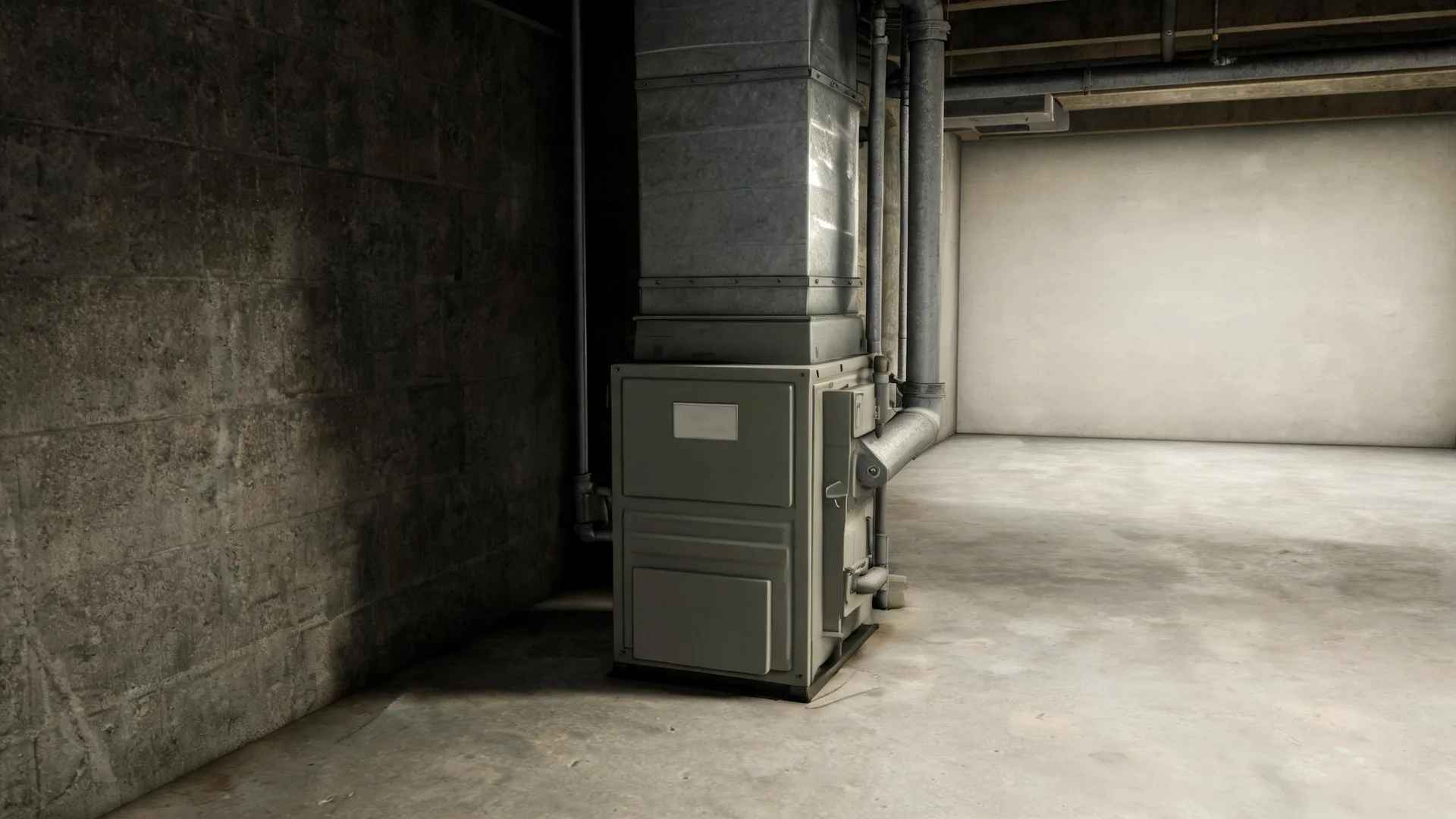
Sizing a furnace for Arthur County means sizing it for a workload that runs the burner, the heat exchanger, and the ignition system hard for most of the year. Homes in Arthur County, NE run heat about eight months a year, from October through May. A contractor quoting a replacement here has to establish the actual load the house places on the equipment before settling on a unit, because undersizing means those cycling components wear faster than the equipment's rated life would suggest. Poor duct work compounds the problem: a furnace working against restricted airflow runs longer per cycle, and longer cycles deepen the wear on the heat exchanger faster than anything else.
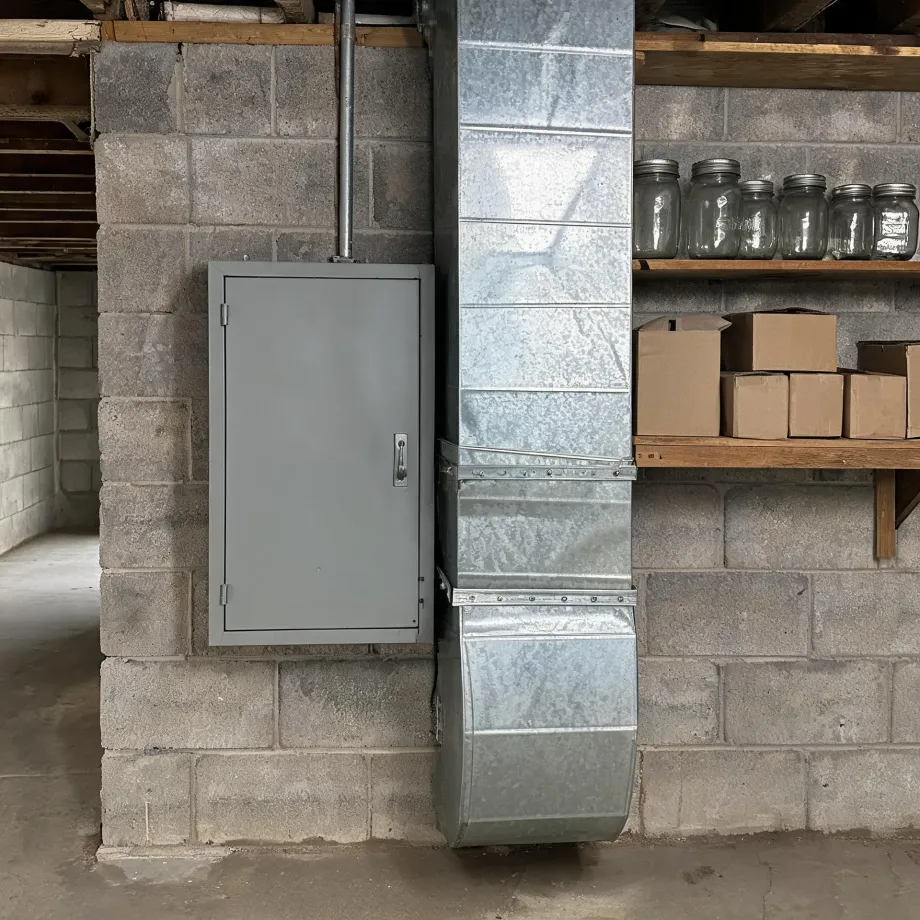
Ductwork is what a furnace installation in Arthur County turns on. Half the homes in Arthur County, Nebraska were built in 1974 or earlier (2020-2024 ACS 5-year). Houses built in that era were ducted around heating systems that are long gone, and the passages left behind were sized for different static pressure and different airflow than a current furnace produces. A contractor installing a new furnace has to measure what those ducts can carry before anything else, because undersized or poorly routed ductwork limits what the new equipment can actually deliver, regardless of the unit's rated output.
What Gets Installed With a New Furnace
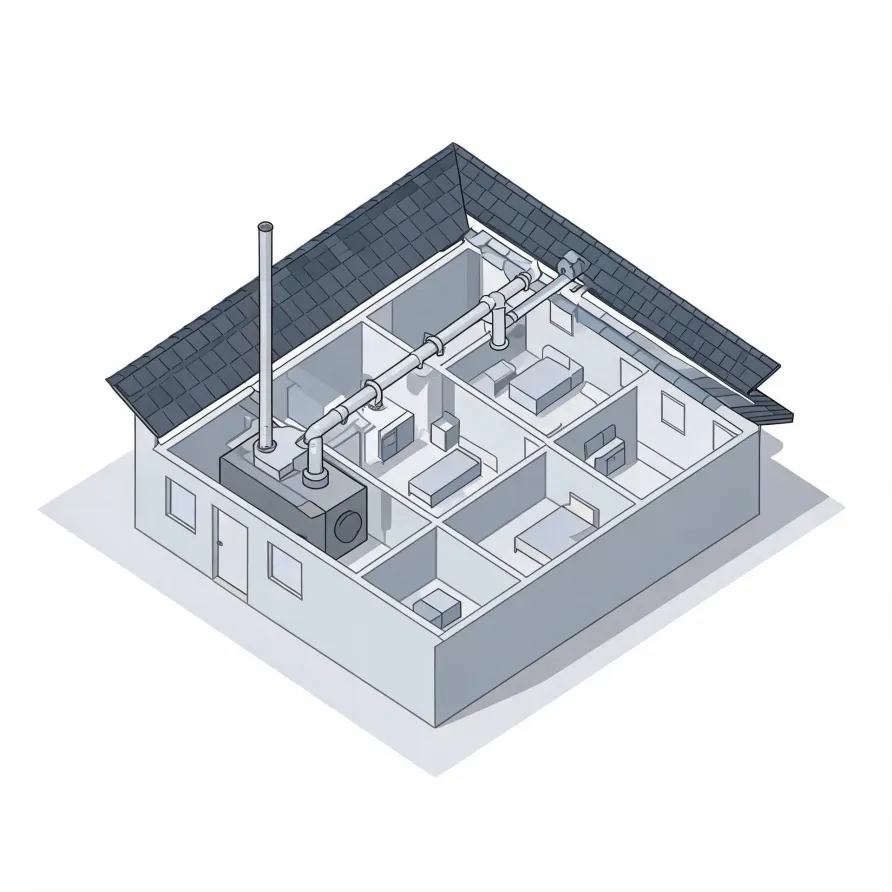
The furnace itself sits in the basement, utility room, or mechanical closet and is the heart of what a contractor installs. Inside it, a burner assembly and a heat exchanger do the work of producing heat, and a blower motor pushes that heat out into the home. The flue pipe exits the cabinet and routes combustion gases out through the wall or roofline.
A contractor also installs the thermostat on an interior wall, where it reads the air temperature and signals the furnace to fire or shut off. Alongside the furnace, a new system includes a filter housing and, where the setup calls for it, a secondary component such as a humidifier or an air handler that ties into the same cabinet.
The drawing shows a general layout of these components, and a licensed contractor determines exactly what the installation covers in your house.
Get matched in Arthur CountyArthur County, by the numbers
86 severe weather events were recorded in Arthur County, Nebraska between 2015 and 2024.
NOAA National Centers for Environmental Information, Storm Events Database, bulk CSV export, events 2015-01-01 through 2024-12-31.Half the homes in Arthur County, Nebraska were built in 1974 or earlier (2020-2024 ACS 5-year).
U.S. Census Bureau, 2020-2024 American Community Survey 5-Year EstimatesArthur County, Nebraska holds 232 housing units (2020-2024 ACS 5-year).
U.S. Census Bureau, 2020-2024 American Community Survey 5-Year EstimatesOwners occupy 80.5% of the occupied homes in Arthur County, Nebraska (2020-2024 ACS 5-year).
U.S. Census Bureau, 2020-2024 American Community Survey 5-Year EstimatesFurnace & HVAC Installation Rules for Arthur County, Nebraska5 codes, standards & licensing rules
What the Installation Actually Looks Like
Non-weatherized gas furnaces manufactured on or after November 19, 2015 must reach 80.0 percent AFUE.
Non-weatherized oil-fired furnaces manufactured on or after November 19, 2015 must reach 83.0 percent AFUE.
Mobile home gas furnaces manufactured on or after November 19, 2015 must reach 80.0 percent AFUE.
Non-weatherized gas furnaces manufactured on or after December 18, 2028 must reach 95.0 percent AFUE, up from the 80.0 percent minimum that applies to units manufactured before that date.
Licensing Rules for HVAC Work in Arthur County, Nebraska
Nebraska requires registration rather than a licence: a contractor must be registered with the Department of Labor before performing any construction work, though anyone earning less than five thousand dollars a year from construction services is not a contractor under the Act at all.
Severe Weather History in Arthur County
Weather extremes put real demands on heating equipment, shortening service life and exposing undersized or aging systems faster than calendar years alone would. Furnace installation in Arthur County is a local decision partly because of what the climate here asks of that equipment.
86 severe weather events, 2015–2024. Source: NOAA National Centers for Environmental Information, Storm Events Database.