Tell us about the job
Takes about a minute. No obligation.
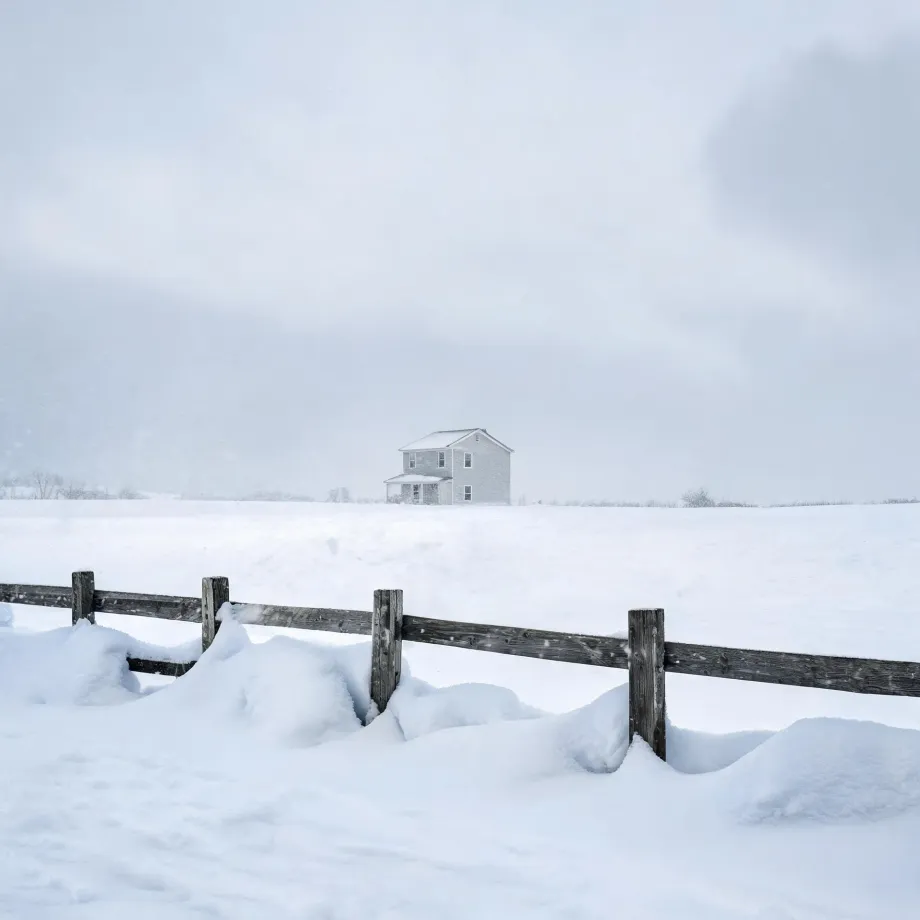
Sizing a furnace for Hooker County starts with understanding how hard the burner actually works. Homes in Hooker County, NE run heat about eight months a year, from October through May. A heat exchanger on an undersized unit carries that cycling load month after month, and the ignition system fires repeatedly rather than occasionally. Cracks and fatigue in those components develop faster on a system that was never matched to the house than on one a contractor sized correctly from the start. Getting the load calculation right before anything else is ordered is where a licensed installer earns the job.
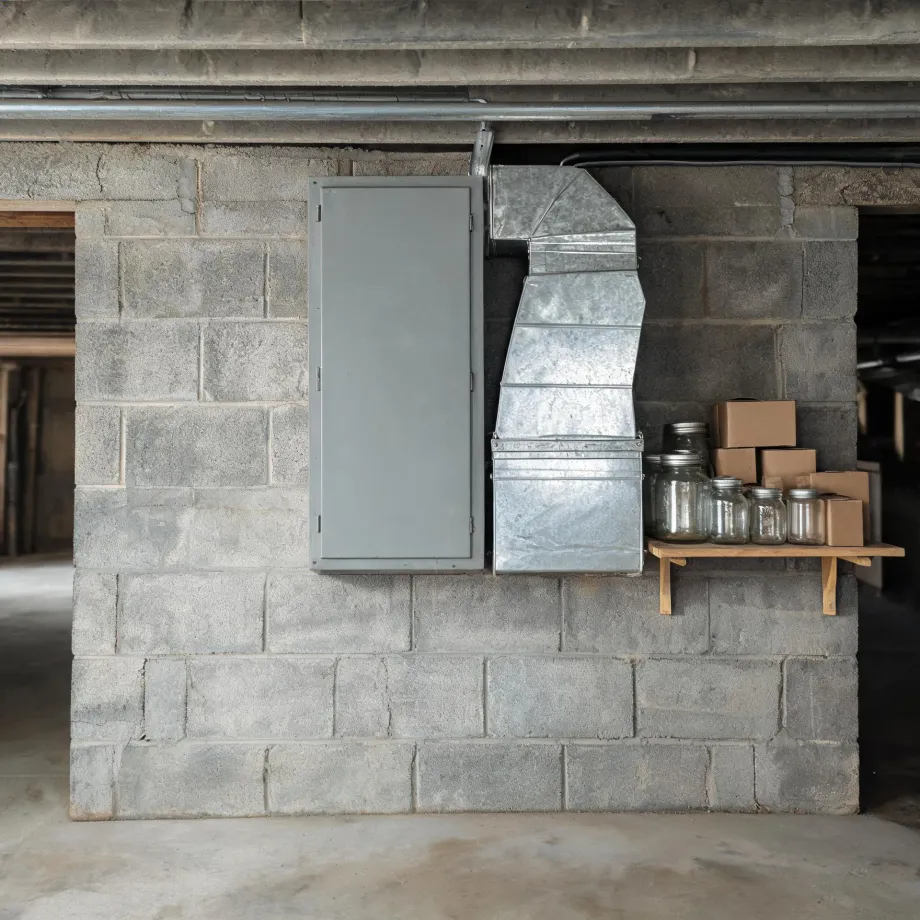
Ductwork in a Hooker County house carries assumptions baked in well before the equipment now sitting in the mechanical room was manufactured. Half the homes in Hooker County, Nebraska were built in 1955 or earlier (2020-2024 ACS 5-year). A contractor installing a new furnace has to look at what those ducts were sized for and whether they move enough air for a modern unit, because a mismatch there changes both the layout and the materials a job requires. The electrical service gets the same check: a panel original to a house this age was not sized for today's loads. What the house already contains is where a furnace installation either runs smoothly or gets complicated.
What Gets Installed With a New Furnace
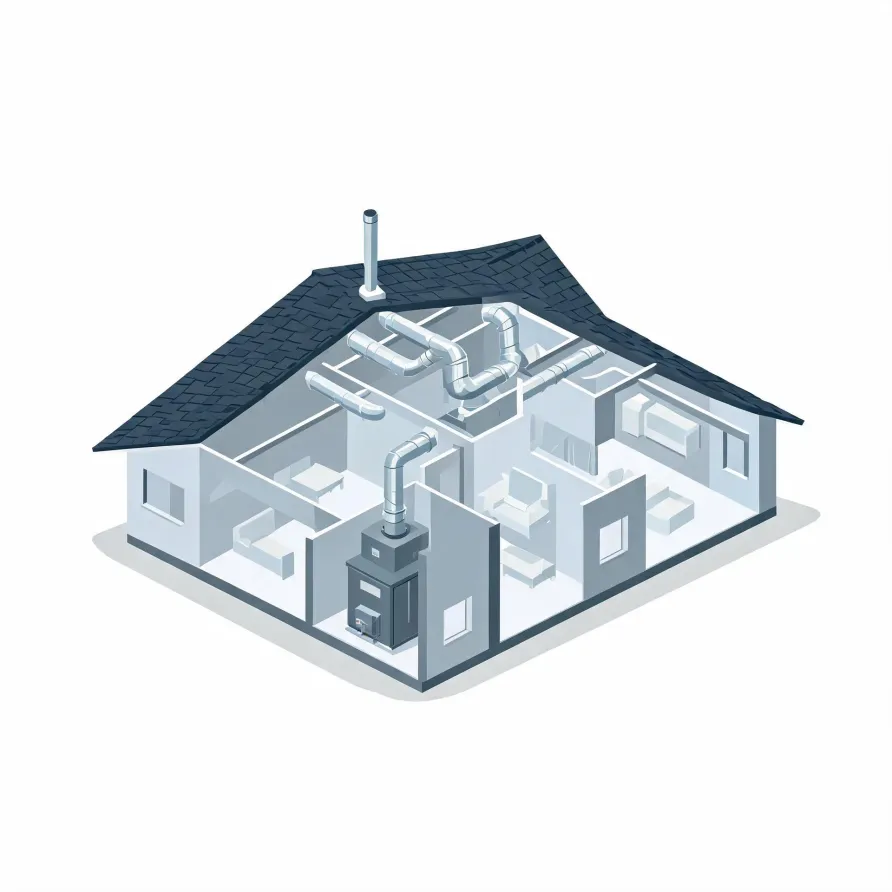
The furnace itself sits in the basement, utility room, or mechanical closet and is the unit that produces heat. A gas burner inside it ignites the fuel, and a heat exchanger transfers that heat to the air moving through the system. The blower motor, housed inside the same cabinet, pushes that warmed air out into the home.
The flue pipe runs from the furnace to an exterior wall or up through the roof, carrying combustion gases out of the house. A new thermostat mounts on an interior wall and serves as the control point for the whole system, telling the furnace when to fire and when to shut off.
The drawing shows a typical layout, and a licensed contractor determines exactly what applies to your house and its existing setup.
Get matched in Hooker CountyHooker County by the Numbers
72 severe weather events were recorded in Hooker County, Nebraska between 2015 and 2024.
NOAA National Centers for Environmental Information, Storm Events Database, bulk CSV export, events 2015-01-01 through 2024-12-31.Half the homes in Hooker County, Nebraska were built in 1955 or earlier (2020-2024 ACS 5-year).
U.S. Census Bureau, 2020-2024 American Community Survey 5-Year EstimatesHooker County, Nebraska holds 428 housing units (2020-2024 ACS 5-year).
U.S. Census Bureau, 2020-2024 American Community Survey 5-Year EstimatesOwners occupy 55.4% of the occupied homes in Hooker County, Nebraska (2020-2024 ACS 5-year).
U.S. Census Bureau, 2020-2024 American Community Survey 5-Year EstimatesFurnace Installation Rules & Codes for Hooker County, Nebraska5 sourced rules and standards
What Happens During an HVAC Installation in Hooker County
Non-weatherized gas furnaces manufactured on or after November 19, 2015 must reach 80.0 percent AFUE.
Non-weatherized oil-fired furnaces manufactured on or after November 19, 2015 must reach 83.0 percent AFUE.
Mobile home gas furnaces manufactured on or after November 19, 2015 must reach 80.0 percent AFUE.
Non-weatherized gas furnaces manufactured on or after December 18, 2028 must reach 95.0 percent AFUE, up from the 80.0 percent minimum that applies to units manufactured before that date.
Licensing Rules for HVAC Work in Hooker County, Nebraska
Nebraska requires registration rather than a licence: a contractor must be registered with the Department of Labor before performing any construction work, though anyone earning less than five thousand dollars a year from construction services is not a contractor under the Act at all.
Severe Weather Events in Hooker County
Furnaces in Hooker County work against whatever the climate throws at them, and local weather patterns shape how hard that equipment has to run and how long it lasts. A contractor sizing or installing a furnace here factors in that local load.
72 severe weather events, 2015–2024. Source: NOAA National Centers for Environmental Information, Storm Events Database.