Tell us about the job
Takes about a minute. No obligation.
A furnace repair in Stanton County starts with the parts that cycle hardest: the ignition system, the burner assembly, and the heat exchanger. Homes in Stanton County, NE run heat about eight months a year, from October through May. That kind of runtime accumulates on every startup and shutdown, and stress fractures in a heat exchanger or a worn igniter reflect what the system has actually been through. A contractor here checks combustion components before anything else, because that is where accumulated cycling shows up first.
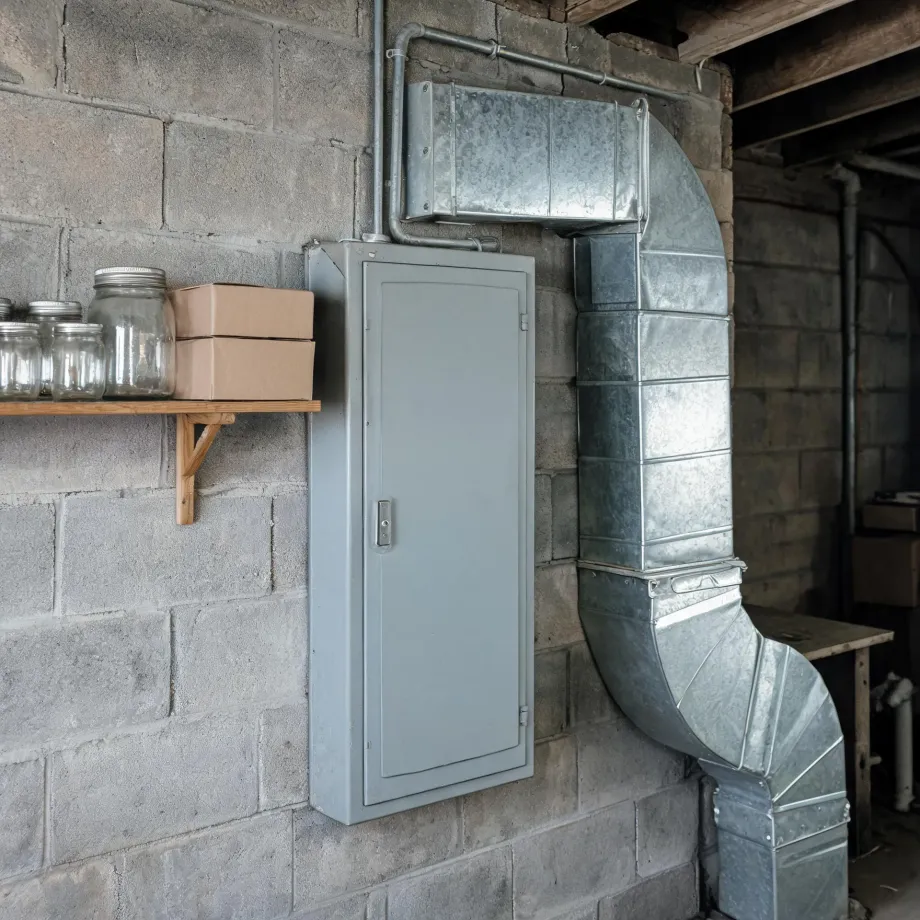
Furnace repair in housing this old runs into a specific problem once a technician opens the unit: the part it needs. Half the homes in Stanton County, Nebraska were built in 1967 or earlier (2020-2024 ACS 5-year). A house that has stood that long has likely had its furnace replaced at least once, but the replacement systems that went in are themselves well past the generation manufacturers still support with standard parts. What a contractor finds inside a failed furnace here often decides whether the repair is a same-week fix or a search for stock that has to be sourced from supply houses carrying discontinued inventory.
The Parts of a Furnace a Contractor Checks First
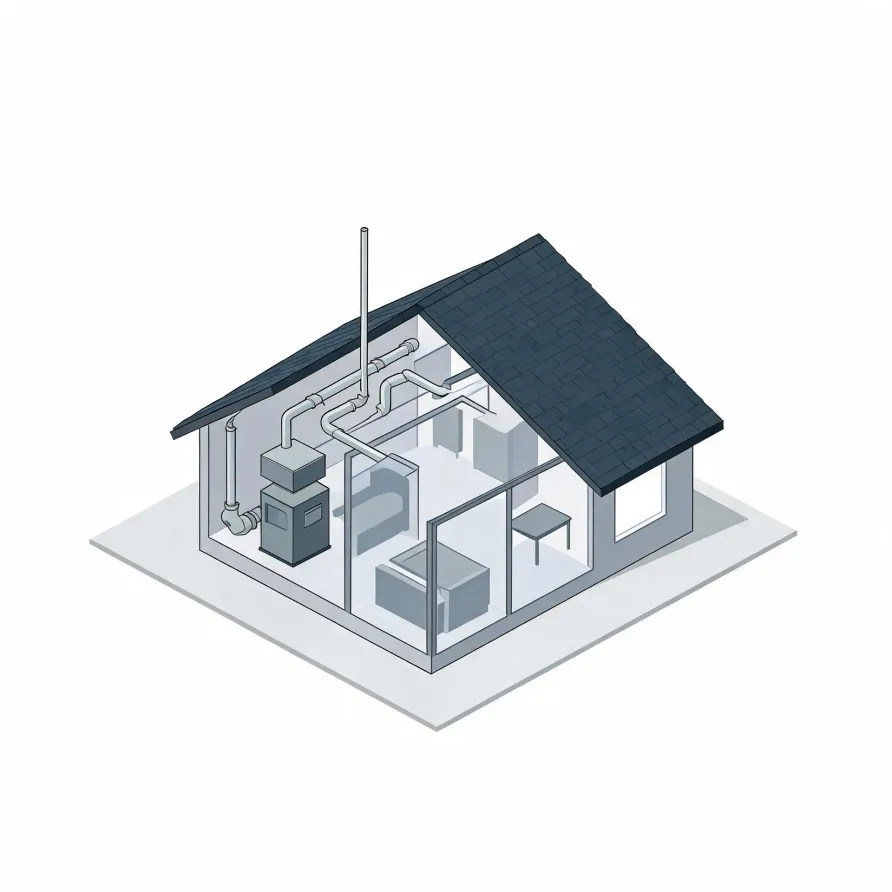
The furnace itself sits in a utility space, basement, or closet and is the piece a contractor goes to first. Inside it, the heat exchanger and burner assembly are the usual suspects when heat stops or drops off. A cracked heat exchanger or a failed igniter are among the first things a technician will look for.
The blower motor moves conditioned air out of the furnace cabinet and through the supply side of your home. The flue and venting run from the furnace to an exterior wall or roof and carry combustion gases out. The thermostat and control board sit at opposite ends of the signal chain, and a fault in either one can look like a furnace problem before the furnace itself is ever touched.
The drawing shows a general layout of these components, and a licensed contractor determines what applies to the specific equipment and configuration in your home.
Get matched in Stanton CountyStanton County by the numbers
92 severe weather events were recorded in Stanton County, Nebraska between 2015 and 2024.
NOAA National Centers for Environmental Information, Storm Events Database, bulk CSV export, events 2015-01-01 through 2024-12-31.Half the homes in Stanton County, Nebraska were built in 1967 or earlier (2020-2024 ACS 5-year).
U.S. Census Bureau, 2020-2024 American Community Survey 5-Year EstimatesStanton County, Nebraska holds 2,483 housing units (2020-2024 ACS 5-year).
U.S. Census Bureau, 2020-2024 American Community Survey 5-Year EstimatesOwners occupy 78.3% of the occupied homes in Stanton County, Nebraska (2020-2024 ACS 5-year).
U.S. Census Bureau, 2020-2024 American Community Survey 5-Year EstimatesCodes & Standards Behind Furnace Repair in Stanton County, Nebraska5 rules & standards
What HVAC Repair Looks Like in Stanton County
Non-weatherized gas furnaces manufactured on or after November 19, 2015 must reach 80.0 percent AFUE.
Non-weatherized oil-fired furnaces manufactured on or after November 19, 2015 must reach 83.0 percent AFUE.
Mobile home gas furnaces manufactured on or after November 19, 2015 must reach 80.0 percent AFUE.
Non-weatherized gas furnaces manufactured on or after December 18, 2028 must reach 95.0 percent AFUE, up from the 80.0 percent minimum that applies to units manufactured before that date.
Licensing and Legal Requirements in Stanton County, Nebraska
Nebraska requires registration rather than a licence: a contractor must be registered with the Department of Labor before performing any construction work, though anyone earning less than five thousand dollars a year from construction services is not a contractor under the Act at all.
Severe Weather Events in Stanton County
Nebraska weather puts real stress on heating equipment, and Stanton County is no exception. How hard a furnace works over its life is largely a function of what the local climate throws at it, which is why the pattern of severe weather here matters when something breaks.
92 severe weather events, 2015–2024. Source: NOAA National Centers for Environmental Information, Storm Events Database.