Tell us about the job
Takes about a minute. No obligation.
Sizing a furnace for Logan County starts with how long the burner actually runs, not just how cold it gets. Homes in Logan County, NE run heat about eight months a year, from October through May. A heat exchanger that cycles through that many months accumulates fatigue on the joints and welds that a contractor has to account for when specifying a replacement. An ignition system that fires repeatedly across a long heating season is the first place an installer looks when a unit has already put in serious time. Get the sizing wrong on the front end, and those parts reach failure faster than the unit's rated lifespan suggests they should.
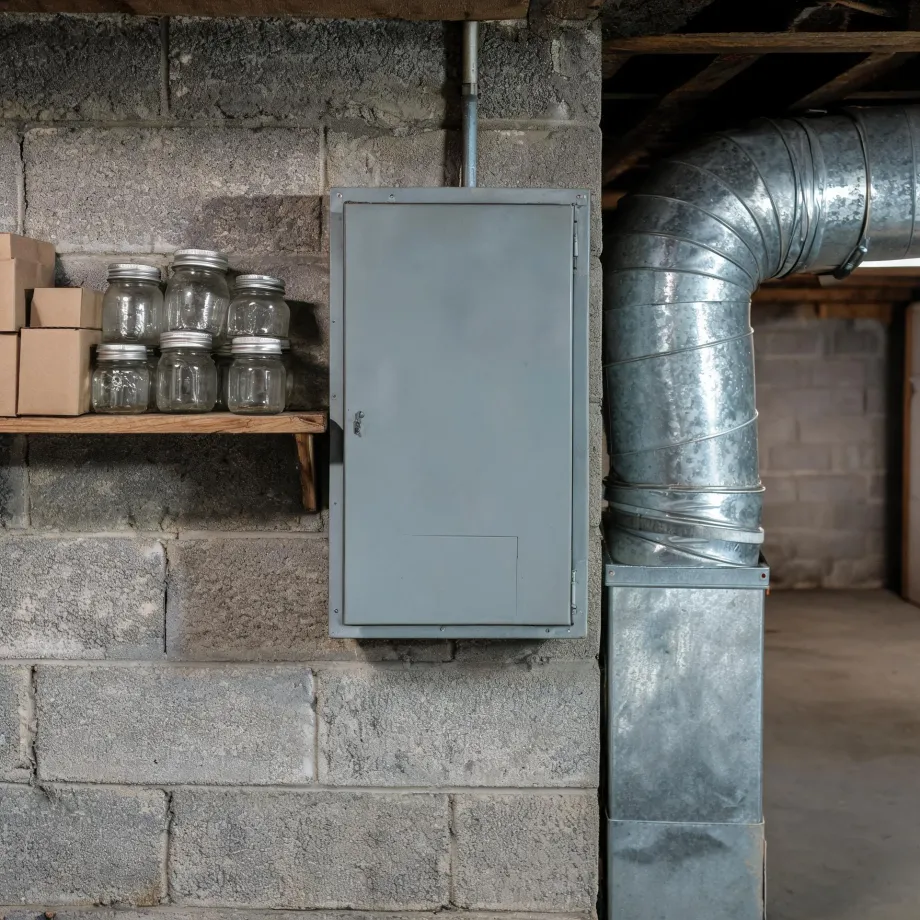
Ductwork laid down for a furnace that has since been replaced two or three times carries assumptions about airflow, trunk sizing, and branch runs that may not match what a new unit needs to push through the house. Half the homes in Logan County, Nebraska were built in 1956 or earlier (2020-2024 ACS 5-year). That depth of history in the housing stock means a contractor pulling a permit for a furnace installation here opens the utility room and then works outward, checking what the existing duct system will actually carry before anything is ordered. A new furnace that cannot move air efficiently through undersized or deteriorated ductwork runs harder and heats unevenly, so the duct evaluation shapes the scope of the job before the equipment choice does.
What Gets Installed With a New Furnace
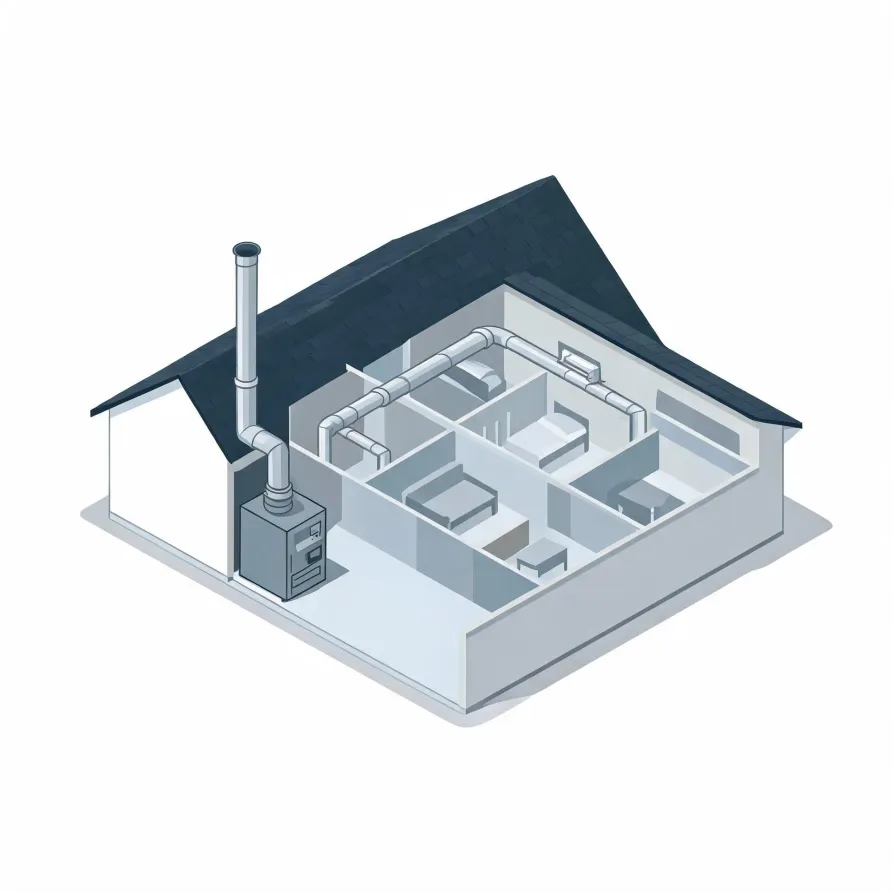
The furnace itself sits in a mechanical room, basement, or utility closet and is the heart of what gets purchased. A contractor sets the unit in place, connects it to the fuel supply, and ties it into the home's existing return and supply air openings. The flue pipe runs from the furnace to an exterior termination point, carrying combustion gases out of the house.
The thermostat mounts on an interior wall and is what the homeowner touches every day to call for heat. A new furnace also gets a dedicated filter housing, positioned where return air enters the unit, and a condensate drain line if the model is a high-efficiency unit that produces moisture during operation.
The drawing shows a general layout of these components, and a licensed contractor determines exactly how each one applies to your home's configuration.
Get matched in Logan CountyLogan County, by the numbers
98 severe weather events were recorded in Logan County, Nebraska between 2015 and 2024.
NOAA National Centers for Environmental Information, Storm Events Database, bulk CSV export, events 2015-01-01 through 2024-12-31.Half the homes in Logan County, Nebraska were built in 1956 or earlier (2020-2024 ACS 5-year).
U.S. Census Bureau, 2020-2024 American Community Survey 5-Year EstimatesLogan County, Nebraska holds 330 housing units (2020-2024 ACS 5-year).
U.S. Census Bureau, 2020-2024 American Community Survey 5-Year EstimatesOwners occupy 78.9% of the occupied homes in Logan County, Nebraska (2020-2024 ACS 5-year).
U.S. Census Bureau, 2020-2024 American Community Survey 5-Year EstimatesCodes & Standards Governing Furnace Installation in Logan County, Nebraska5 sourced rules and standards
What the Installation Actually Looks Like
Non-weatherized gas furnaces manufactured on or after November 19, 2015 must reach 80.0 percent AFUE.
Non-weatherized oil-fired furnaces manufactured on or after November 19, 2015 must reach 83.0 percent AFUE.
Mobile home gas furnaces manufactured on or after November 19, 2015 must reach 80.0 percent AFUE.
Non-weatherized gas furnaces manufactured on or after December 18, 2028 must reach 95.0 percent AFUE, up from the 80.0 percent minimum that applies to units manufactured before that date.
Licensing and Legal Requirements in Logan County, Nebraska
Nebraska requires registration rather than a licence: a contractor must be registered with the Department of Labor before performing any construction work, though anyone earning less than five thousand dollars a year from construction services is not a contractor under the Act at all.
Severe Weather Events in Logan County
Extreme weather puts a real load on heating equipment, and furnaces that are sized or installed without accounting for local conditions fall short when conditions get hard. What happens in Logan County shapes what a furnace needs to do here.
98 severe weather events, 2015–2024. Source: NOAA National Centers for Environmental Information, Storm Events Database.