




Why your furnace won't turn on in a Nebraska winter

Step 1 of 3: Equipment

Why won't my furnace turn on?

Cold hits hard here, and a furnace that won't start on a January morning isn't something you want to sit with for long. Before anything else, it helps to know what actually stops a furnace from firing, so you can tell whether it's something small or something that needs a contractor's eyes on it.

Most often it's the thermostat, the pilot or igniter, or a safety switch stopping it

A furnace that won't turn on usually comes down to one of three things. The thermostat isn't calling for heat the way it should, the igniter or pilot isn't lighting the gas, or a safety switch has shut the whole system down on purpose. That last one matters most. Furnaces are built to stop themselves rather than run unsafely, so a dead furnace is often doing exactly what it's supposed to do. With gas heat running most homes through a Nebraska winter, a furnace that stays off isn't a small inconvenience. It's worth figuring out which of these three it is before the cold settles into the house, since a tripped switch can mean something needs a closer look.

A woman in a gray turtleneck sweater stands by a window looking outside at snowy ground, with a dimly lit living room containing a sofa, shelves, lamp and a lit candle behind her.
A woman in a cream cable-knit turtleneck sweater stands in a warmly lit living room with a fireplace and shelves behind her, looking out a window toward snow-covered trees and a railed deck.
A woman in a cream knit turtleneck sweater stands by a window looking out at snow, with a lit fireplace, sofa and lamp in the room behind her.
A woman in a gray knit sweater sits by a window looking out at falling snow, with a dimly lit living room containing a sectional sofa, pillows, a lamp and houseplants behind her.

Is it just the cold, or is the furnace actually failing

You might notice the air coming from the vents is cold, or there's no air at all. Maybe the thermostat screen is blank, or it's lit up but nothing happens when you bump the temperature. Some furnaces click and try to start, then shut off again after a few seconds. Others hum without ever lighting. If you smell gas near the furnace, that's not a wait-and-see problem, leave the house and call the gas company before anything else. A furnace that keeps failing to start and keeps getting reset on its own can wear out the parts trying to make it run, and with Nebraska mornings well below freezing, a house that can't hold heat gets cold fast.

  1. Thermostat calls for heat and signals the control board

  2. Inducer motor starts and clears the heat exchanger of gas

  3. Pressure switch confirms draft before ignition is allowed

  4. Igniter heats up or sparks to light the burners

Troubleshoot It or Bring in a Pro

Handle It Yourself

  • Check that the furnace switch, usually near the unit and shaped like a light switch, hasn't been bumped off.
  • Look at the thermostat batteries if the screen is blank, since dead batteries are an easy thing to rule out first.
  • Check your breaker panel for a tripped breaker labeled furnace or heat, and reset it once if it has tripped.
  • Replace the air filter if it's visibly clogged, since a blocked filter can cause the furnace to shut itself down.
  • Confirm the thermostat is set to heat and set a few degrees above room temperature, not just powered on.

Call a Contractor

  • A furnace that won't stay lit after ignition often points to a flame sensor or pressure switch issue that needs testing.
  • Repeated short cycling or a furnace that locks out after a few tries usually means a control board or ignition fault.
  • Gas smell near the furnace means the gas valve or line needs a licensed hand, not a troubleshooting attempt.
  • A contractor can diagnose which specific part failed instead of you replacing parts by guesswork.
  • Getting matched means skipping the search for who in your area actually works on furnaces this time of year.
  • One call gets your situation to a contractor instead of you explaining the same problem to several companies.
A dark high-efficiency furnace on a concrete pad in a basement, connected to galvanized ductwork, white PVC vent pipes, and copper and black gas piping, with concrete walls and wood framing nearby.

Running the way it should

A furnace like this fires on command and holds a steady flame at the burners. Air moves through the ductwork without a fight, and the PVC pipes carry exhaust and condensate out without backing up. Nothing about a January morning should surprise you.


A gas furnace with a louvered upper panel stands on a concrete pad in a basement, flanked by sheet-metal ductwork, white PVC and metal pipes, and insulated columns.

Telling you something's wrong

An older furnace like this one works harder to do the same job, and that shows up in longer run times or a flame that won't stay lit. If the condensate line freezes or clogs, the furnace may shut itself down rather than run unsafe.

A bearded man in a plaid flannel shirt stands in a kitchen looking out a window toward snow-covered shrubs, with a steaming mug on the windowsill and potted plants on a shelf behind him.
A smiling man with dark curly hair in a navy t-shirt sits on a gray couch indoors, with a large-leafed plant and a window in the background.

Matched to your furnace job

A furnace that won't fire on a Nebraska morning doesn't wait for a convenient time to be fixed. Below zero, a dead furnace turns into a frozen pipe problem fast, and that's not a gamble worth taking while you try to figure out which part failed. Tracing it to the igniter, the pressure switch, or a flame sensor that's lost its signal takes someone who's opened up enough furnaces to know where to look first. Doing that search yourself means calling one company, waiting on a callback, explaining the no-heat problem all over again if they can't come out soon, then starting over with the next name on the list while the house keeps losing heat. Every hour spent on that is an hour the furnace stays off. Handing off the search now means that work stops, and someone who can actually get into the unit and find out what's keeping it from starting is already headed your way.

Why the pressure switch trips so often

A furnace won't fire if the pressure switch doesn't sense enough draft from the inducer motor, and in a hard freeze that happens more than people expect. The PVC intake and exhaust pipes run outside or through unheated space, and when the air coming through them is cold enough, the switch can read it as insufficient flow even though the inducer is running fine. A pipe that's partly blocked by frost or a nest adds to the problem. This is one reason furnaces that worked fine in November start acting up once Nebraska temperatures drop well below freezing.

Why the igniter is often the part at fault

Most furnaces now use a hot surface igniter instead of a standing pilot, and that igniter is a thin strip that wears out with use, not age by the calendar. It can glow for a season or two and then fail on a morning no colder than the last ten. When it cracks or stops drawing enough current, the control board won't let gas reach the burners, since the safety circuit is built to shut things down rather than risk gas without a flame. A furnace with a bad igniter often still runs its fan and inducer motor normally, which is a useful thing to check.

Winter nights average 17°F statewide

At 17 below freezing, a furnace isn't idling along, it's running close to full tilt most of the night. That's more hours for a weak igniter or a fouled flame sensor to show itself, usually right when you need the heat most.

NOAA nClimDiv 1991-2020 county normals weighted by homes

A beige high-efficiency furnace with white PVC vent pipes stands beside galvanized sheet-metal ductwork in a basement with a concrete floor, exposed wood studs, and metal piping along the wall.

Firing up normally

The burners light on the first try and the inducer motor clears the heat exchanger before ignition. Exhaust and intake run out through the PVC pipes without any trouble, and the plenum pushes warm air through the ductwork. A furnace set up like this just does its job every time you ask it to.

An older beige furnace with a louvered vent panel stands on a concrete basement floor beside galvanized sheet-metal ductwork, a metal flue pipe and vertical pipes along a concrete wall.

Stuck and won't start

The flue connects through a metal pipe into the block wall, and if that vent or the furnace's own sensors are blocked, the unit won't fire at all. An older cabinet like this has had more years for an igniter to weaken or a flame sensor to foul, and a cold snap is when that catches up with it.

A smiling man in a denim shirt and white t-shirt stands in an open dark doorway of a stucco house, facing a woman with long brown hair and a green jacket seen from behind in the foreground.

A dead furnace doesn't stay a furnace problem for long

A furnace that won't fire overnight means a house losing heat while you sleep. By morning the thermostat might read 55 or lower, and anything on an outside wall, including the pipes under your kitchen sink, is sitting in that same cold air. Pair that with wind off the plains and a house can lose heat faster than the furnace would need to catch up even once it's running again.

Figuring out which part failed usually isn't a one-call job. You end up checking a few contractors, explaining the same symptoms more than once, waiting on callbacks, then comparing quotes that don't quite match up because each one diagnosed something different over the phone. Getting matched with a contractor who already knows gas furnaces and Nebraska winters skips that part. They'll have your situation before they call, not a blank slate.

A gray upholstered sofa with a matching cushion sits beside a potted plant and a wooden table holding a small green plant in a stone pot, near a curtained window.
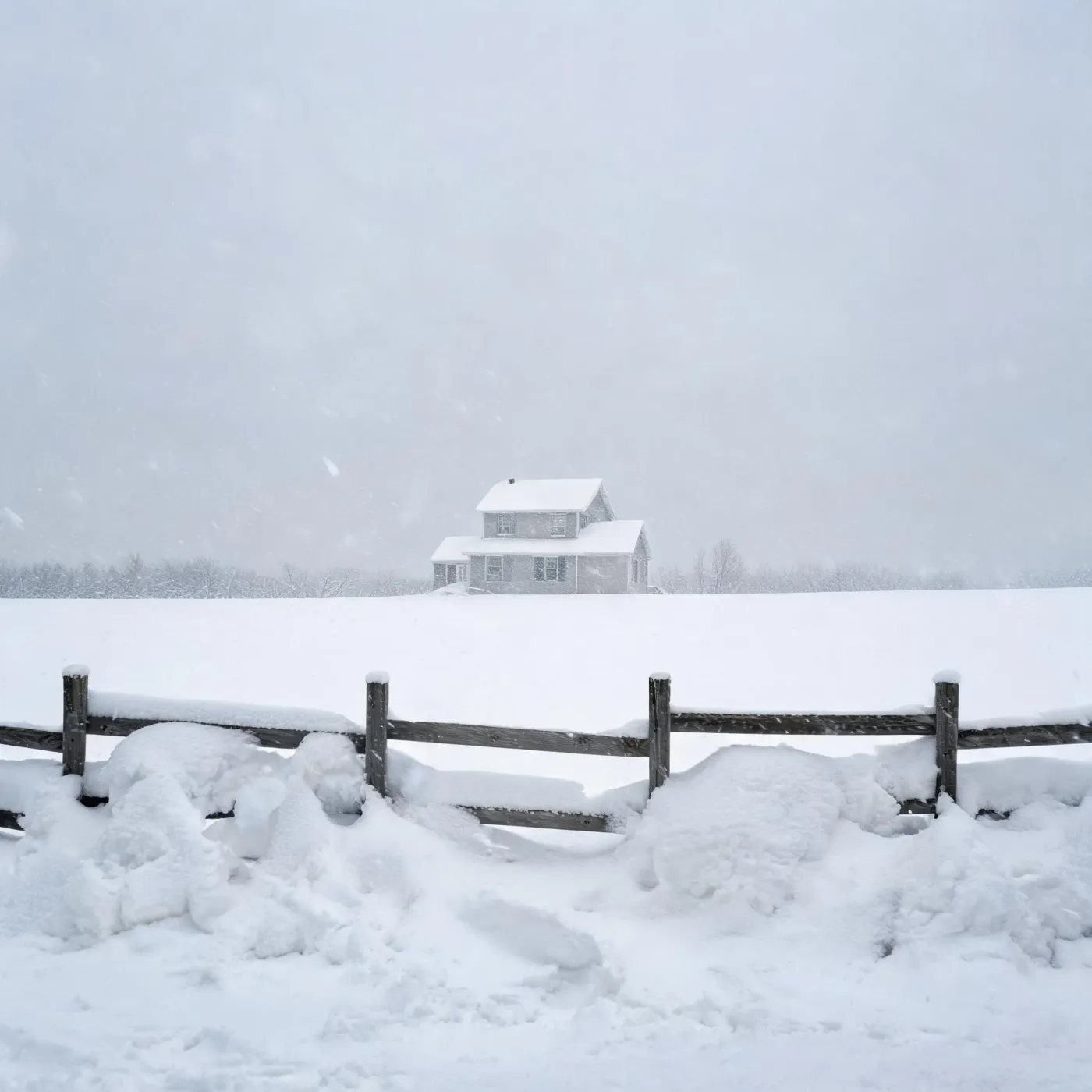
A two-story light-colored house with snow-covered roofs stands beyond a snow-filled field, with a weathered wooden post-and-rail fence half buried in drifts in the foreground under an overcast, hazy sky.

Statewide, winter nights average 17°F, according to NOAA climate data. That's cold enough that a furnace running on a weak igniter or a marginal flame sensor often won't recover on its own. At milder temperatures a furnace might limp along, cycling on the second or third try. At 17°F it doesn't get that chance as easily, since the burners need to light clean the first time to keep up with how fast the house loses heat. If yours has been short-cycling or taking longer to catch, a night like that is usually what brings it to a full stop.

NOAA nClimDiv 1991-2020 county normals weighted by homes

A gray furnace cabinet in a basement, connected to galvanized sheet-metal ductwork and white PVC pipes, against a concrete wall with exposed metal piping and insulation overhead.
Before you get your furnace repair
A gray high-efficiency furnace with two PVC vent pipes stands in an unfinished basement beside sheet-metal ductwork, a framed and plastic-covered wall, and a bare concrete wall with vertical pipes.
After you get your furnace repair

A furnace that won't fire usually comes down to one part failing to do its job, whether that's a stuck pressure switch, a worn igniter, or a flame sensor that's stopped reading the burners right. You don't have to figure out which one on your own. Instead of searching through contractors, calling a handful of them, explaining the same dead furnace story each time, and sitting with quotes trying to guess who's worth the call, you can skip straight to a contractor who already knows Nebraska winters and furnaces like yours. You'll be matched with someone who serves your area and reaches out to you directly, so the work of finding help is done. What's left is the actual repair, and a furnace that fires reliably no matter how far the temperature drops tonight.

Interior room corner with sunlight from a window, showing peeling paint and damaged plaster on the wall above a white baseboard, a wooden cabinet with a pale bowl on top, hardwood floor and a patterned rug.
Interior corner of a room with tan walls, white profiled baseboard and window trim, a wood-plank floor in sunlight, and green foliage visible through the window.
An empty room corner with cream walls, white baseboard, two windows with deep sills showing green foliage outside, and a wood plank floor lit by sunlight.
Empty room corner with beige walls, white beadboard wainscoting, chair rail and baseboard, a window with green foliage outside, and sunlight casting leaf shadows on the wall above a wood floor.
Sunlit room corner with a multi-pane window, beige walls, white baseboard, wood floor with a woven rug, and a dark wooden cabinet holding a ceramic table lamp below a framed picture.

A furnace pro near you

One form replaces the calls you'd make to find a furnace pro.

Find a pro near me

There's no charge for the request.