







Why your furnace keeps turning on and off in Nebraska

Tell a local repair pro what your furnace is doing.

Find a pro near me

A furnace that keeps turning on and off, sometimes called short cycling, usually means it's running for a minute or two, shutting down, then starting again before the house ever gets warm. The most common reason is a dirty air filter choking off airflow, which makes the furnace overheat and shut itself down as a safety measure. It can also mean the flame sensor is dirty and can't confirm the burner is lit, or the furnace itself is oversized for the house and heats the air faster than the thermostat can register it. In a Nebraska winter, a furnace that won't stay running is more than an annoyance. It struggles to keep up when temperatures drop hard, and the on-off cycling puts extra wear on the ignition system and blower motor each time it restarts. The fix depends on which of these is actually happening in your house.

A woman in a cream sweater with her hair in a bun laughs while seated at a stone counter holding a glass of red wine, in a dimly lit interior with a sofa, houseplants and a large window at night.
A woman with long dark hair in a cream knit sweater laughs while looking off to the side, seated in front of a dimly lit kitchen with an island, stools, open shelving and a potted plant, with a glass of red wine in the foreground.
A smiling woman with long dark wavy hair in a light knit sweater sits at a marble counter with a glass of red wine, with a dimly lit living room and kitchen in the background.
A smiling woman with long wavy brown hair in a beige sweater sits at a white marble counter with a glass of red wine, with a living room, dining table and kitchen cabinets behind her.
A man in a dark blue shirt stands in an open front doorway of a stucco and wood-clad house, facing a blond woman seen from behind in the foreground on a stone walkway.

What short cycling does to your house and your gas bill

You'll notice it room by room. The living room never quite catches up before the furnace quits again, and the bedrooms stay cold while the thermostat insists the house is warm. Short bursts of heat don't move far through the ductwork before the burner shuts off, so the rooms farthest from the furnace lose out first. That start-stop pattern also pulls more gas than a normal heating cycle would, since the furnace spends part of every run just getting back up to temperature.

It wears on the equipment too. Every restart puts a load on the igniter and the blower motor, and a furnace that cycles a dozen times an hour is working those parts a dozen times as often as it should. Left alone, that's how a furnace that should run for years starts needing repairs early. Tracking down what's actually tripping the shutoff, a clogged filter, a cracked heat exchanger, a bad flame sensor, takes someone who can look at your system directly. A local contractor who knows Nebraska furnaces can tell you which one it is without you having to call around and describe the problem to three different companies first.

Interior corner of a dining room with a round wooden table, a ceramic vase holding olive branches, a dark spindle-back chair near a curtained window, and a sideboard with a lamp against beige walls.
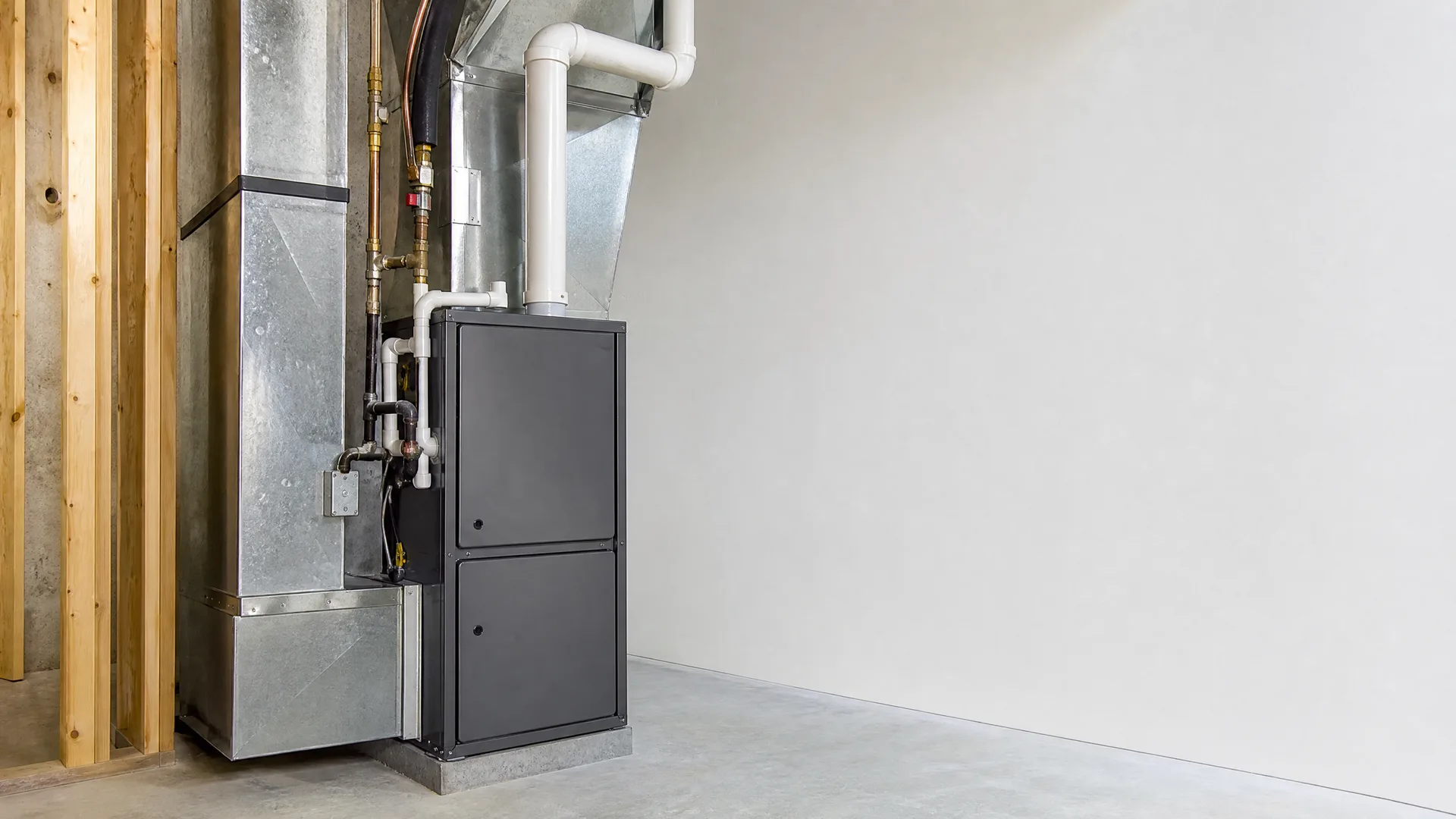
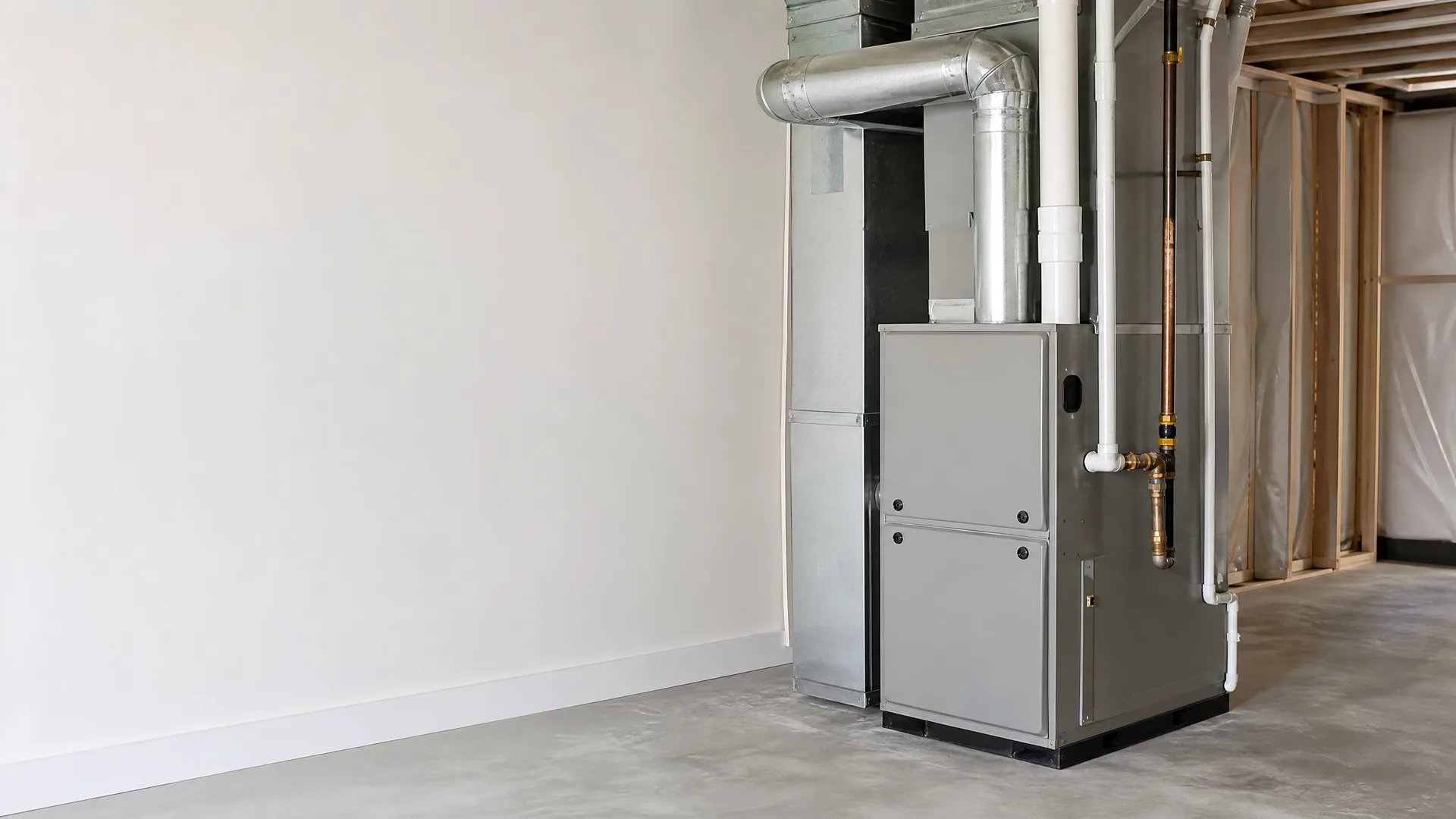
A dark gray furnace connected to galvanized sheet-metal ductwork, white PVC vent pipes and copper piping, standing against a plain light wall in a room with a bare concrete floor and exposed wood framing at left.

Why a dirty filter causes this

Your furnace pulls air through the filter, heats it, and pushes it back out through the ducts. When that filter is packed with dust, the furnace can't pull enough air across the heat exchanger. The metal overheats, a safety switch called the limit switch trips, and the burners shut off even though the house is still cold. A furnace running in a home with pets or a recently finished basement can clog a filter in a matter of weeks.

A gray high-efficiency furnace with sheet-metal ductwork, white PVC vent pipes and copper piping stands against a wall in an unfinished basement with a concrete floor and insulated wood stud framing at right.

The flame sensor behaves the same way

A furnace also shuts down fast when the flame sensor is coated with soot. That sensor's job is to confirm a flame is actually burning. If it can't read the flame clearly, it tells the control board to cut the gas, and the burners go out within seconds of lighting. In Nebraska, where the furnace is lit every day for months straight, that soot builds up a lot faster than it would on a furnace that only runs now and then.

Is your furnace doing this right now in your house

You hear the burner kick on, then off, then on again, maybe three or four times in twenty minutes. The air coming out of the vents feels decent for a minute, then quits before any room actually warms up. Your thermostat might show the right temperature while the house still feels cold, because the sensor reads the air near it, not the air in your bedroom down the hall. You'll likely notice the furnace running more often but the gas bill higher than a winter where it ran less. Left alone, that heat exchanger is cycling through heat and cool stress over and over, and that's what eventually cracks it.

A gray high-efficiency furnace in a basement with sheet-metal ductwork, white PVC vent pipes, metal plumbing lines, a condensate pump on the floor, and a window showing green trees outside.

Running right

The burner stays lit, air moves steady through the ducts, and the house climbs to the thermostat setting and holds there. The flue and condensate lines are doing their job quietly, and the filter behind that panel is clean enough to let the furnace breathe.


An older metal furnace with PVC and metal pipes stands on a concrete basement floor beside galvanized ductwork, with wooden stairs and a water tank in the background.

Short cycling

This furnace has seen a lot of winters and it shows. A clogged filter or a dirty flame sensor can make it fire, shut off, and fire again every few minutes, never running long enough to push real heat through the ducts into the rooms that need it.

A smiling middle-aged man in a dark green sweater sits at a candlelit table with wine glasses and a plate of greens in a dimly lit interior.
A woman in a dark knit turtleneck sweater reclines on a couch under a cream knit blanket, looking down at an open book, with a lit table lamp and framed pictures behind her.
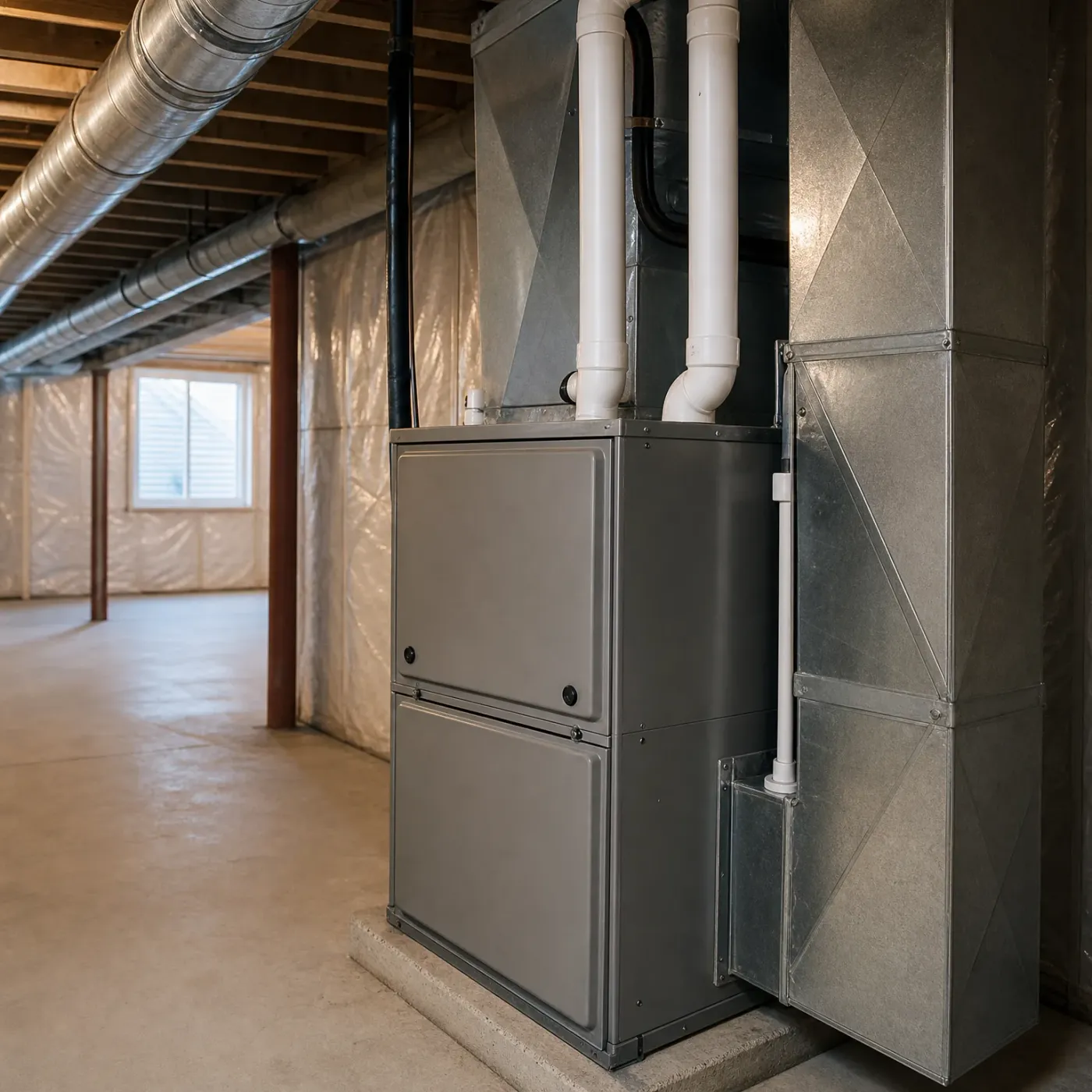
A gray high-efficiency furnace on a concrete pad in an unfinished basement, with white PVC vent pipes, galvanized sheet-metal ductwork, insulated walls and a small window in the background.

Get your furnace to the right pro

One form replaces the calls you'd make to find a furnace pro.

Say what's going on with your furnace, and a pro who works on them reaches out.

Get my match

Sending the form costs nothing.

Swap the Filter or Call Someone

Clean the filter yourself

  • A filter swap takes a few minutes and costs the price of the filter, nothing more.
  • If the filter was the only problem, the short cycling usually stops the same day you replace it.
  • You still have to figure out which size and type your furnace takes and where to buy it.
  • If the cycling continues after a fresh filter, you've spent money and time and you're back where you started.
  • You won't know if the overheating already tripped a limit switch or stressed the heat exchanger.

Get it looked at

  • A contractor can tell you in one visit whether it's the filter, the flame sensor, the limit switch, or something else entirely.
  • You skip the back and forth of searching contractors, calling around, and explaining the same problem more than once.
  • Being matched means someone who handles this reaches out to you instead of you sorting through quotes yourself.
  • If the filter wasn't the cause, you find out what is instead of guessing a second and third time.
  • A furnace that's already tripped a safety switch gets checked for damage you can't see from behind the vent.
  1. Thermostat calls for heat and the igniter glows hot.

  2. Gas valve opens and the burners light.

  3. Blower pushes air across the heat exchanger and into the ducts.

  4. Restricted airflow traps heat inside the heat exchanger.

Winter nights average 17°F statewide

At 17 degrees, your furnace has to work through long burner cycles to keep up. If it's short cycling instead of running steady, the house loses ground fast on a night that cold, and the burner is firing more often to chase a temperature it can't hold.

NOAA nClimDiv 1991-2020 county normals weighted by homes

Where this leaves you

  • A furnace that fires, quits, and fires again within a few minutes is short cycling, and a dirty filter is the usual cause.
  • Checking the filter costs nothing and takes a few minutes, but a cracked heat exchanger or a failing limit switch needs a trained eye.
  • Left alone, short cycling wears down the parts that start the burner, and that wear adds up over a Nebraska winter.
  • A furnace that can't hold a steady cycle on a 17-degree night will lose ground in every room of the house, not just one.
  • Instead of searching for a contractor, calling around, and explaining the same problem to each one, you answer a few questions once.
  • Getting matched means a contractor already knows what's going on with your furnace before they call you back.

A furnace that fires and quits and fires again is short cycling, and most of the time a dirty filter is behind it. That part you can check yourself, tonight, for nothing. But the same symptom shows up when a limit switch is failing or a heat exchanger has cracked, and those aren't jobs to guess at. Every cycle that ends early before the burner should have put stress on the parts that light it, and a Nebraska winter gives a furnace a lot of chances to run that cycle wrong. On a night that drops to 17 degrees, a furnace that can't hold steady won't just lose the living room. It loses ground everywhere in the house at once, because the burner keeps shutting off before any room gets what it needs.

None of that tells you, on its own, whether what's wrong at your house is the filter or something behind the panel. What it tells you is that the answer is worth getting instead of living with. Normally that means calling around to a few contractors, describing the on-off-on pattern to each one, and sorting through whatever they quote you back. Here you answer a few questions about what your furnace is doing once, and a contractor who already has those answers is the one who calls you. You're not starting the explanation over every time the phone rings.

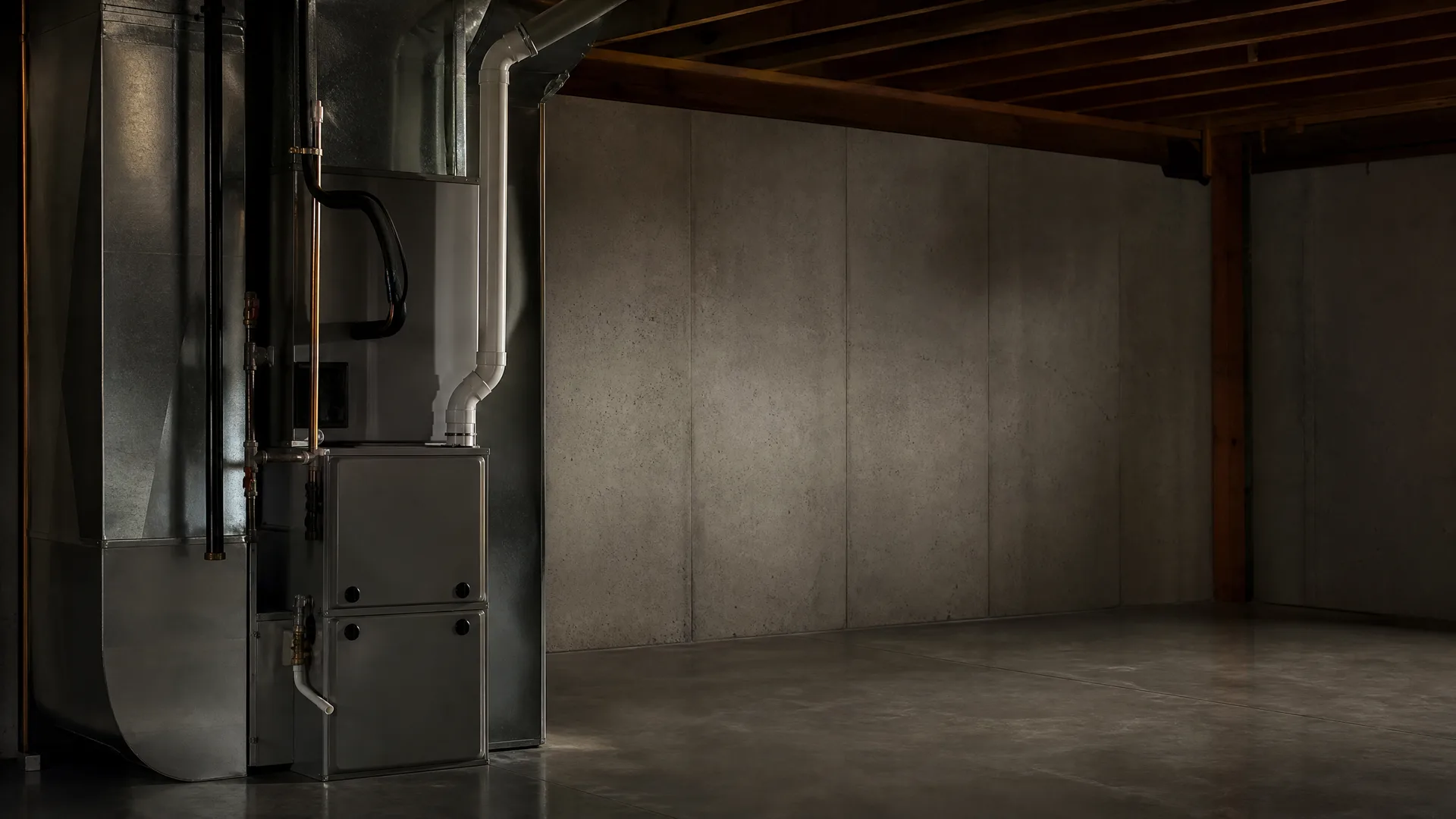
A dimly lit basement with concrete floor and walls, exposed wood joists, and a furnace with sheet-metal ductwork and copper piping on the left side.

The right pro for this job

Describe what your furnace is doing once, in one form.

Step 1 of 3: Equipment