Profile view of a bearded man wearing a dark baseball cap and a dark gray T-shirt against a plain off-white background.

Why your furnace is leaking water in Nebraska

Step 1 of 3: Equipment

Why is water leaking from my furnace?

A gas furnace shouldn't produce water at all, so finding a puddle or drip near the unit is alarming, especially with a Nebraska winter underway and the furnace running most of the day. You want to know fast whether this is something minor or a sign the furnace needs attention before it quits altogether.

It's almost always condensation, a cracked part, or a clogged drain line

A high-efficiency furnace produces condensation as part of normal operation, and that water is supposed to leave through a drain line and a condensate pump. Water shows up where it shouldn't when that line clogs, the pump fails, or a crack lets condensation escape before it reaches the drain. An older furnace without that drain system can leak for a different reason: a cracked heat exchanger or a problem with the flue venting condensation back into the cabinet. Either way, the water itself isn't the real problem. It's a sign that something inside the furnace isn't routing or draining the way it should, and that's worth having looked at before it damages the furnace or the floor around it.

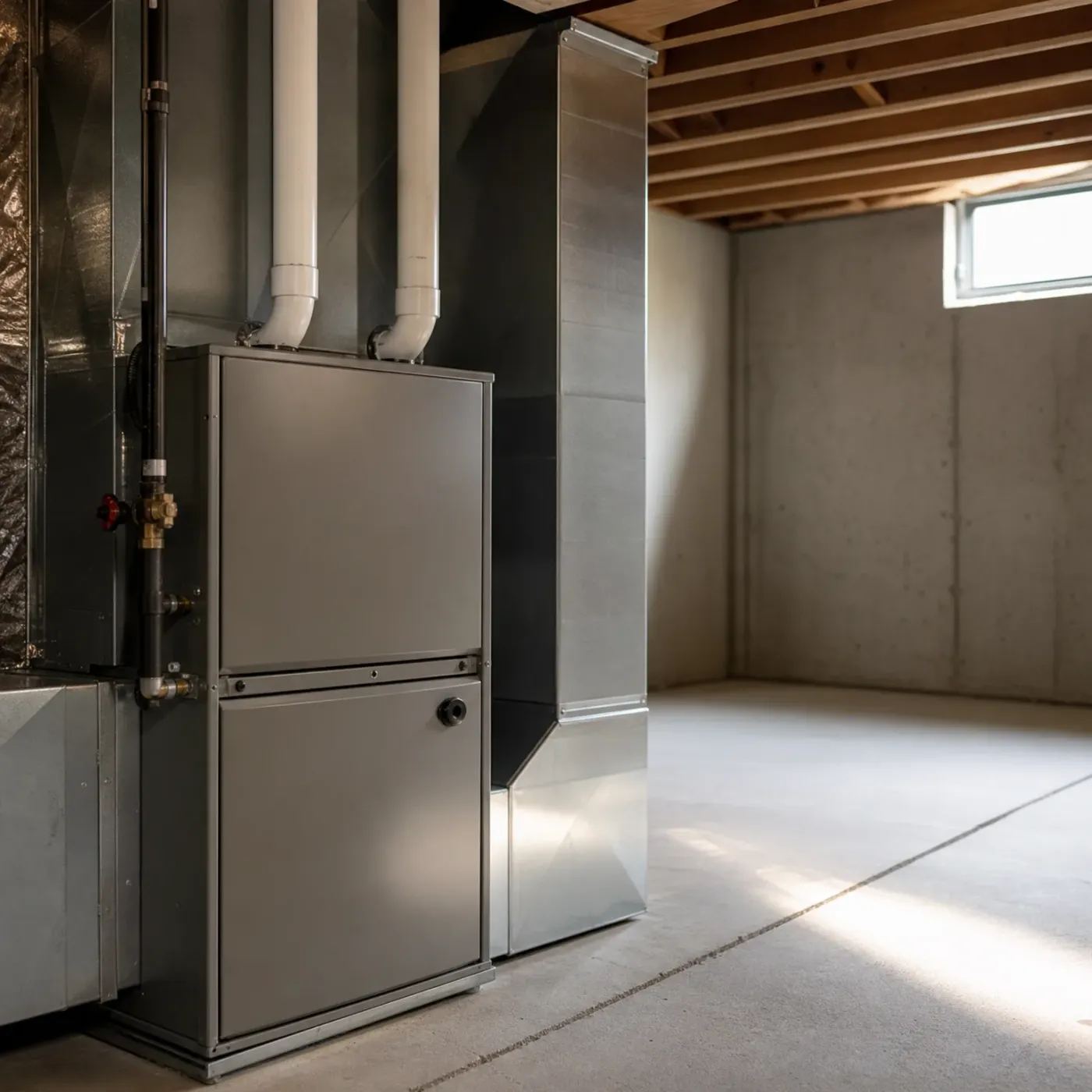
A gray high-efficiency furnace in a basement, connected to sheet-metal ductwork on the left and white PVC vent pipes above, with black gas and drain piping and an exposed wood-stud wall with OSB sheathing on the right.

A high-efficiency furnace makes water on purpose

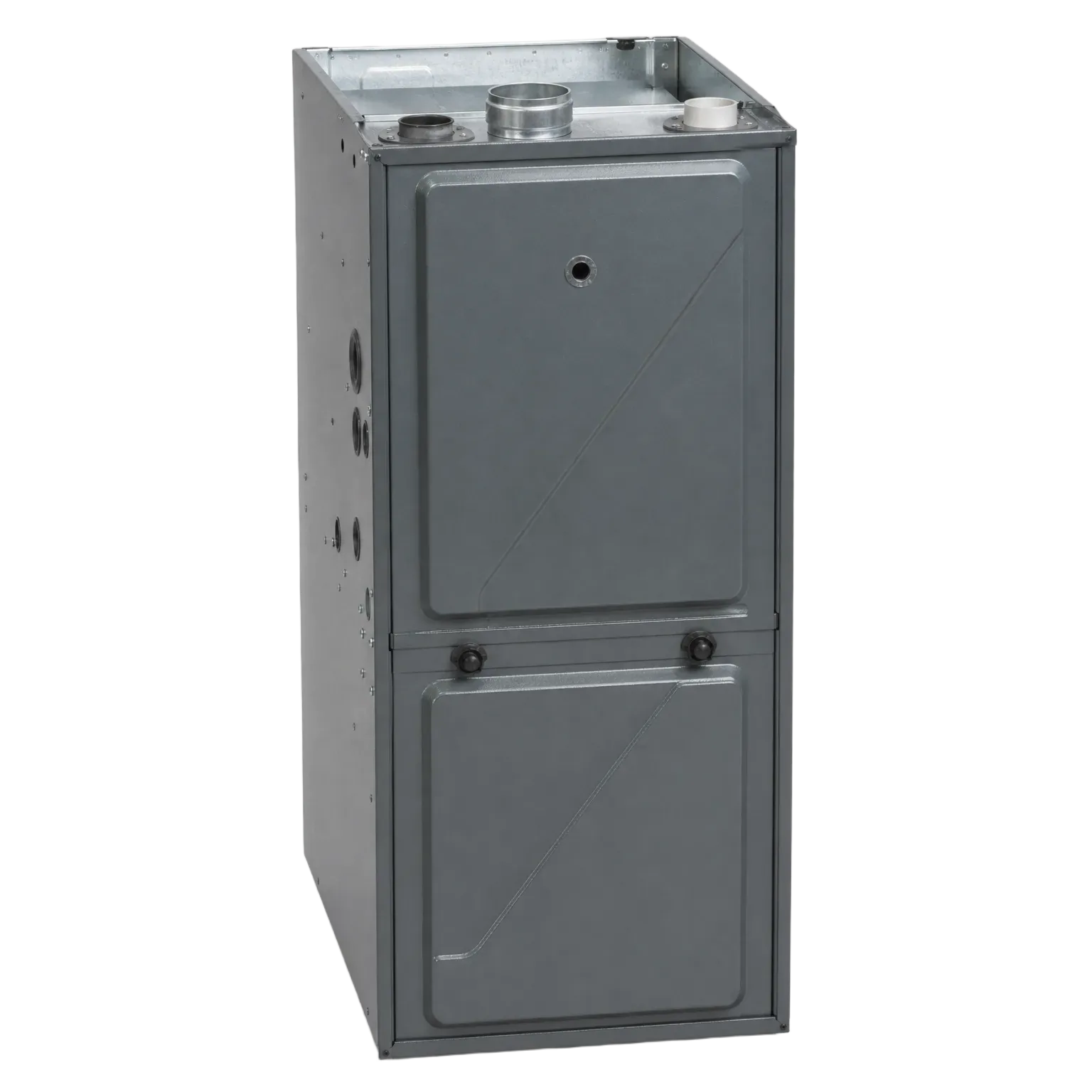
If your furnace vents through white PVC pipe instead of a metal flue, it's a high-efficiency model, and those pull extra heat out of the exhaust until it turns to water. That water drains out through the condensate line. A drip there is normal. A puddle on the floor means the line is clogged or cracked.


An older gas furnace with two louvered front panels stands on a concrete basement floor beside galvanized sheet-metal ductwork, pipes, and a weathered concrete wall.

An older furnace with a standing flue shouldn't leak at all

A furnace like this one, with a metal flue and no PVC pipe, doesn't make condensate as part of running. Water near it usually means something else: a cracked heat exchanger, a humidifier line, or water finding its way in from outside and tracking along the concrete floor.

A smiling man in a navy long-sleeve shirt sits at a wooden table in a kitchen and dining area, with a ceramic mug, a potted plant, and a sliding glass door behind him.
A smiling bearded man in a green henley shirt stands at a kitchen island with a gray mug, looking off to the side, with a dining area and shelves blurred behind him.
A smiling bearded man in a navy sweater sits at a white kitchen island with a ceramic mug, with open shelves, potted plants and a range hood behind him.
A smiling man in a dark olive long-sleeve shirt sits in a kitchen beside a counter with a dark mug, with a dining table, sideboard and hallway visible in the blurred background.

The condensate has to get from the furnace to a drain somehow, and that's a plastic hose, not a sealed pipe. Along the way it passes through a trap, a bend built to hold a small amount of water so air can't get pulled backward through the line. If that hose picks up a clog, or the drain it feeds into is slow, the water backs up the only way it can: out through the nearest opening, which is usually somewhere in the cabinet. The same thing happens inside a condensate pump if its float switch sticks. That switch is supposed to cut power to the furnace when the pump can't keep up, but a stuck float lets the pump overflow instead of shutting anything down. Algae and sediment collect inside that hose the way they would in any line that holds standing water, narrowing it until it backs up on its own. One thing looks the same as all of this but isn't: a cracked heat exchanger letting flue gas condense inside the cabinet. That's not a drainage problem at all, and it needs a furnace technician, not a drain cleared out.

Where the water actually comes from

  • Condensate drips through a clear or white plastic hose from the furnace down to a floor drain, a condensate pump, or outside.
  • That hose runs through a trap shaped like a small U, and the trap has to stay filled with water to work right.
  • A clog in the hose or the drain it empties into backs the water up until it finds the nearest low spot to escape, usually inside the cabinet.
  • The condensate pump has a float switch that should shut the furnace down if the pump fails, but a stuck float lets water overflow instead.
  • Algae and sediment build up inside that hose over time the same way they do in any drain that sees standing water.
  • A cracked heat exchanger on an older furnace can let flue gas condense inside the cabinet, which shows up looking like a drain problem but isn't one.
A gray high-efficiency furnace with white PVC vent pipes stands against a concrete basement wall beside sheet-metal ductwork, a small condensate pump on the floor, and exposed wood framing at left.
A high-efficiency furnace draining the way it should keeps the condensate line clear and the water flowing straight to the pump.
A gray sheet-metal furnace with flue pipe and adjacent ductwork stands against a stone basement wall on a concrete floor, with white PVC and metal pipes running nearby.
An older furnace with no condensate system has no business making water, so any leak here points to the flue or a cracked heat exchanger.
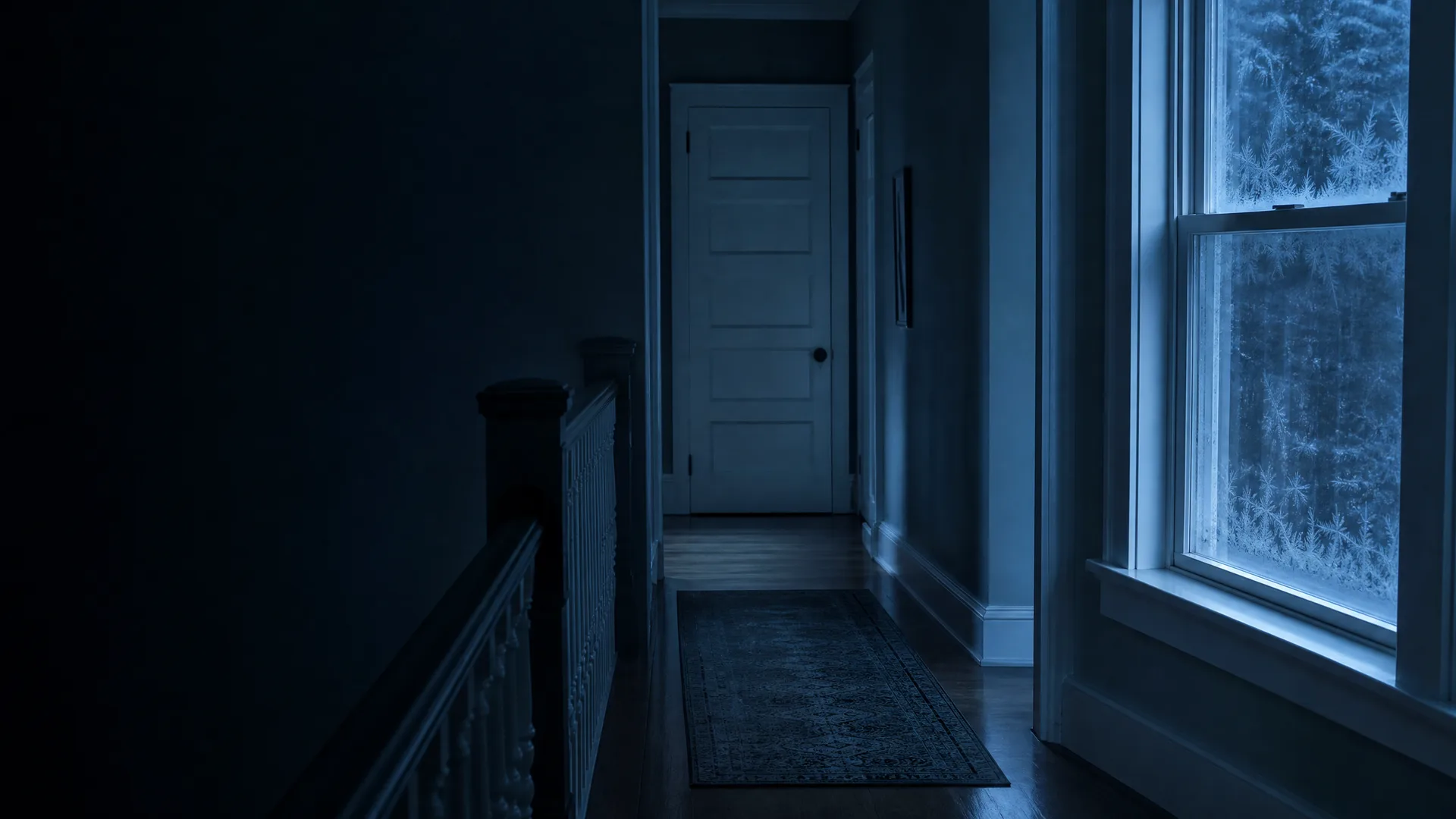
Dimly lit interior hallway at night with a closed white paneled door at the end, a long runner rug on a wood floor, a stair railing at left, and a frost-covered window admitting blue light at right.

You wake up without knowing why. The house is too quiet. You go check on the kids and the hallway floor is cold under your feet in a way it shouldn't be. No air moving from the vent. You crouch down and hold your hand over the grille and feel nothing, not even warm. Outside the window the frost has climbed up from the corners, and the glass is the kind of cold that means it's well below freezing out there. It's two in the morning and the furnace has stopped somewhere downstairs, and you don't yet know if it's the water you saw by the unit the day before or something else entirely.

Hand off the furnace problem

Fill out one short form instead of calling around.

You only hire the pro if you want to.

What a clogged trap does over time

That U shaped trap holds water so exhaust gas can't back up through the drain line into the furnace. When it clogs, the water has nowhere to go but out, usually through a small port or seam never meant to drain. Left alone, that backup can trip a pressure switch and shut the furnace down outright, which is a safer outcome than it sounds. A furnace that keeps running with a blocked trap is pushing condensate somewhere it shouldn't be, and in a Nebraska cold snap, a shutdown furnace is the problem you want to catch early, not after a week of single digit nights.

Why the heat exchanger matters more

A cracked heat exchanger can also put water near the furnace, but it's doing it by failing, not by design. Condensation forms on the cold metal as flue gas passes through a crack, and that moisture drips down into the cabinet. This doesn't happen on its own from age. It happens when metal has already fatigued or corroded enough to let combustion gas mix where it shouldn't. That's not a clog you clear and move on from. It's a furnace that needs to be shut off and looked at before it runs again, especially with the furnace carrying the full load of a Nebraska winter.

A smiling man in a dark blue T-shirt sits on a light gray sofa in a living room with a wooden shelf and window behind him, with a laptop edge visible in the foreground.
A bearded man in a plaid flannel shirt stands indoors looking out a frost-covered window, with a steaming dark blue mug on the wooden sill and snow-covered trees outside.

Fix it yourself

You clear the trap, check the hose, maybe stop the drip. If it comes back, or it's the flue instead, you're back to square one with no diagnosis.

Describe it once

Send the form

No more calling around Nebraska furnace repair shops or explaining the leak twice. A contractor gets in touch and looks at the actual cause.

Describe it once
A metal furnace with louvered panels stands against a concrete basement wall, connected to sheet-metal ductwork and a round flue pipe, with wooden framing posts and a pipe nearby.
Before you get your furnace repair
A gray gas furnace stands on a concrete basement floor, connected to sheet-metal ductwork, white PVC vent pipes, and a yellow gas line, with plastic sheeting covering the walls.
After you get your furnace repair
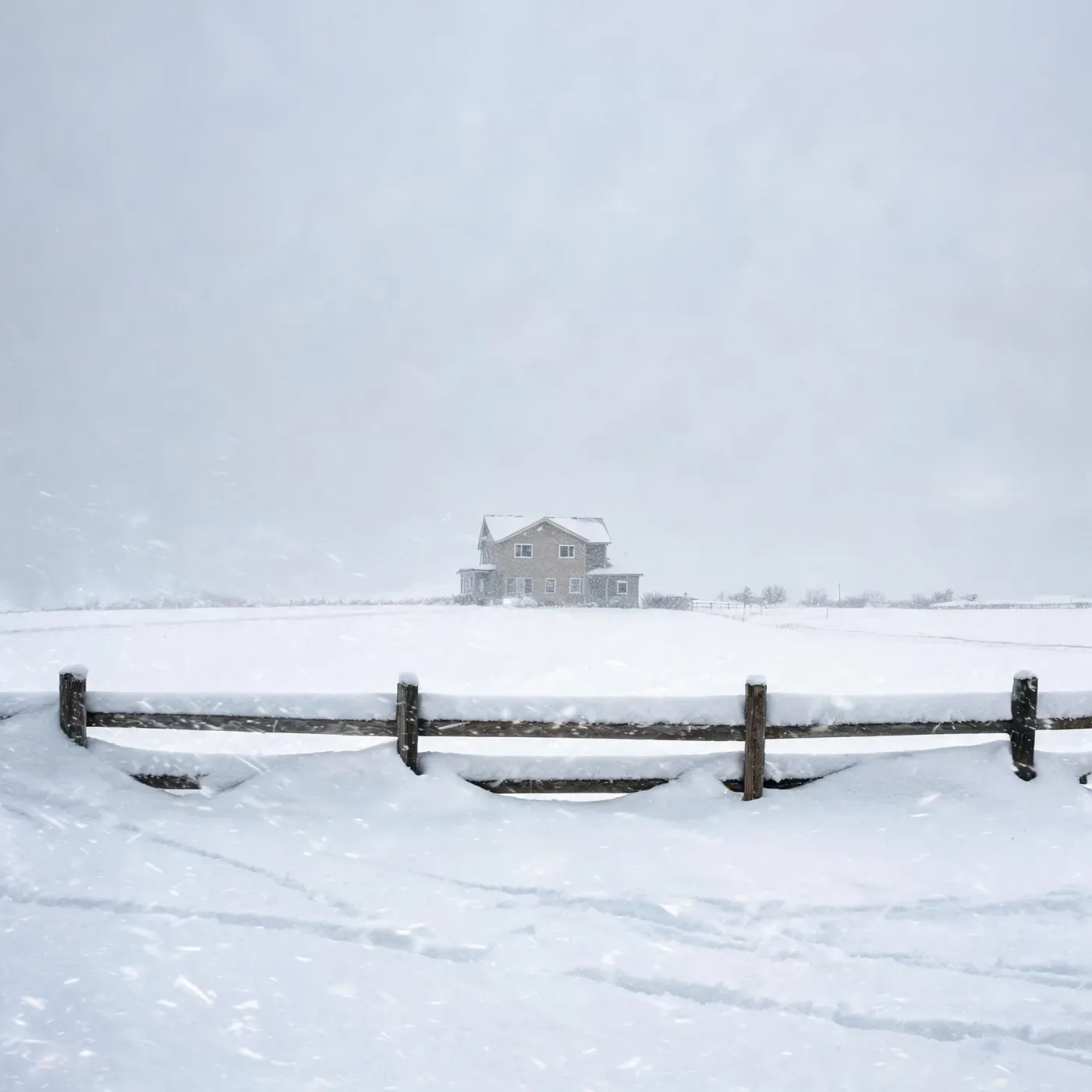
A two-story house stands on a flat snow-covered field in falling snow, with a partly buried wooden post-and-rail fence crossing the foreground under a pale gray sky.

Statewide, winter nights average 17°F, and your furnace runs for hours at a stretch just to keep up. That long runtime matters more than the cold itself. The longer the burner stays on, the more exhaust moves through the vent pipe and, if you have a high-efficiency furnace, the more condensate it produces. A short cycle on a mild day might not even fill the trap. A string of 17°F nights will, and if the trap or drain line is already partway clogged, that's when you finally see the puddle. The leak was building before the cold snap. The cold just gave it enough runtime to show up on your floor. Source: NOAA 30 year climate normals

NOAA nClimDiv 1991-2020 county normals weighted by homes

A furnace leaking water is either doing its job through a clogged drain or telling you something is cracked where exhaust gas shouldn't be. The clear hose, the U shaped trap, the PVC vent pipe if you have one, each points to a different cause, and the fix depends on which one it is. Guessing wrong means clearing a trap when the real problem is a cracked heat exchanger, or worse, ignoring a flue issue because the water looked like ordinary condensate. You don't have to work out which one it is before you get help. Send the form and you're done hunting through Nebraska furnace repair listings, calling shops to see who answers, explaining the drip and the cold spots and the sound from the vent over and over to whoever picks up, then sitting with three quotes trying to guess which contractor actually knows furnaces instead of just AC. That part ends. What's left is a contractor who already knows what you told the form, looking at your furnace, telling you straight whether it's the trap, the flue, or the heat exchanger.

A gray furnace with PVC vent pipes and sheet-metal ductwork stands against a wall in an unfinished basement with concrete floor and walls, exposed wood joists, and a small window.

Let someone else find the pro

I'm done searching

Skip searching for a furnace pro and answer a few questions instead.

No fee to send it, and nothing to sign.