When to replace a furnace in Omaha, NE

Step 1 of 3: Equipment

When should I replace my furnace in Omaha?

Omaha winters push a furnace hard for months at a time, and nobody wants it to fail on a night when it's below zero outside. If yours is getting old, or it's been acting up, you're probably trying to figure out whether a repair will hold it over or whether you're better off replacing it before it quits on you.

Replace a furnace around 15 to 20 years old, or sooner if repairs keep adding up

Most furnaces last 15 to 20 years, and gas furnaces here run from October through April, so the unit in your house has put in a lot of hours by the time it hits that age. Once it's in that range, a cracked heat exchanger, a failing igniter, or a blower motor on its way out are signs it's cheaper to replace than to keep patching. If your furnace came with the house, check the age on the nameplate or your paperwork rather than guessing. Winters in the Omaha area get cold enough that a furnace running past its expected life is a real risk, not just an inconvenience, and gas prices here make a newer, more efficient furnace worth the switch once the old one starts failing.

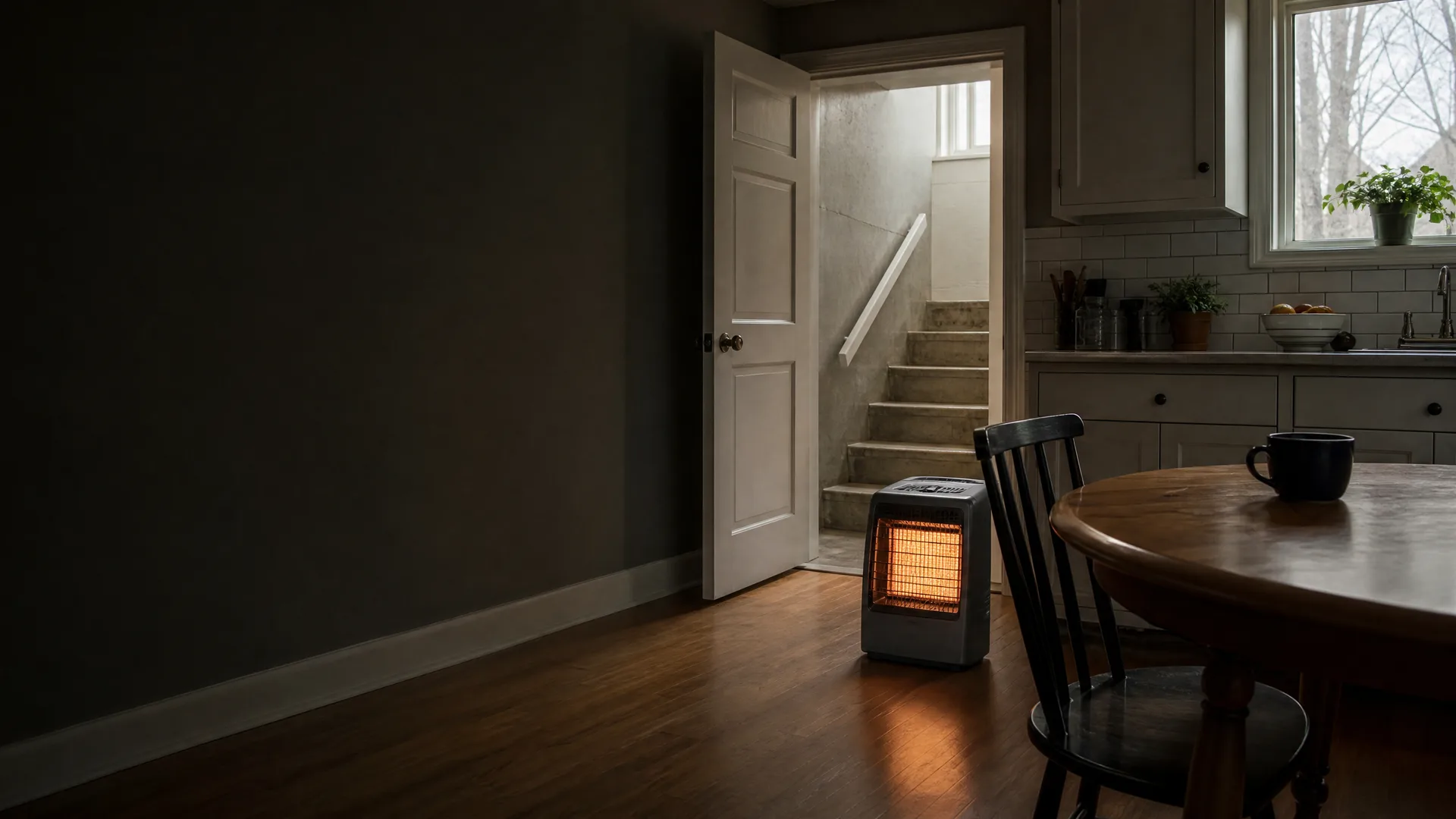
A portable space heater with a glowing orange element sits on a wood floor in a dim room beside a round table and black wooden chair, with an open door leading to a stairwell and a kitchen counter with a window at right.

The space heater has been running since five, and it's still barely enough. You're standing at the counter in a coat, waiting on coffee, and the cold is coming up through the floor more than anything. The basement door is open because you went down twice already, once to check the pilot and once just to stand near the furnace like that would tell you something. It didn't kick on right either time. Outside it's still dark and somewhere below zero, the kind of Omaha morning where the house usually fights back harder than this. Today it isn't. You go back to the coffee and leave the door open, listening for it to try again.
Is your furnace trying to tell you something?

Some rooms stay cold no matter how long the furnace runs. It cycles on and off more than it used to, or it runs and runs without the house ever quite catching up. You notice the gas bill crept up even though you haven't changed the thermostat. There might be a burnt smell the first time it fires up in the fall, or a rattle that wasn't there last winter. If a pilot light keeps going yellow instead of blue, that's not a small thing to ignore, it means the furnace isn't burning gas the way it should. A furnace that's struggling in November usually isn't getting better by January, and waiting it out risks it quitting on the coldest night of the year instead of on your schedule.

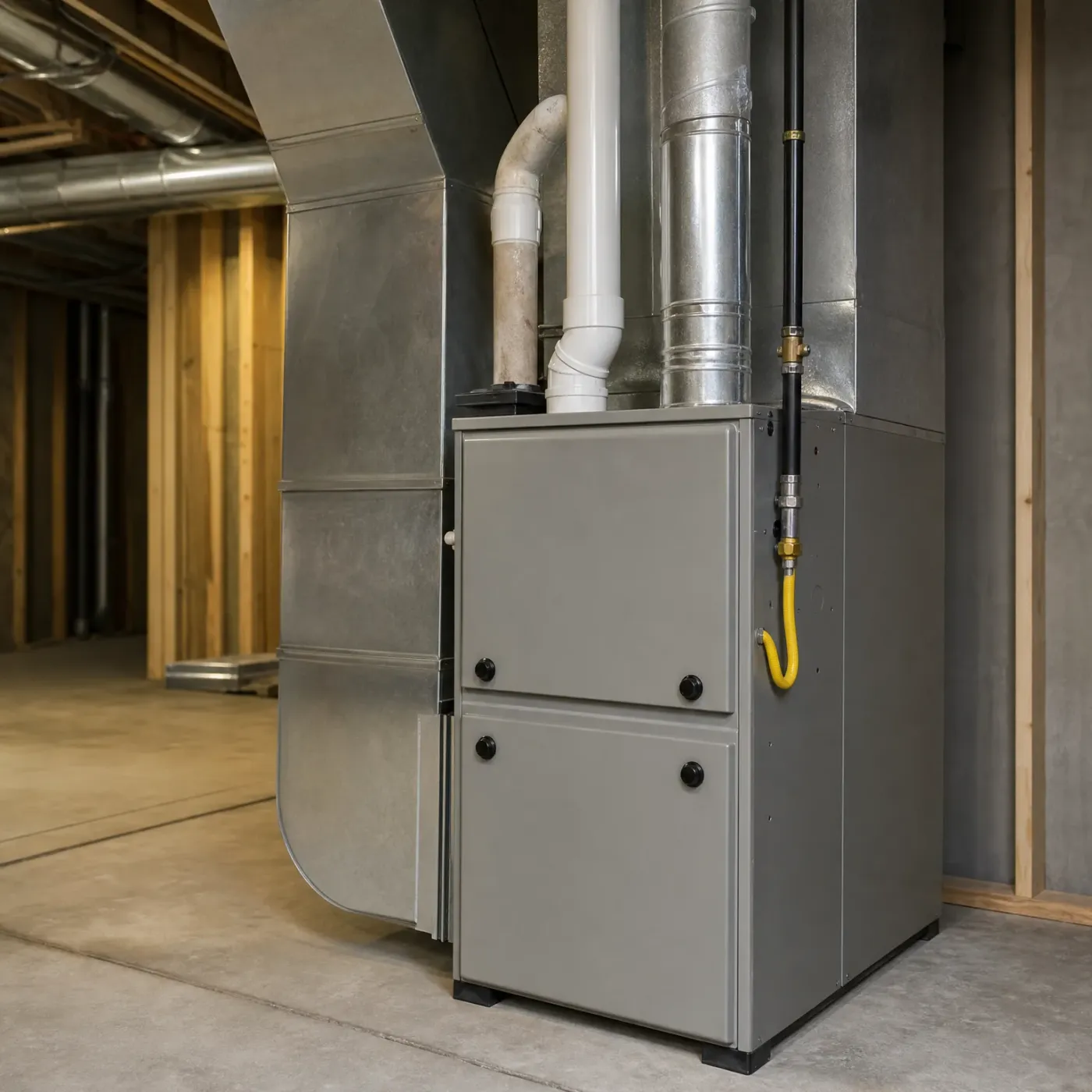
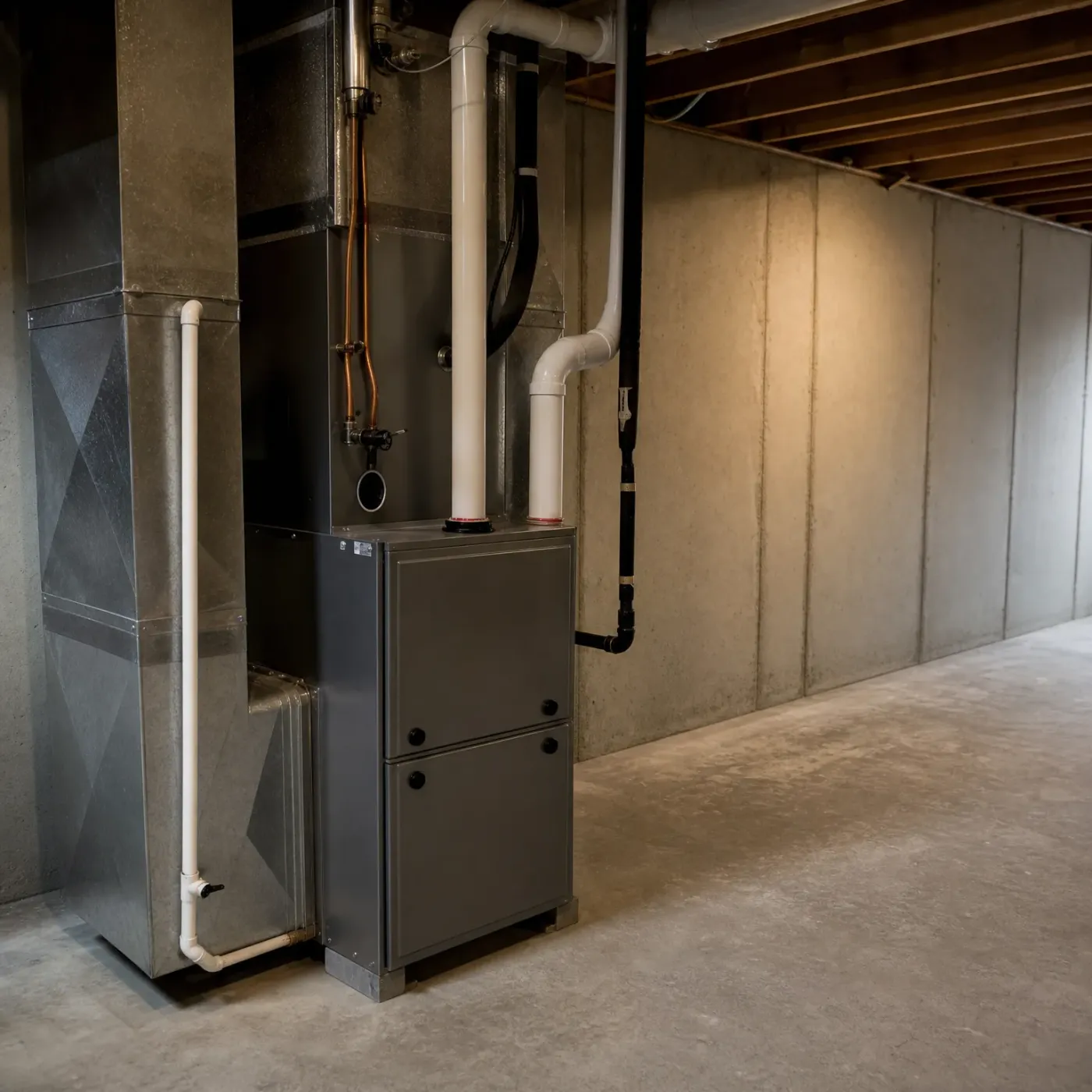
A gray high-efficiency furnace with white PVC vent pipes stands beside sheet-metal ductwork and a water heater in an unfinished basement with concrete walls and wood framing.

Furnace holding steady

This is what a furnace running right looks like: steady flame, tight connections, a clean run of ductwork overhead. It heats the house evenly and shuts off when it's supposed to. If yours looks and acts like this, keep up with yearly service and let it run.

A beige gas furnace with a metal flue pipe stands in a basement against concrete block walls, beside sheet-metal ductwork, copper and white plastic pipes, and a water heater at right.

Furnace on its way out

An older furnace like this one has had years to wear down. The ductwork shows its age, the plenum has rusted at the seams, and the unit works harder for the same heat. Once a furnace gets here, repairs start costing more than they're worth, and replacement is worth asking about.

How hard does a Douglas County winter run your furnace?

  • Winter nights average 17°F

    Overnight lows average 17°F in December, January and February here, so your furnace has to work through real cold, not just a chill.

  • Heat runs October through May

    Heat runs October through May in Douglas County, about eight months of the year your furnace is on call.

  • 72% of homes heat with gas

    72% of homes in Douglas County heat with gas, so most of what's written about furnace replacement here is written for a system like yours.

NOAA nClimDiv 1991-2020 · ACS 2020-2024

An older man with gray hair, a dark coat and scarf dusted with snow stands in a warmly lit entryway with an open wooden door, a table lamp, framed pictures, and a plant in a vase.
An older man with gray hair and a beard wearing a dark snow-dusted coat stands in a home entryway, with a lamp-lit living room and a wooden staircase behind him.
An older man with gray hair and a beard, wearing a dark snow-dusted coat, stands in a warmly lit home entryway with a hallway, console table with lamp, patterned rug, and living room visible behind him.
A gray-haired bearded man in a dark snow-dusted coat and scarf stands inside a dimly lit home entryway, with a hallway, framed picture, lit table lamp and staircase behind him.
A beige high-efficiency furnace in an unfinished basement, with white PVC vent pipes, a yellow gas line, metal ductwork, and exposed wood framing on a concrete floor.
A furnace like this holds its heat evenly through an Omaha winter, running clean and quiet on the coldest nights.
An older beige furnace with two louvered vent panels stands on a concrete basement floor, connected to galvanized ductwork and a metal flue pipe, with gas piping and flexible conduit on the wall behind.
Black iron gas pipe and a flue pipe this worn are signs the unit underneath is reaching the end of its working life.
A woman wrapped in a thick cream knit blanket sits in an armchair beside a lit table lamp, with an open book in the foreground and a frost-covered window behind her.
A smiling older woman with gray shoulder-length hair in a cream cable-knit turtleneck sweater stands behind a wooden board holding a round loaf of bread, in a warmly lit kitchen with a dark window and shelves behind her.
A gray two-panel furnace stands on a concrete basement floor beside large sheet-metal ductwork, with white PVC vent pipes, a metal flue, and a black gas line with a yellow flexible connector running above it.

Get matched with a furnace pro in Douglas County

Send the form and stop researching installers for the new furnace.

Get matched with a pro who works on furnaces in Douglas County.

Get my match

You're not committing to anything by asking.

Fix It or Replace It

Repair

  • A furnace less than 10 years old is usually still worth fixing if one part has failed, like an igniter or a draft inducer motor.
  • If this is the first real repair it's needed, that points to a furnace that's otherwise sound.
  • A cracked or worn flue pipe can sometimes be replaced on its own without touching the furnace itself.
  • Parts for a furnace still under 15 years old are generally easier to find and less likely to be discontinued.
  • If the gas bill hasn't climbed and the house heats evenly room to room, the furnace is still doing its job.

Replace

  • A furnace running past 15 to 20 years has outlived the point where repair costs make sense against a new unit.
  • Black iron gas pipe or a visibly corroded flue pipe usually means the furnace underneath is near the end too.
  • A furnace that short cycles, or runs long without the house catching up, is losing efficiency that a repair won't fully fix.
  • Rooms that stay cold no matter how long it runs points to a furnace that can no longer keep up with an Omaha winter.
  • A gas bill that's crept up with no other change usually means the furnace is burning more to produce the same heat.
  • Needing a second or third repair within a couple of years is a sign the furnace is failing in more places than one.
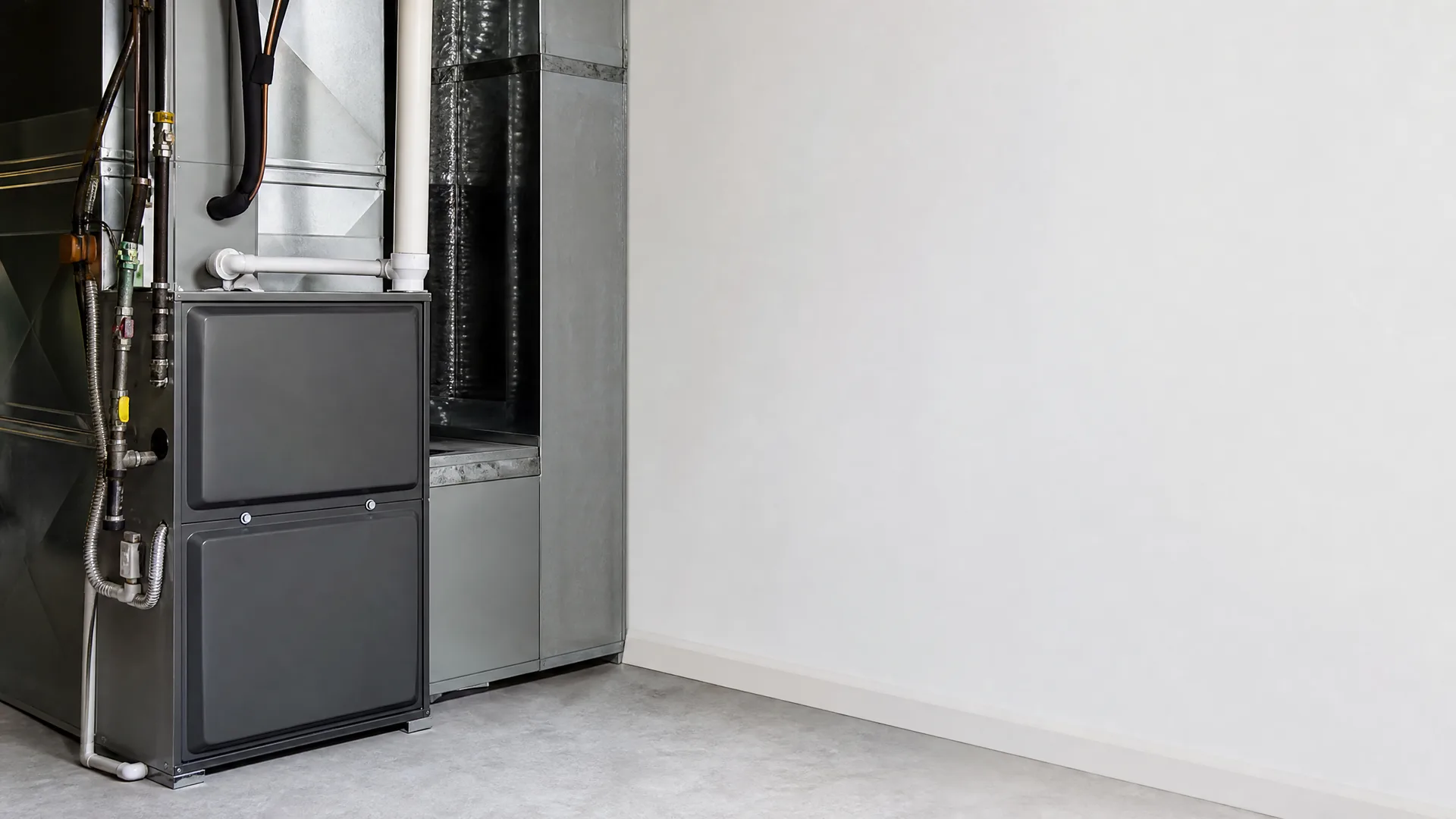
A dark gray furnace unit with connected ductwork, pipes and flexible hoses stands in the corner of an empty room with bare white walls and a concrete floor.

What a furnace is rated to do

Every furnace carries an AFUE rating, a measure of how much of the gas it burns turns into heat for the house instead of going out the flue. A new furnace runs 90 percent or higher. One from the 1990s was likely built closer to 80 percent. That gap doesn't close on its own, and it widens as the heat exchanger ages and the burners wear. The furnace still heats the house. It just burns more gas to do it.

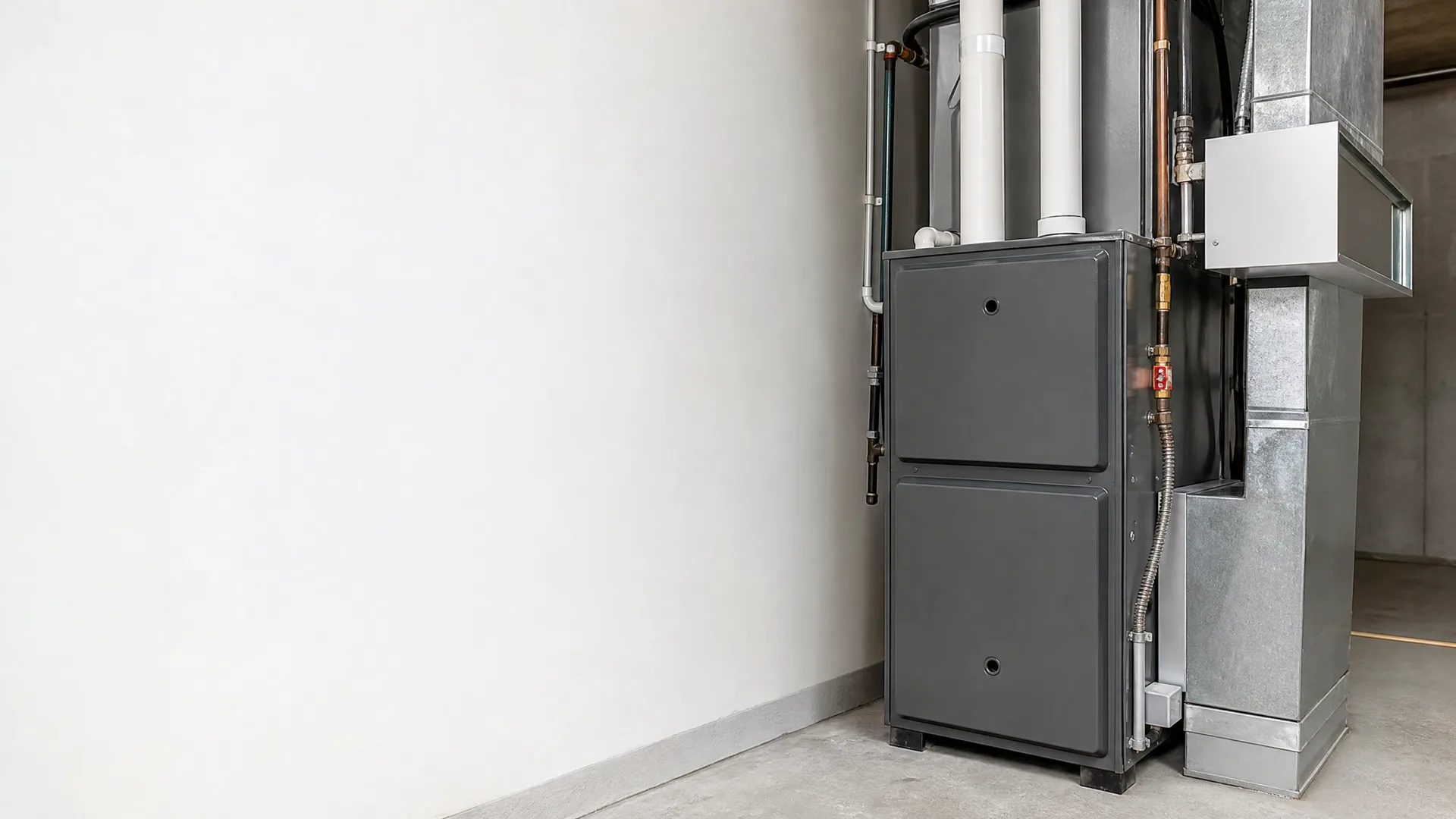
A gray high-efficiency furnace stands against a plain white wall in a concrete-floored utility room, connected to white PVC vent pipes, copper gas lines, and sheet-metal ductwork.

Why age catches up at once

A furnace doesn't wear down evenly across all its parts. The heat exchanger, the blower motor and the control board age on different timelines, but they were installed together and they tend to near the end together too. A homeowner who fixes a draft inducer motor one winter can find the heat exchanger cracked the next. That's why a furnace's repair history tends to bunch up late in its life instead of spreading out evenly over the years.

A furnace that's past 15 or 20 years old, losing efficiency, or needing repairs more often than it used to is telling you it's done, even if it still runs today. Age, the number of repairs, and a rising gas bill together say more than any one of them alone. An Omaha winter doesn't leave much room for a furnace to fail partway through, so the decision is worth making before it's forced on you by a cold morning and no heat. If what you've read here matches what's happening in your house, the next step is getting a straight answer from someone who can look at your furnace in person and tell you where it stands. Send in your information and the search for the right contractor is off your plate. Someone who installs furnaces in Douglas County homes will have what you need to make the call with confidence, and you can go back to worrying about something else.

A gray high-efficiency furnace in an unfinished basement with concrete walls and floor, connected to sheet-metal ductwork, white PVC vent pipes, and a black drain line beneath exposed wood joists.

Find a furnace installation pro in Douglas County

Request a pro

One request ends the search for a furnace installer.

It costs nothing to send, and you don't have to hire anyone.