
Signs your furnace won't last a Nebraska winter
Describe your furnace job, and a local pro who handles it gets in touch.
Find a furnace proWhat are signs my furnace won't make it through a Nebraska winter?
A Nebraska winter doesn't give a furnace much room for error. When temperatures drop below zero for days at a time, a furnace that's struggling has to work harder than it would almost anywhere else, and that's usually when small problems turn into no heat at all. You're probably noticing something off already: a smell, a noise, a room that won't warm up, or a utility bill that's climbed. The question is whether what you're seeing means the furnace is on its way out.
Short cycling, yellow flame or rising gas bills mean it may not last the winter
A furnace that turns on and off in short bursts, blows air that's gone lukewarm, or makes a grinding or screeching sound when it starts is wearing out a part that will eventually fail outright. A burner flame that's yellow instead of blue points to a combustion problem that gets worse under heavy use, not better. So does a gas bill that's climbed without a change in how you're running the thermostat. None of these mean the furnace is dead today. They mean it's losing the ability to keep up, and a Nebraska cold snap is exactly the kind of demand that exposes that. The colder it gets outside, the longer the furnace runs, and the less margin it has left.
Short cycling wears the igniter fast
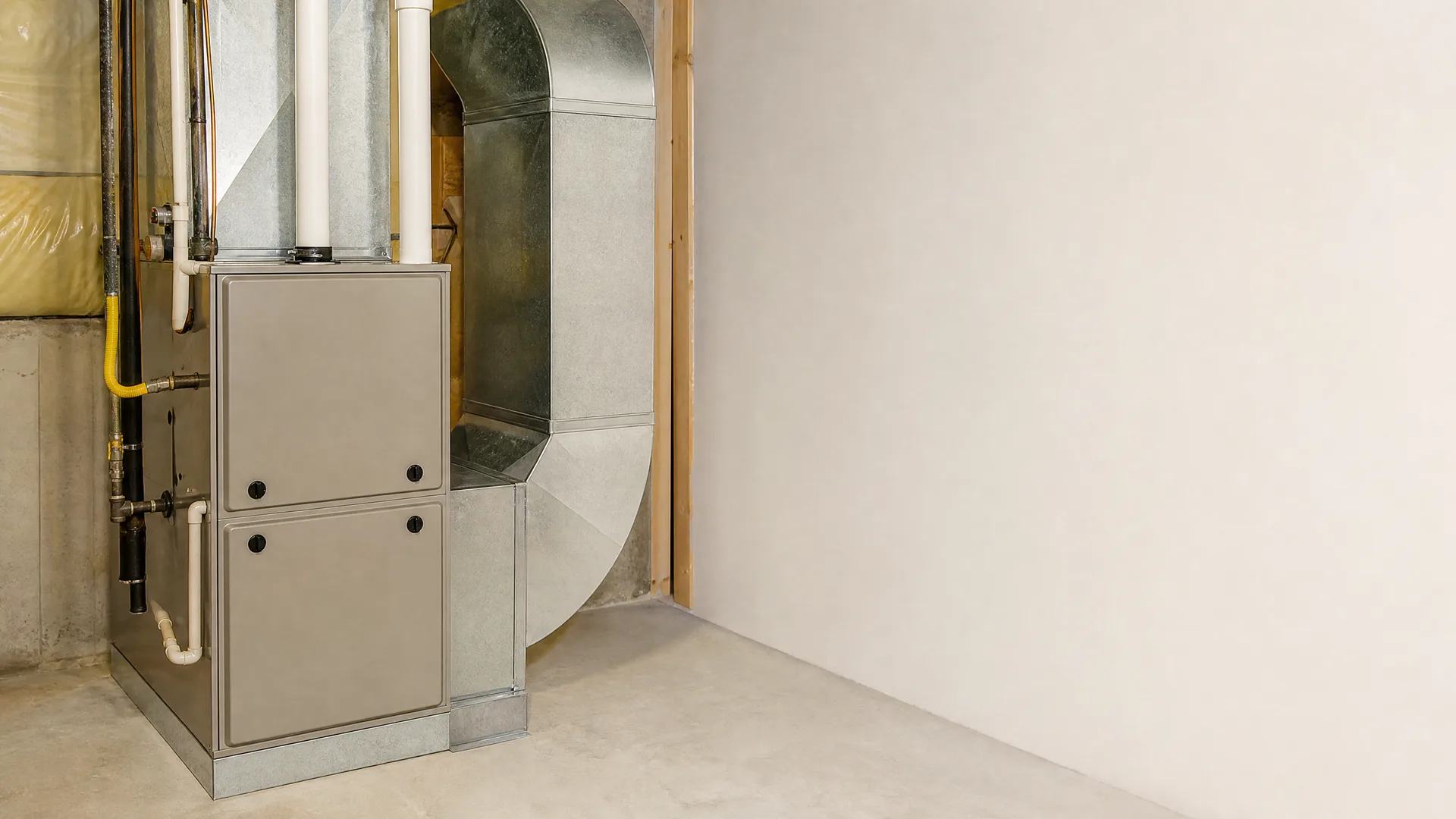
If your furnace shuts off and restarts every few minutes instead of running a full cycle, something is making it think the house is warm when it isn't, or it's overheating and tripping a safety switch. Each restart puts another load on the igniter and the blower motor. An igniter built to light a furnace a few times a day doesn't hold up when it's lighting one every ten minutes through a January cold snap.
Yellow flame means incomplete combustion
Open the panel and look at the burner flame. It should be blue, steady, and mostly even across each burner. A yellow or flickering flame usually means the gas isn't burning clean, which can point to a dirty burner or a cracked heat exchanger. This matters more in Nebraska than in a mild climate, because a furnace running flat out for days at zero or below is pushing that bad combustion harder and longer than it would in a short cold snap.
Winter nights average 17°F statewide
Seventeen degrees is the average overnight low here in December, January and February, and plenty of nights go colder than that. A furnace that's already short cycling or struggling to hold a cycle doesn't get a break on those nights. It just keeps running into the same problem, over and over, until something fails.
NOAA nClimDiv 1991-2020 county normals weighted by homes
A furnace that might make it
If yours heats evenly, cycles on and off at a normal pace, and the air coming out of the vents feels warm and steady, it's probably got another winter in it. An older unit can still run fine if nothing inside it has started failing yet. A furnace that holds its temperature setting without the house drifting a few degrees either way is doing its job the way it was built to. Minor things like a pilot light that needs relighting once in a while, or a furnace that's a little loud when it kicks on, don't mean the system is on its way out. Those are things a repair can usually settle without replacing anything major. If the furnace has been serviced and nothing was flagged, that's a good sign too.
A furnace that probably won't
If the furnace has already failed once this fall, or it's making a new noise like a screech or a bang when it starts up, that's a different situation. A cracked heat exchanger, a failing igniter, or a blower motor that's starting to strain won't fix themselves, and they tend to get worse exactly when the furnace is working hardest, which in Nebraska means the coldest week of January. A furnace that can't keep the house above 65 when it's in the single digits outside is already behind. Waiting to see how it does during the next cold snap isn't a plan. A local contractor who works on these systems all winter can tell you in one visit which situation you're actually in.


Thermostat calls for heat and opens the gas valve
Igniter glows hot enough to light the burners
Burners heat the exchanger and the blower kicks on
Flue carries exhaust out while warm air moves through the ducts




Get your furnace to the right pro

Your request stays with one local pro.
There's no charge for the request.
What a bad winter costs your house
- A furnace that can't keep the house above 65 on a single-digit night will fall further behind once it drops below zero.
- Rooms farthest from the furnace go cold first, and that gap gets wider as the outside temperature drops.
- A cracked heat exchanger can leak exhaust into the house, and running a failing furnace harder in January raises that risk.
- A furnace that stalls out during a cold snap leaves the house without heat right when temperatures are least forgiving.
- Pipes can start freezing within hours once the furnace stops keeping up, especially on an exterior wall.
- A furnace limping along in December rarely improves on its own by February, it just gets asked to do more with less.
A furnace that's falling behind doesn't fail all at once. It shows up first as a house that feels a little off. You bump the thermostat to 70 and the living room gets there, but the bedroom down the hall stays cold enough that someone starts sleeping under two blankets instead of one. That gap between rooms is worth paying attention to, because it tends to grow, not shrink, as the outside temperature drops. The same furnace that can barely hold 65 on a mild night has nothing left in reserve when it's five below.
There's also what you don't see. A heat exchanger with a crack in it can push exhaust into the ductwork instead of out the flue, and a furnace that's already stressed gets pushed harder during the exact stretch of January when it's running the most. That's not a reason to panic, but it is a reason not to ignore a furnace that's been acting up.
And if it does stall out during a cold snap, the clock starts right away. Pipes on an exterior wall can start freezing within hours once the heat stops moving through the house. A furnace that's struggling in December doesn't tend to fix itself by February. It's usually running on less margin every week, asked to do more with equipment that already has less to give.




The signs are what they've always been: short cycling, cold rooms that stay cold, a smell when it kicks on, a flame that looks wrong. None of them get better on their own, and a January cold snap is a bad time to find out which one your furnace has. If something on this page matched what's happening in your house, that's worth a look before the next hard freeze, not after. A furnace tech who works on these all winter in your part of Nebraska has seen this failure before, usually more than once this season, and knows what to check first. You'll be matched with one contractor, licensed and local, so you're dealing with one person who knows the equipment, not a string of calls from companies that don't. Where you stand is simple: either the furnace holds through the next cold stretch or it doesn't, and that's worth knowing now.

Furnace Repair
The right pro for this job

- Tell a local repair pro what your furnace is doing.

- Get the furnace repair search off your mind today.
- Send the request today and stop worrying about who to call.

- One form replaces the calls you'd make to find a furnace pro.
- Describe what your furnace is doing once, in one form.

- The pro who reaches out is licensed in Nebraska.
- Only one pro gets your request, so you hear from one company.