Profile view of a bearded man wearing a dark green baseball cap and a dark gray T-shirt against a plain light background.

Signs of a cracked heat exchanger in Nebraska

Step 1 of 3: Equipment

A cracked heat exchanger usually shows up as a smell, not a sound. You might notice something like formaldehyde when the furnace kicks on, or a headache that goes away when you leave the house. Some furnaces will trip their flame sensor and shut off on their own, since the crack throws off the draft and the flame starts rolling instead of burning clean. You may also see soot near the burner or notice the flame looks yellow instead of blue. The exchanger is the metal chamber that keeps your furnace's exhaust separate from the air blown through your ducts and into your rooms. Once it cracks, that separation is gone, and combustion gas can mix with the air you're heating. Nebraska winters mean this furnace runs for months at a time, so a crack found in December doesn't wait until spring. This isn't something to watch and see about. It needs a furnace technician to confirm with a proper inspection, not guesswork.

A gray high-efficiency furnace in a basement with PVC vent pipes, sheet-metal ductwork, copper and insulated pipes, a water heater at left, and an unfinished wood-stud wall at right.
A furnace running the way it should, with a steady flame and no odd smell when the burners fire.
An older beige furnace with louvered front panels stands on a concrete basement floor beside galvanized ductwork, metal and plastic pipes, exposed wood framing, and a cylindrical water heater at right.
A furnace like this is worth a second look, especially if the flue pipe or the burner box shows rust.
A gray-haired man in a dark sweater sits on a light gray sofa in a living room, looking toward a sunlit window with trees outside.
A gray-haired man in a dark blue sweater sits on a light gray sofa in a sunlit living room, looking off to the side, with a potted plant, shelving unit, and large glass doors behind him.
A bearded man with graying hair in a dark green sweater sits on a sofa in a living room, looking off to the side, with a sliding glass door and a dim kitchen doorway behind him.
A gray-haired man in a dark knit sweater sits on a light gray sofa in a living room, looking toward a sunlit window, with houseplants, a lamp, and framed art in the background.

Keep Running It or Get It Checked

Keep running it

  • A cracked heat exchanger can leak carbon monoxide into the air your furnace is pushing through the ducts.
  • The crack usually gets worse with each heating cycle as the metal keeps expanding and contracting.
  • A furnace in this state can still heat the house fine for a while, which is part of why it gets missed.
  • Running it means gambling on a part that a technician would shut off on sight once they find a crack.
  • Nebraska winters mean this furnace runs for months, not days, so the exposure adds up.

Get it checked

  • A technician can inspect the exchanger with a camera or combustion analyzer, which tells you more than a smell ever will.
  • If the crack is confirmed, the furnace gets shut down until it's repaired or replaced, no guesswork involved.
  • A local contractor who works on furnaces all winter has likely seen this exact failure in other homes nearby.
  • One visit settles it, instead of you calling several companies and explaining the smell or the symptoms each time.
  • If the exchanger checks out sound, you've ruled out the most serious possibility and know what you're actually dealing with.
A gray high-efficiency furnace with two access panels stands in a bare basement corner, connected to sheet-metal ductwork, white PVC vent pipes, and flexible gas and electrical lines.

Why the crack happens at all

The heat exchanger is a metal chamber that flexes a little every time the burners light and every time they shut off. It expands when hot, contracts when cool. Over years of that cycle, metal fatigue sets in at the welds and bends, the same way a paperclip weakens after enough bending back and forth. Once a crack starts, it does not heal. It only opens further with the next cold snap.

A gas furnace with metal ductwork, copper and yellow gas piping stands against a wall in an empty room with a bare concrete floor.

Why Nebraska furnaces run so often

A furnace here might fire a dozen times a day through a Nebraska winter, each cycle another round of heating and cooling for that metal. Gas is cheap to run locally, so a lot of homeowners leave the thermostat set higher and let the furnace cycle more than it might somewhere milder. More cycles over the years means more chances for a weak spot in the exchanger to turn into a crack.

Can a cracked heat exchanger make my furnace trip the breaker or shut off randomly?

Your furnace shuts off mid-cycle for no clear reason, or it seems to trip the breaker, and you're wondering if that's just a bad igniter or something tied to the crack you've read about. A furnace that won't stay running is easy to notice, which is actually useful, since a cracked heat exchanger doesn't always announce itself any other way.

Yes, through the flame sensor or the limit switch, not the breaker itself

A crack lets exhaust gas drift into the air the furnace pulls back in to feed the burners, and that throws off the flame sensor, which shuts the burners down as a safety response. Some furnaces will cycle off and restart a few minutes later, over and over, as the sensor keeps tripping. A furnace can also shut off from a high limit switch if the crack is changing how air moves through the heat exchanger. What it almost never does is trip your electrical panel's breaker. That's a wiring or motor problem, a separate issue from the heat exchanger. If your furnace keeps cutting out mid-cycle, a licensed contractor can check the exchanger itself rather than just resetting it and hoping it holds.

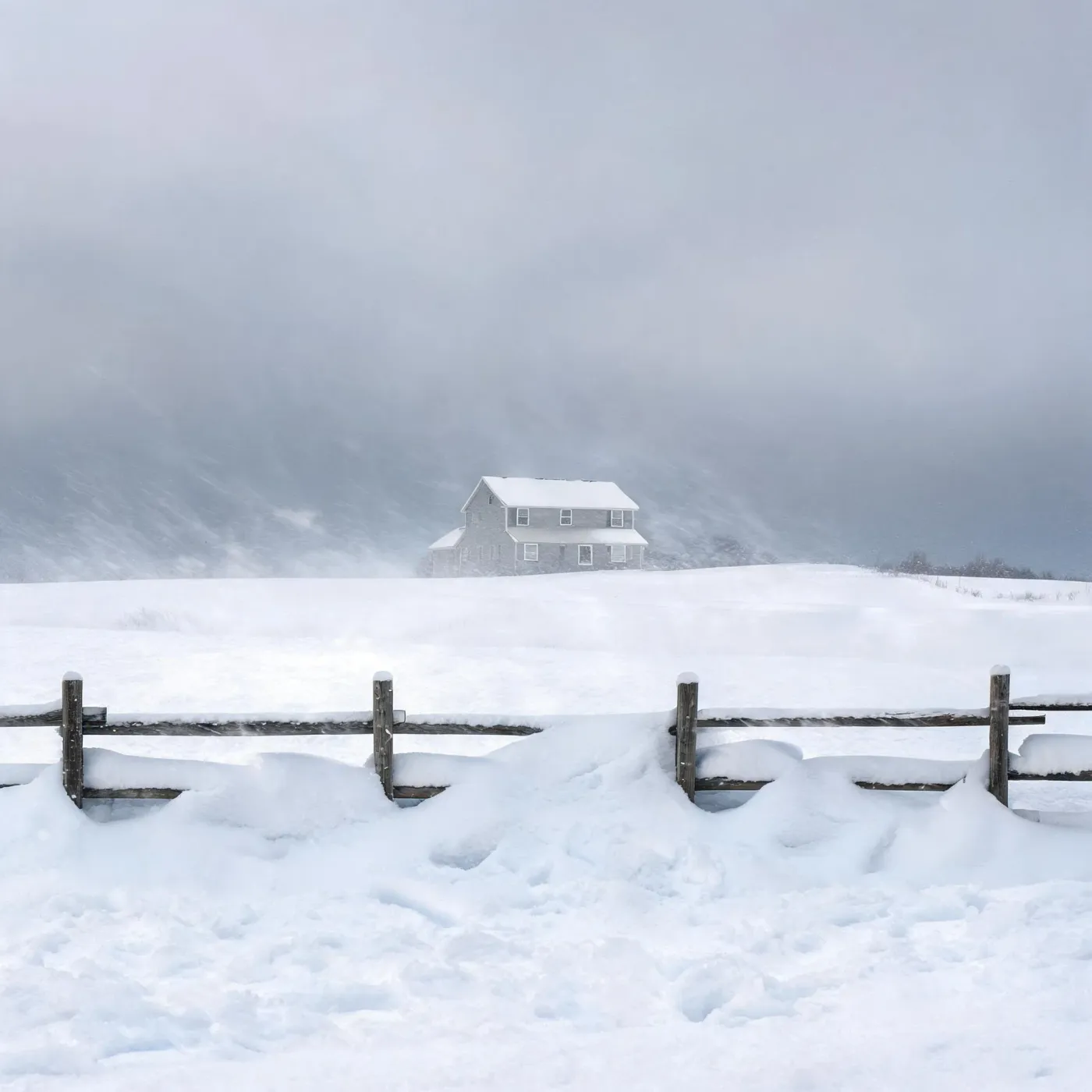
A two-story light-colored house stands on a snow-covered rise under a gray sky during blowing snow, with a partially buried wooden post-and-rail fence in the foreground.

Winter nights in Nebraska average 17°F across the state, according to NOAA climate data. That means your furnace is running long stretches overnight, cycling on and off for hours at a time to keep up. Every one of those cycles flexes the metal in the heat exchanger a little more, and a furnace already cracked will push harder on the coldest nights, which is often when a carbon monoxide smell or a tripped flame sensor shows up first. If you've noticed something off, it's worth having someone look at it rather than spending evenings calling around different HVAC companies, repeating the same description of the smell or the shutoffs to each one, and sorting through quotes. A local contractor who works on furnaces all winter here can usually tell you quickly whether what you're smelling is the exchanger or something else.

NOAA nClimDiv 1991-2020 county normals weighted by homes

No phone calls to make

The pro who reaches out is licensed in Nebraska.

It costs nothing to send, and you don't have to hire anyone.

Your furnace runs most of the night on those 17°F stretches, cycling on and off for hours. A crack that's barely open in October has had a whole winter of that flexing by February.

That's why a furnace that seemed fine at the start of the season can be pushing carbon monoxide into the house by the coldest part of it, with nothing louder than a smell to tell you.

A middle-aged woman with shoulder-length dark hair, wearing a gray cardigan over a cream top, sits in an upholstered armchair and looks toward a sunlit window, with a shelf holding framed pictures and a plant behind her.
A woman and a child wrapped together in a knitted gray blanket on a couch, with the child's head resting on her shoulder and a lit table lamp and houseplant in the background.

Finding a cracked heat exchanger takes more than a flashlight. A technician runs a borescope through the burner compartment and the cabinet access panels to look along the seams and around the burner ports, since that's where the metal flexes hardest every time the furnace cycles. A combustion analyzer samples the flue gas for carbon monoxide through a full heating cycle, because a crack that's closed at startup can open once things warm up. Some technicians run the blower with the burners lit and watch the flame itself, since moving air can pull a flame toward a crack that looks fine when the air is still. A smoke or pressure test can catch the same kind of crack, one that only shows up once the metal's hot and expanded. Inside the cabinet, rust streaks or soot near the exchanger are often the first clue, left behind by combustion gas that's been escaping the sealed chamber for a while before anyone noticed a smell or a short cycle.

How a Technician Actually Checks

  • A technician checks the exchanger with a borescope, a thin camera run through the burner compartment and the cabinet access panels.
  • They look for hairline splits along the seams and around the burner ports, where the metal flexes most with every cycle.
  • A combustion analyzer reads the flue gas for carbon monoxide levels while the furnace runs a full heating cycle, not just at startup.
  • Some techs run the blower with the burners firing and watch for the flame pattern to waver or pull toward a crack, since moving air can expose a leak a still flame won't show.
  • A pressure or smoke test can reveal a crack that only opens once the metal heats up and expands, which a cold inspection would miss.
  • Rust or soot patterns inside the cabinet near the exchanger often mark where a leak has already been pushing combustion gas out of the sealed chamber.
An older gas furnace with two white PVC vent pipes stands on a concrete basement floor beside galvanized sheet-metal ductwork, flexible conduit, and piping along a wall.
Before you get your furnace repair
A gray high-efficiency furnace with white PVC venting pipes stands on blocks in a basement next to sheet-metal ductwork, with exposed wood framing on the left and a concrete wall and floor.
After you get your furnace repair
A beige high-efficiency furnace stands on a concrete basement floor beside sheet-metal ductwork, with white PVC vent pipes, flexible conduit and copper and steel piping running up a concrete wall to an electrical box.

A furnace that's holding up

The burner flame sits steady and blue, the flue and PVC lines run clean overhead, and there's no smell when the burners fire. Dust and age alone don't mean a cracked exchanger, especially if the cabinet and gas lines look this kept up.

An older gas furnace with a louvered front panel stands on a concrete basement floor beside large sheet-metal ductwork, a metal flue pipe, copper piping and wood framing.

A furnace worth checking

Dust built up around the base, an older cabinet, and a flue pipe that's seen years of heat cycles are all worth a second look. None of this proves a crack on its own, but it's the kind of furnace a technician should open up and check with a borescope.

What are you noticing when your furnace runs

Maybe it's a smell when the burners first light, something sharp or sour that fades after a few minutes. Maybe the flame looks different than it used to, flickering or leaning instead of sitting still. Some people notice soot around the burner compartment, or a fine layer of dust that looks sooty rather than gray. Others just feel off while the furnace is running: a headache, dry eyes, a tired feeling that lifts once they step outside. None of these by themselves prove a crack. But a furnace that's cracked and still running is pushing combustion gas somewhere it shouldn't go, and in a house that's shut up tight through a Nebraska winter, that gas doesn't have many ways to leave.

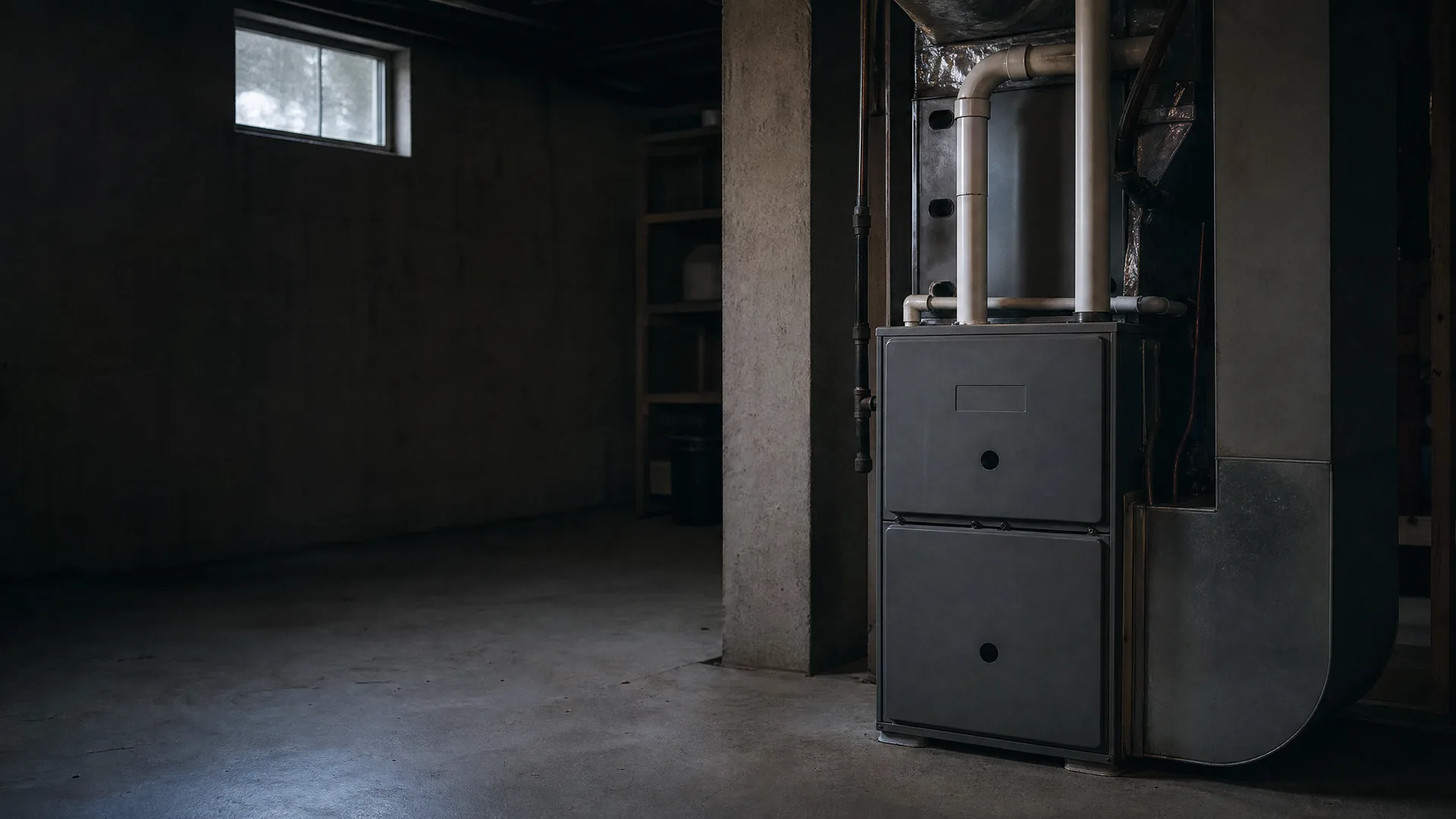
A gray high-efficiency furnace with white PVC vent pipes and attached ductwork stands beside a concrete support column in a dim, empty basement with bare concrete walls and floor and a small window.

You're down in the basement around six, putting the storage bins back after digging out the winter coats. The furnace sits quiet against the wall, not due to kick on for a few more minutes. The air near it has that faint haze you get when something hasn't run in a while, dust stirred up off the top of the cabinet. It's dark enough outside that the one bulb overhead is doing all the work. You stand there a second, waiting to see if it'll fire while you're down there, half listening for the burners. Nothing yet. You head back upstairs, leaving it cold and still behind you, the dust settling again in the quiet.


Winter nights average 17°F statewide

At 17°F your furnace isn't cycling for twenty minutes and resting. It's holding a long burn to keep the house warm through the night. That's hours of the heat exchanger expanding hot and pulling back cool, every night, all winter.

NOAA nClimDiv 1991-2020 county normals weighted by homes

  1. The burners ignite and heat the metal walls of the exchanger.

  2. Hot combustion gas passes through the exchanger on its way to the flue.

  3. A blower pushes house air across the outside of that same metal.

  4. Heat moves through the metal into the air without the two mixing.

A closed silver laptop and a glazed ceramic mug on a wooden table, with a blurred kitchen counter, potted plant, cutting board and window in the background.

If something feels off when your furnace runs, get it checked

A smell when the burners light, a flame that flickers instead of sitting still, a furnace that shuts off mid-cycle for no reason you can find. Any one of those is reason enough to have someone look at the heat exchanger before the next cold stretch pushes it harder. A crack doesn't heal on its own, and in a Nebraska winter the furnace doesn't get a break long enough to matter.

You don't have to spend an evening searching contractor sites, calling around to see who answers, and explaining the smell and the flame and the shutoffs over and over to each one. You get matched with one licensed local contractor who works on furnaces like yours all winter and knows what a crack like this usually looks like by the time someone calls. No chasing quotes, no repeating yourself. You explain it once, to the person who's going to fix it.

A living room corner with a beige sofa and cushion, a round wooden coffee table holding a pale ceramic vase of eucalyptus stems and a wooden bowl, and a curtained window with a potted plant above a latticed radiator cover in the background.
Kitchen corner with cream upper cabinets, oak lower cabinets, white marble-look countertop, beige tile backsplash, a ceramic vase of greenery, a wooden cutting board and bowl, and a black-framed window at right.
Interior corner of a room with a white-framed window and wide sill, beige walls with panel molding, a wooden cabinet holding a ceramic vase with a green leafy plant, and blurred shrubs and trees outside.
A wood-framed armchair with beige cushions and a woven lumbar pillow sits in a corner beside a large window overlooking green trees, with a tall ceramic vase holding leafy branches on the left and plaster walls and wood flooring.
Interior corner with a white-framed window above a sill, beige walls with baseboard molding, a greige shaker-style cabinet with brass knobs and a potted plant on top, light wood flooring and a woven jute rug.
A dark-framed six-pane window with white trim and sill set in gray horizontal lap siding, with hydrangea shrubs below and a white column and shingled roof section at left.

One form, no calling around

Only one pro gets your request, so you hear from one company.

Skip the search

No charge to send it. You decide if you hire them.