Furnace tune-up before winter in Bellevue, NE

Step 1 of 3: Equipment

A furnace tune-up before winter means having a contractor check and clean your furnace while it is still warm out, before you need the heat every day. In Bellevue, that usually means getting it done sometime in October. A tune-up covers things like testing the igniter, checking the flame sensor, inspecting the heat exchanger for cracks, and making sure the blower and venting are working the way they should. Winters here get hard, and most homes run on gas furnaces that sit unused all summer. A furnace that has not run in months can have a cracked igniter, a dirty flame sensor, or a clogged vent that only shows up once it is cold and the furnace has to run every day. Catching that in October, rather than during the first cold snap in December, means you are not without heat on the night you need it most.

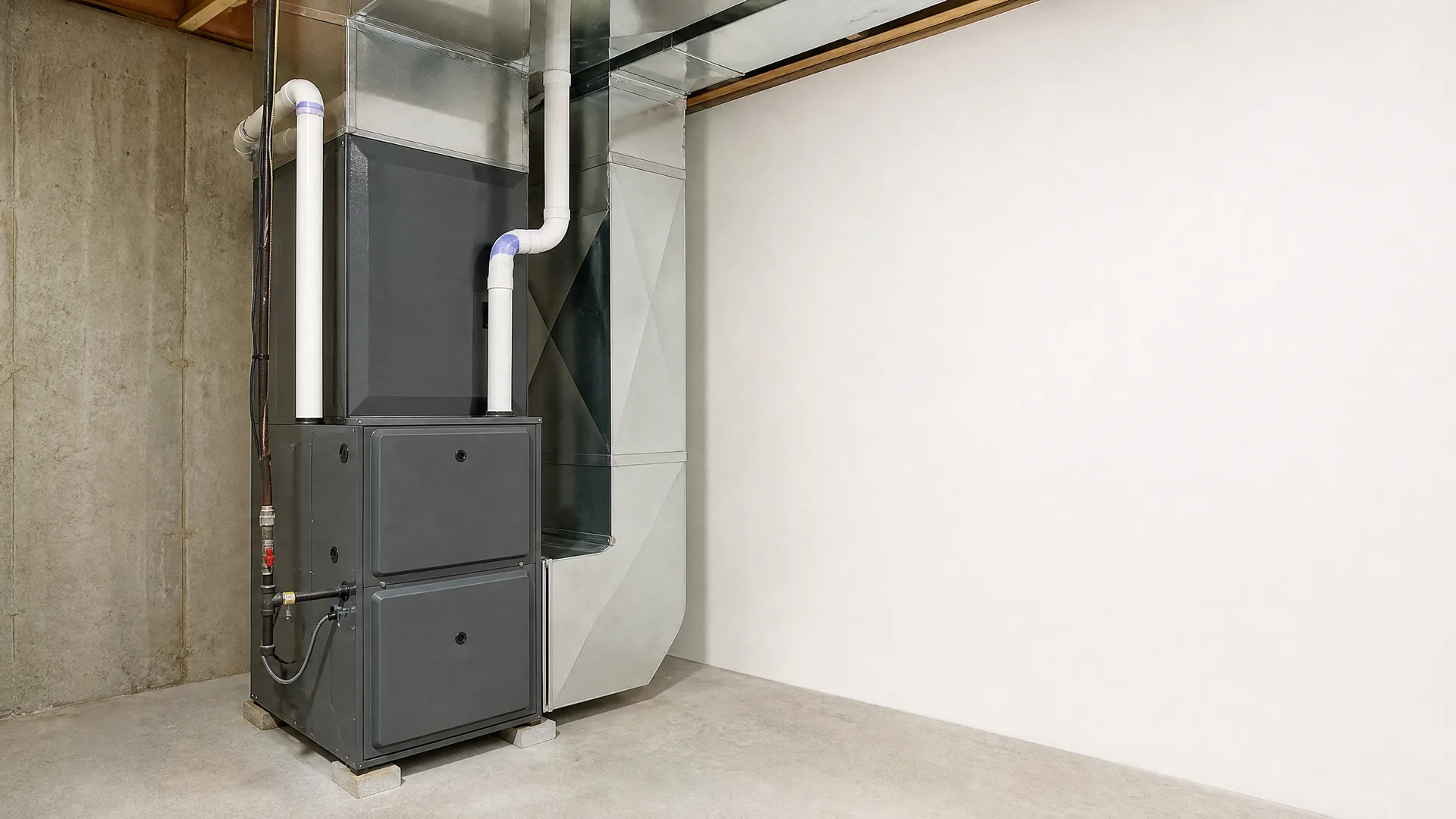
A dark gray high-efficiency furnace with white PVC vent pipes stands against a concrete basement wall, connected to sheet-metal ductwork running along the ceiling joists.

Why the igniter matters most

Most furnaces now use a hot surface igniter instead of a standing pilot. It is a thin strip that glows to light the burners each time the furnace calls for heat. That strip wears out with age and use, and it is one of the most common reasons a furnace won't start on a cold morning. A tune-up checks its condition before it fails, not after you're already without heat.

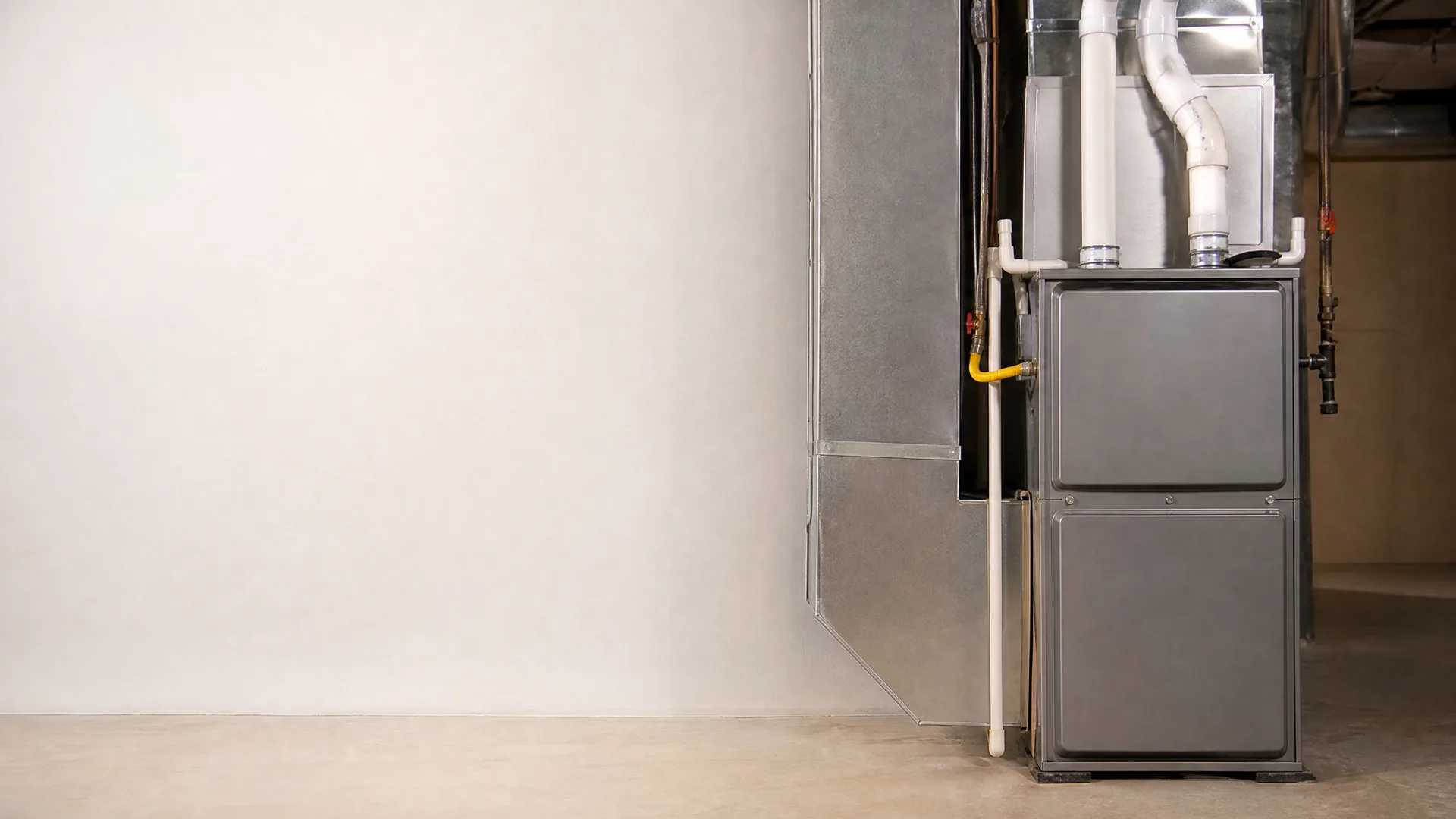
A gray high-efficiency furnace with white PVC vent pipes, a yellow gas line and metal ductwork stands against a plain light wall in a basement with a concrete floor.

What a clogged filter does

Your furnace pulls air through the filter, across the heat exchanger, and back out through the ducts. When that filter is clogged, the furnace has to work harder to push air through it, and the heat exchanger can run hotter than it should. Over a full winter of daily use, that strain adds up. Checking and replacing the filter is a basic part of getting the furnace ready for the months ahead.

Why does a furnace tune-up matter so much here?

  • Winter nights average 17°F

    Those 17°F nights are when a furnace that's been coasting since spring gets asked to run hard, for hours at a stretch, without a break.

  • Heat runs October through May

    Eight months of heat is eight months a worn igniter or a dirty flame sensor has to make it through. A tune-up in October is what gets it there.

  • 72.8% of homes heat with gas

    Almost three out of four homes around here are counting on gas heat through those eight months, which is exactly what a tune-up checks.

NOAA nClimDiv 1991-2020 · ACS 2020-2024

Get the tune-up done

A contractor checks the igniter, tests the flame sensor, and clears anything that built up over the summer while the furnace sat idle. If a part is wearing out, you find out in October, with time to get it replaced before a cold night makes the decision for you. Your furnace starts the winter running the way it's supposed to, and you're not left guessing whether it will carry you through a stretch of 17°F nights. You also skip the work of lining this up yourself: finding a contractor, calling around, and explaining the same thing more than once.


Skip it and hope

Plenty of furnaces make it through winter without ever being looked at. But a furnace that's been sitting since April doesn't announce a weak igniter or a dirty flame sensor until it's asked to run for hours straight on a hard night. That's usually in December or January, not October, and usually when you need the heat most. If it fails then, you're calling around for someone who can come out fast, explaining the problem from scratch, and waiting on whoever can fit you in during the busiest stretch of the year.

An older man with gray hair and a beard, wearing a dark coat dusted with snow, stands smiling in a doorway of a warmly lit home with a sofa, lamp and window visible behind him.
An older man with grey hair and a beard, wearing a dark coat dusted with snow, stands in a dimly lit entryway with a ceiling lamp, a side table with two shaded lamps, and a lit fireplace visible in a room beyond.
A bearded older man in a dark snow-dusted coat and scarf stands just inside a home's front door, with a lamp-lit room and snowy window visible behind him.
An older man with gray hair and a beard stands in a doorway of a home, wearing a dark coat dusted with snow, with a lit fireplace and lamp visible in the blurred room behind him.

Get matched with a furnace pro in Sarpy County

You could call around Bellevue yourself, get a few contractors on the phone, explain the same thing about your furnace three or four times, then sit with the quotes trying to tell which one actually means something. That's hours you probably don't have before the cold sets in. Submit the request here and one contractor who works on furnaces in Sarpy County gets your information and reaches out to you directly. No stack of calls to make, no retelling the story to five different people. Your furnace has been sitting idle since spring, and the first hard freeze won't wait for you to finish shopping around. Getting matched now means the checking and testing happens while there's still time to fix anything that turns up, instead of finding out on a 17°F night when the furnace won't catch.

What a skipped tune-up looks like

A furnace that didn't get checked in October usually still starts up fine in November. The trouble shows up on the nights it has to run for hours without stopping, which in Bellevue means January and February. That's when a cracked igniter finally gives out, or a flame sensor coated with residue starts shutting the burners off a few minutes after they light. You end up calling a contractor on a night when the house is getting cold and whoever's available first gets the job, instead of a contractor you chose with a few weeks to spare.

What it costs you to wait

A furnace running on a dirty flame sensor or a weak igniter cycles more than it should, short bursts of heat instead of one steady run, and gas use climbs to make up for it. None of that shows up as an obvious problem. The thermostat still reads warm. The bill just runs higher than it would with the furnace cleaned and adjusted. Catching it in October means a contractor can test the flame sensor and clean what built up over the summer before any of that starts, instead of you noticing it only once a January gas bill arrives higher than last year's.

A beige sheet-metal furnace with a louvered upper panel stands on a concrete basement floor, connected to galvanized ductwork, white PVC vent pipes, and a metal gas line with an electrical box.
Before you get your furnace maintenance
A gray high-efficiency furnace with white PVC vent pipes stands in an unfinished basement beside sheet-metal ductwork, gas piping, and insulated stud walls on a concrete floor.
After you get your furnace maintenance

Skip the tune-up and the furnace still runs on the first cold morning. Nothing tells you the igniter is on its last cycles or the flame sensor is coated until the night it actually has to work.

Get it looked at in October and a worn part gets found while there's still time to order it and get it swapped. That's the difference between a scheduled fix and a cold house on a January night.

Winter nights average 17°F

A 17°F night doesn't ask much of a furnace that's running fine. It asks a lot of one with a weak igniter or a flame sensor caked in soot. Those are the nights a small problem turns into no heat at all.

NOAA nClimDiv 1991-2020

Where that leaves your furnace

  • A furnace tune-up in October means a contractor checks it while it's still warm out, not on the first cold night.
  • The igniter and flame sensor are the parts most likely to fail, and both get tested during a tune-up.
  • Bellevue winters bring nights near 17°F that ask a furnace to run for hours without stopping.
  • A problem found in October gives you time to get a part replaced before you need the heat every night.
  • Skipping the tune-up doesn't show up in November; it shows up in January or February when the furnace works hardest.
  • Getting matched with a contractor means you explain your furnace once, not three or four times to different companies.

A furnace tune-up isn't complicated. It means a contractor comes out in October, while the weather still allows it, and checks the parts that wear out: the igniter that lights the burners and the flame sensor that keeps them running. Those two fail more than anything else in a gas furnace, and a tune-up is built around catching that before it happens on its own schedule.

Bellevue gives a furnace a real test. Nights near 17°F mean hours of continuous run time, and that's exactly when a weak igniter or a sensor coated in summer dust gives out. A furnace that starts fine in November can still fail in January, once it's asked to work instead of just turn on.

October is what makes the difference. Find a worn part then and there's time to replace it before a cold night depends on it. Find it in January and you're without heat on the night you needed it most.

None of that changes what it takes to get there. Calling around, explaining the same furnace problem to three or four companies, then sorting through quotes that don't match up, that's the part that costs you time. Getting matched with a contractor means you explain it once, to someone who follows up with you. The tune-up still has to happen. What goes away is the work of finding who does it.

A woman wrapped in a cream textured blanket sits in an armchair beside a lit lamp and a dark window, with an open book in the foreground.
A woman in a cream knit sweater sits in an armchair with her eyes closed near a window showing yellow autumn foliage, with a mug on a round wooden side table beside her.

Find a furnace maintenance pro in Sarpy County

Getting a furnace checked before winter means a contractor looks at the igniter and flame sensor while the weather is still mild, not after a 17°F night finds the weak one. It also means skipping the part where you call around Bellevue, repeat the same furnace story to three contractors, and sort through quotes on your own. One call gets you matched with a contractor who handles that, and they reach out to you.

Connect with a pro

Fill out one form instead of calling around for a furnace tune-up.

It costs nothing to send, and you don't have to hire anyone.





