Tell us about the job
Takes about a minute. No obligation.
Homes in Saunders County, NE run heat about eight months a year, from October through May. The burner and ignition system cycle through that season repeatedly, and the heat exchanger takes the same thermal stress every time. A contractor diagnosing a furnace repair here checks the igniter and flame sensor before anything else, because those components accumulate failure long before the cabinet rusts or the blower seizes. The heat exchanger itself warrants a close look too, since repeated expansion and contraction through a long heating season opens cracks that a visual pass in a mild year would never catch.
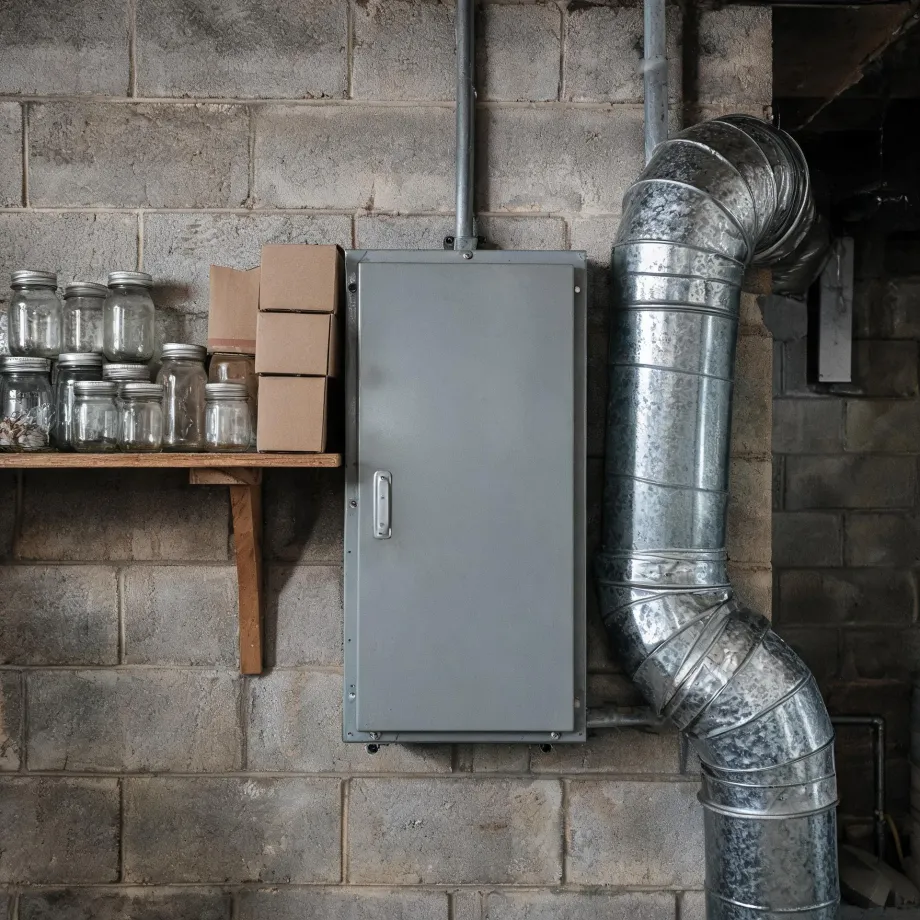
Ductwork sized for a furnace that left the market a generation ago tells a contractor something specific when the current unit fails: the repair scope is set by what the opened heat exchanger and burner assembly turn out to contain, and whether the parts they need are still manufactured. Half the homes in Saunders County, Nebraska were built in 1973 or earlier (2020-2024 ACS 5-year). That much history between a house and its heating means components have been swapped more than once, and a furnace running in that house today may take parts from a short supply chain. A contractor opening the cabinet finds out which situation they are actually in.
The Parts of a Furnace a Contractor Checks First
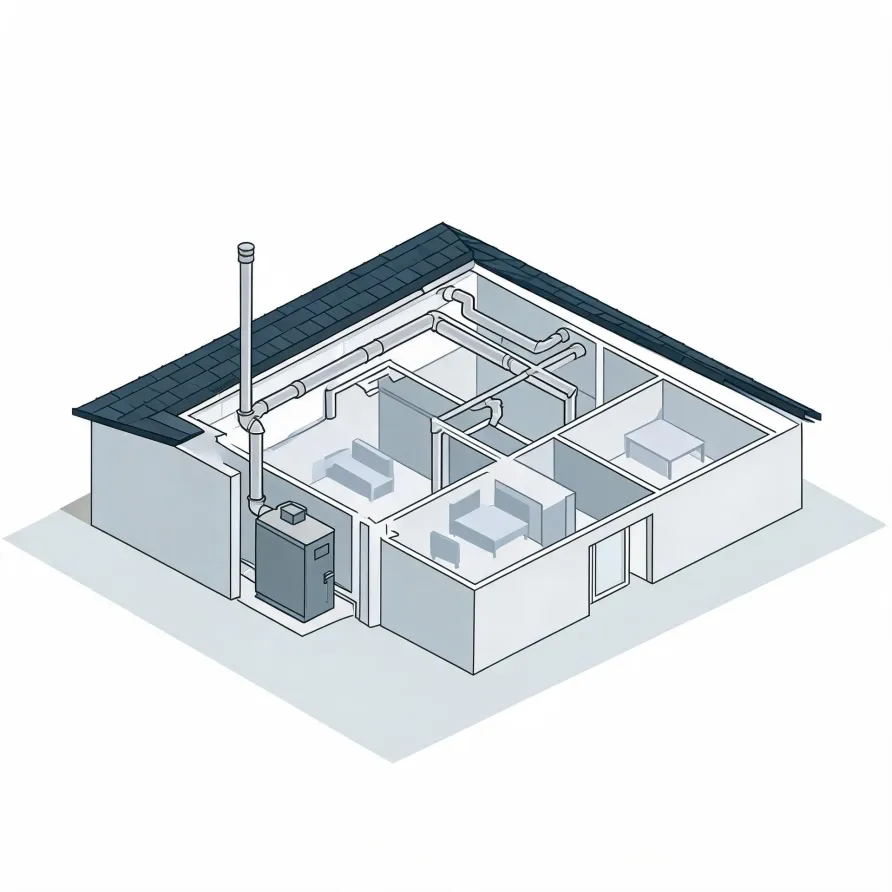
The furnace itself sits in the basement, utility room, or mechanical closet and is where heat is produced. A contractor working a repair call starts here, at the heat exchanger, burners, and igniter, because a crack, a dirty burner, or a failed igniter accounts for many of the calls where the system runs but heats poorly or does not light at all.
The blower motor pushes conditioned air from the furnace cabinet into the supply side of the duct system, and the flue or exhaust vent carries combustion gases out of the house through the wall or roof. The control board ties both of those to the thermostat signal, and a fault there can look like a dozen different problems until a contractor reads the error codes.
The drawing shows a typical furnace layout, and a licensed contractor determines which components apply and what condition they are in for your specific home.
Get matched in Saunders CountySaunders County, by the record
152 severe weather events were recorded in Saunders County, Nebraska between 2015 and 2024.
NOAA National Centers for Environmental Information, Storm Events Database, bulk CSV export, events 2015-01-01 through 2024-12-31.Half the homes in Saunders County, Nebraska were built in 1973 or earlier (2020-2024 ACS 5-year).
U.S. Census Bureau, 2020-2024 American Community Survey 5-Year EstimatesSaunders County, Nebraska holds 10,276 housing units (2020-2024 ACS 5-year).
U.S. Census Bureau, 2020-2024 American Community Survey 5-Year EstimatesOwners occupy 82.1% of the occupied homes in Saunders County, Nebraska (2020-2024 ACS 5-year).
U.S. Census Bureau, 2020-2024 American Community Survey 5-Year EstimatesCodes & Standards Behind Furnace Repair in Saunders County, Nebraska5 sourced rules & standards
What HVAC Repair Looks Like in Saunders County
Non-weatherized gas furnaces manufactured on or after November 19, 2015 must reach 80.0 percent AFUE.
Non-weatherized oil-fired furnaces manufactured on or after November 19, 2015 must reach 83.0 percent AFUE.
Mobile home gas furnaces manufactured on or after November 19, 2015 must reach 80.0 percent AFUE.
Non-weatherized gas furnaces manufactured on or after December 18, 2028 must reach 95.0 percent AFUE, up from the 80.0 percent minimum that applies to units manufactured before that date.
Licensing and Legal Requirements in Saunders County, Nebraska
Nebraska requires registration rather than a licence: a contractor must be registered with the Department of Labor before performing any construction work, though anyone earning less than five thousand dollars a year from construction services is not a contractor under the Act at all.
Severe Weather Events in Saunders County
Nebraska weather puts real strain on heating equipment. Hard conditions accelerate wear, and furnaces in Saunders County bear that load directly, which makes local repair knowledge worth more than a general estimate.
152 severe weather events, 2015–2024. Source: NOAA National Centers for Environmental Information, Storm Events Database.