Tell us about the job
Takes about a minute. No obligation.
A furnace repair quote in Johnson County starts with the burner assembly and the heat exchanger, not with the thermostat or the blower. Homes in Johnson County, NE run heat about eight months a year, from October through May. That kind of cycling puts the ignition system through repeated thermal stress every season, and cracks or fatigue in the heat exchanger tend to show up in older units before other faults do. A contractor who skips a close inspection of those parts and goes straight to controls is not working from the actual wear pattern the equipment carries.
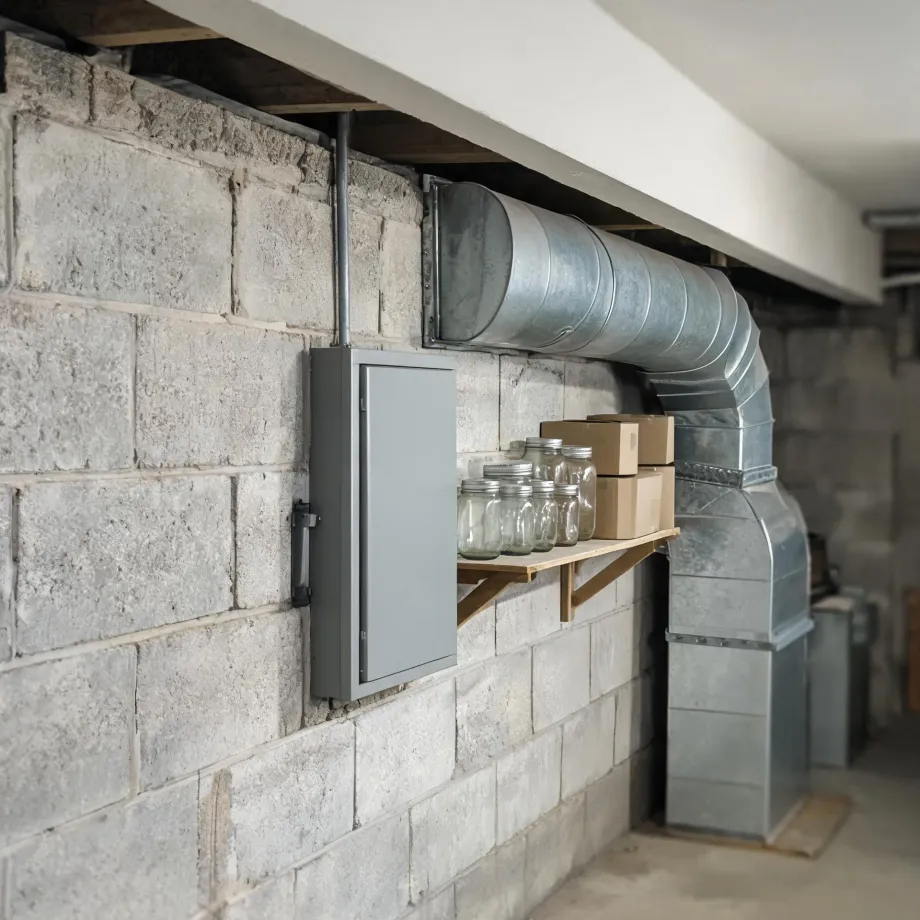
Ductwork in stock this old was sized and routed for heating systems that have since been replaced, often more than once, meaning the furnace a contractor opens today is not what the house was built around. Half the homes in Johnson County, Nebraska were built in 1953 or earlier (2020-2024 ACS 5-year). For a repair, that gap matters most when the opened unit calls for a heat exchanger, burner assembly, or control board that the original manufacturer no longer makes in that configuration. A contractor sourcing parts for a furnace in a house like this checks current supplier catalogs against what the unit actually takes, because an obsolete part number changes whether a repair is viable at all.
The Parts of a Furnace a Contractor Checks First
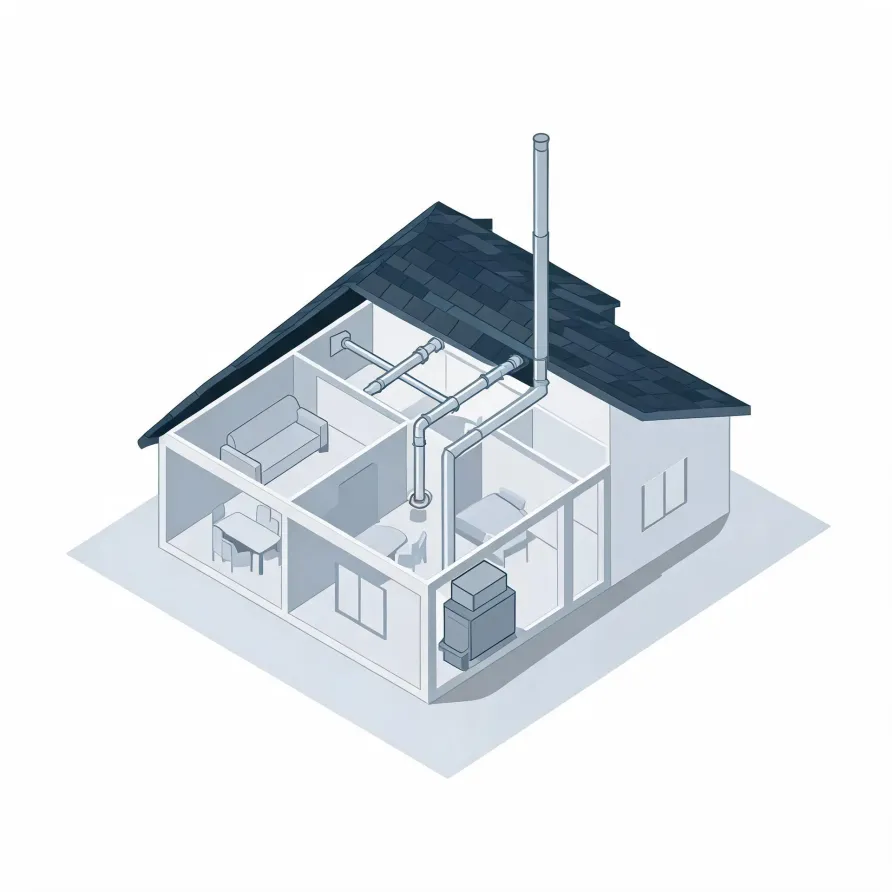
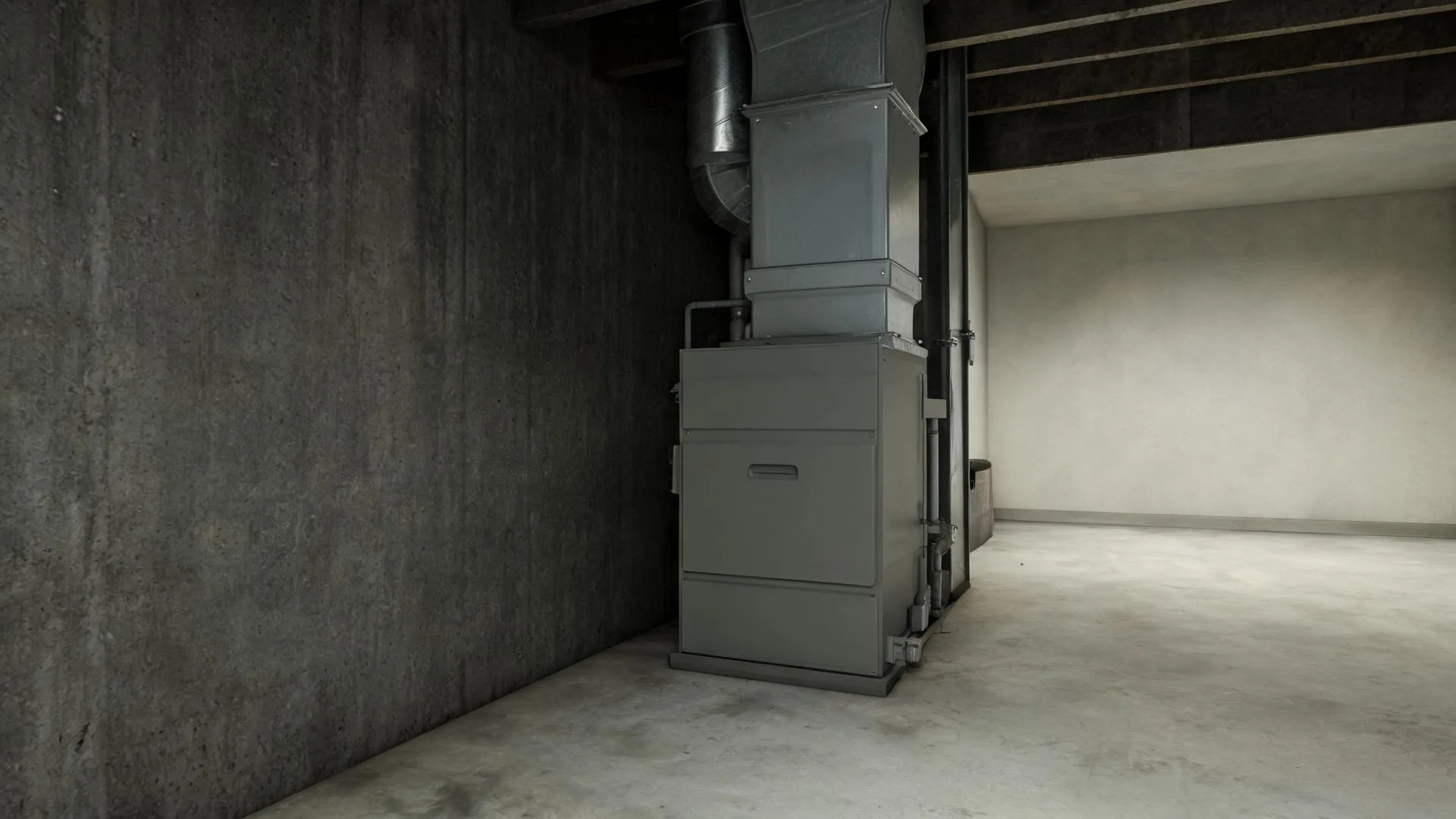
The furnace itself sits in the basement, utility room, or mechanical closet and is the piece a contractor opens first. Inside it, the heat exchanger is the part that fails quietly but seriously: cracks in it let combustion gases into the air supply. The burners, igniter, and flame sensor are the pieces that keep the fire starting and running the way it should.
The blower motor and its wheel sit at the base of the furnace cabinet and push conditioned air into the supply ducts. The flue pipe runs from the top of the unit up and out of the house, and a contractor checks it alongside the draft inducer motor that pulls exhaust through it. The filter housing, usually right at the return-air opening, tells a contractor a lot about how the system has been running.
The drawing shows a typical furnace layout, and a licensed contractor determines which of these components are relevant to your specific system and situation.
Get matched in Johnson CountyJohnson County, Nebraska, by the numbers
81 severe weather events were recorded in Johnson County, Nebraska between 2015 and 2024.
NOAA National Centers for Environmental Information, Storm Events Database, bulk CSV export, events 2015-01-01 through 2024-12-31.Half the homes in Johnson County, Nebraska were built in 1953 or earlier (2020-2024 ACS 5-year).
U.S. Census Bureau, 2020-2024 American Community Survey 5-Year EstimatesJohnson County, Nebraska holds 2,098 housing units (2020-2024 ACS 5-year).
U.S. Census Bureau, 2020-2024 American Community Survey 5-Year EstimatesOwners occupy 67.2% of the occupied homes in Johnson County, Nebraska (2020-2024 ACS 5-year).
U.S. Census Bureau, 2020-2024 American Community Survey 5-Year EstimatesCodes & Standards Covering Furnace Repair in Johnson County, Nebraska5 sourced rules and standards
What Happens When a Contractor Comes Out
Non-weatherized gas furnaces manufactured on or after November 19, 2015 must reach 80.0 percent AFUE.
Non-weatherized oil-fired furnaces manufactured on or after November 19, 2015 must reach 83.0 percent AFUE.
Mobile home gas furnaces manufactured on or after November 19, 2015 must reach 80.0 percent AFUE.
Non-weatherized gas furnaces manufactured on or after December 18, 2028 must reach 95.0 percent AFUE, up from the 80.0 percent minimum that applies to units manufactured before that date.
Licensing and Legal Requirements in Johnson County, Nebraska
Nebraska requires registration rather than a licence: a contractor must be registered with the Department of Labor before performing any construction work, though anyone earning less than five thousand dollars a year from construction services is not a contractor under the Act at all.
Severe Weather Events in Johnson County
Extreme weather puts real stress on furnace systems, cycling them hard and accelerating wear on components that might otherwise hold up for years. How much of that pressure a furnace faces depends on where it runs, and Johnson County has its own record.
81 severe weather events, 2015–2024. Source: NOAA National Centers for Environmental Information, Storm Events Database.