Tell us about the job
Takes about a minute. No obligation.
A furnace repair quote in Seward County starts with the components that actually cycle: the burner, the heat exchanger, and the ignition system. Homes in Seward County, NE run heat about eight months a year, from October through May. That kind of continuous seasonal demand concentrates wear on the parts responsible for lighting and sustaining combustion, and a contractor who skips straight to the heat exchanger without checking the igniter and flame sensor first is working backward. Cracks in the heat exchanger and fouled burner ports are the findings that show up when a system has been asked to perform that consistently, season after season.
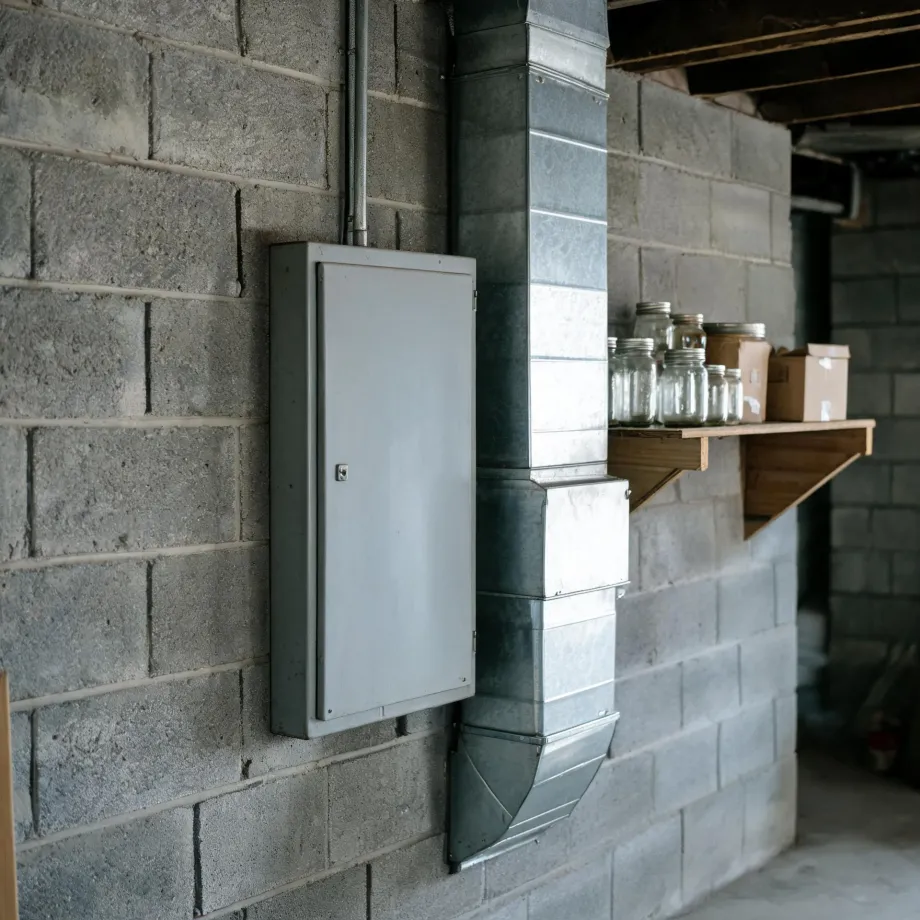
Ductwork in a house built for an earlier generation of heating equipment carries the fingerprints of whatever ran in it before, and the furnace a contractor opens today was dropped into that context later. Half the homes in Seward County, Nebraska were built in 1970 or earlier (2020-2024 ACS 5-year). That span between the building and the burner is where parts availability becomes the pressure point: the older the housing stock, the further back a contractor has to reach into supply chains for heat exchangers, igniters, and control boards sized to what is actually installed. A part that is simply unavailable turns a straightforward repair into a replacement conversation regardless of what the diagnosis shows.
The Parts of a Furnace a Contractor Checks First
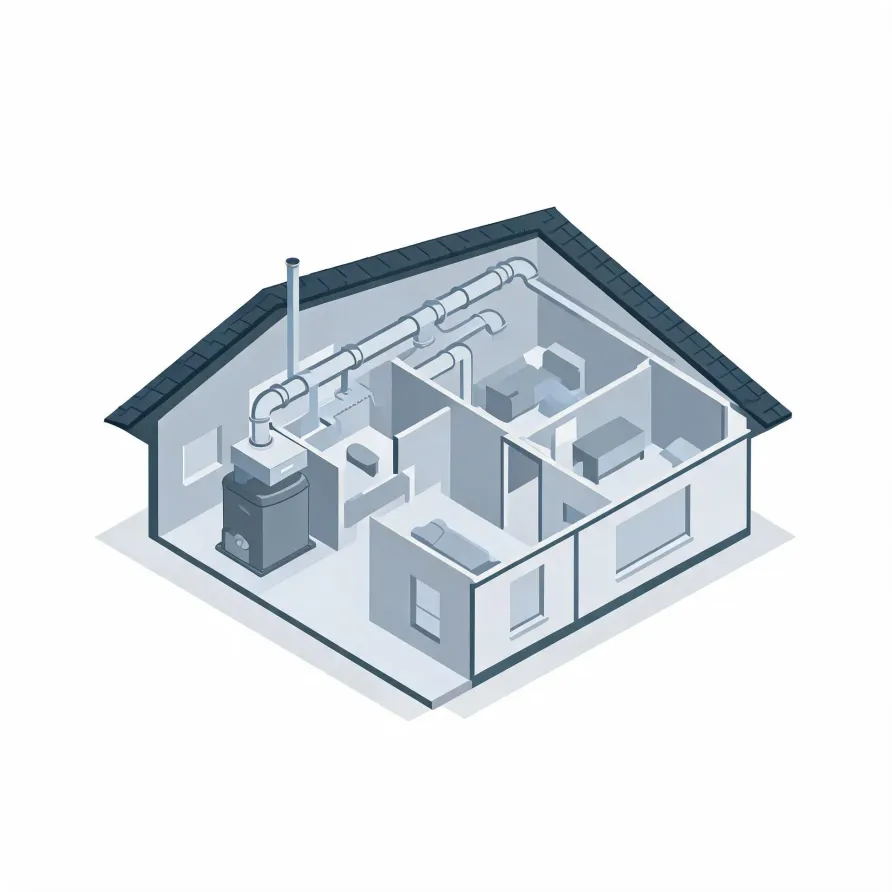
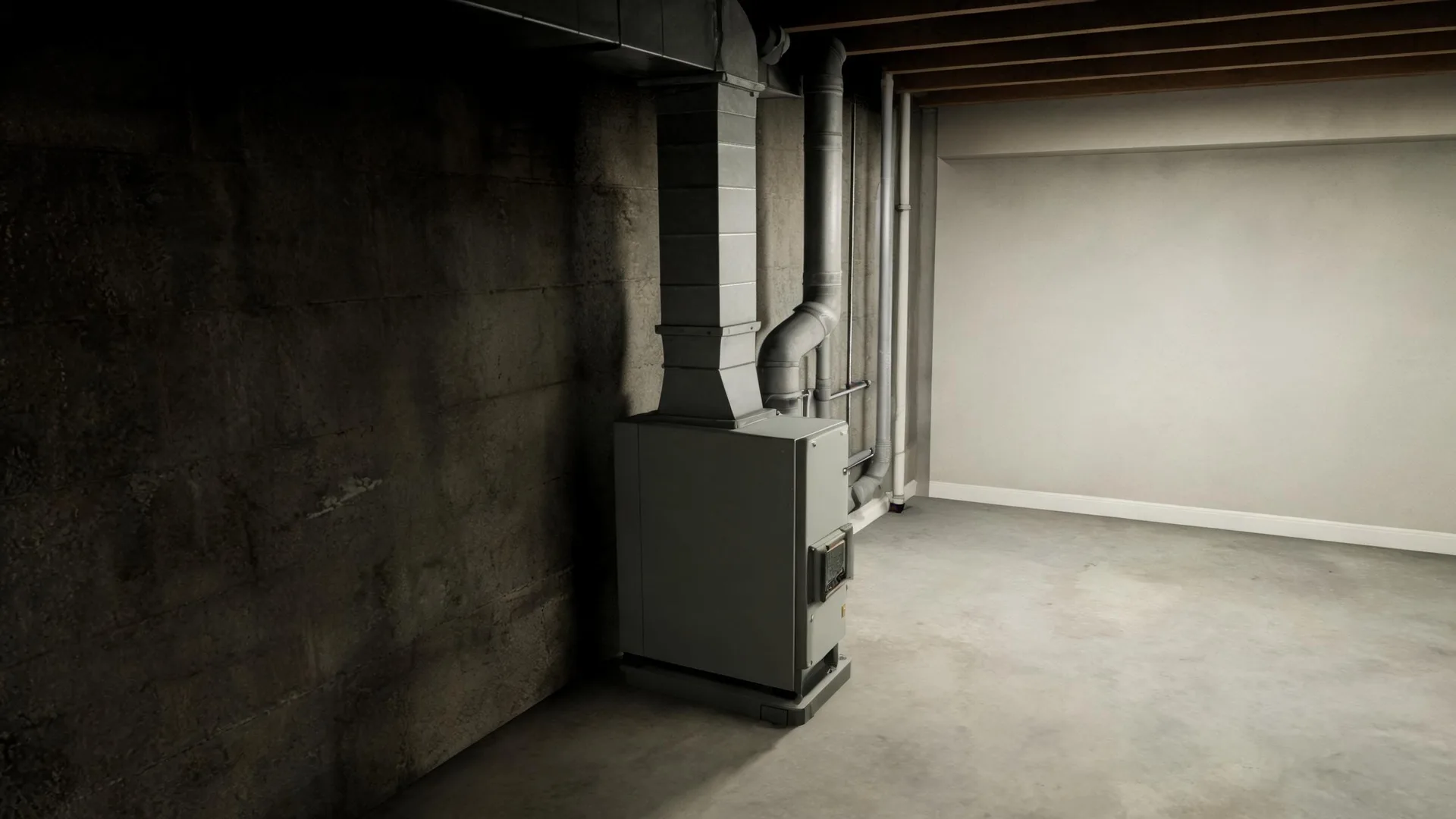
The furnace itself sits in the basement, utility room, or closet and is the core of the system. Inside it, the heat exchanger and burner assembly are where a contractor starts when heat is absent or inconsistent. A cracked heat exchanger or a failed igniter are among the first things they rule out.
The blower motor and its wheel push conditioned air into the supply side of the duct system. The flue pipe runs from the furnace cabinet up and out of the house, carrying combustion gases away. The thermostat on the wall ties the whole sequence together, and a fault there can look like a furnace problem before the cabinet is even opened.
The drawing shows the general layout of a furnace system, and a licensed contractor determines what applies to your specific house and installation.
Get matched in Seward CountySeward County, by the numbers
92 severe weather events were recorded in Seward County, Nebraska between 2015 and 2024.
NOAA National Centers for Environmental Information, Storm Events Database, bulk CSV export, events 2015-01-01 through 2024-12-31.Half the homes in Seward County, Nebraska were built in 1970 or earlier (2020-2024 ACS 5-year).
U.S. Census Bureau, 2020-2024 American Community Survey 5-Year EstimatesSeward County, Nebraska holds 7,206 housing units (2020-2024 ACS 5-year).
U.S. Census Bureau, 2020-2024 American Community Survey 5-Year EstimatesOwners occupy 72.0% of the occupied homes in Seward County, Nebraska (2020-2024 ACS 5-year).
U.S. Census Bureau, 2020-2024 American Community Survey 5-Year EstimatesCodes & Standards Covering Furnace Repair in Seward County, Nebraska5 sourced rules and standards
What HVAC Repair Looks Like in Seward County
Non-weatherized gas furnaces manufactured on or after November 19, 2015 must reach 80.0 percent AFUE.
Non-weatherized oil-fired furnaces manufactured on or after November 19, 2015 must reach 83.0 percent AFUE.
Mobile home gas furnaces manufactured on or after November 19, 2015 must reach 80.0 percent AFUE.
Non-weatherized gas furnaces manufactured on or after December 18, 2028 must reach 95.0 percent AFUE, up from the 80.0 percent minimum that applies to units manufactured before that date.
Licensing Rules for HVAC Repair in Seward County, Nebraska
Nebraska requires registration rather than a licence: a contractor must be registered with the Department of Labor before performing any construction work, though anyone earning less than five thousand dollars a year from construction services is not a contractor under the Act at all.
Severe Weather Events in Seward County
Extreme weather puts real strain on furnace components, from heat exchangers to ignition systems, as equipment runs harder and longer to hold indoor temperatures. How much stress a furnace accumulates over time is shaped by local conditions, which is why weather history for Seward County belongs alongside any conversation about repair needs.
92 severe weather events, 2015–2024. Source: NOAA National Centers for Environmental Information, Storm Events Database.