Tell us about the job
Takes about a minute. No obligation.
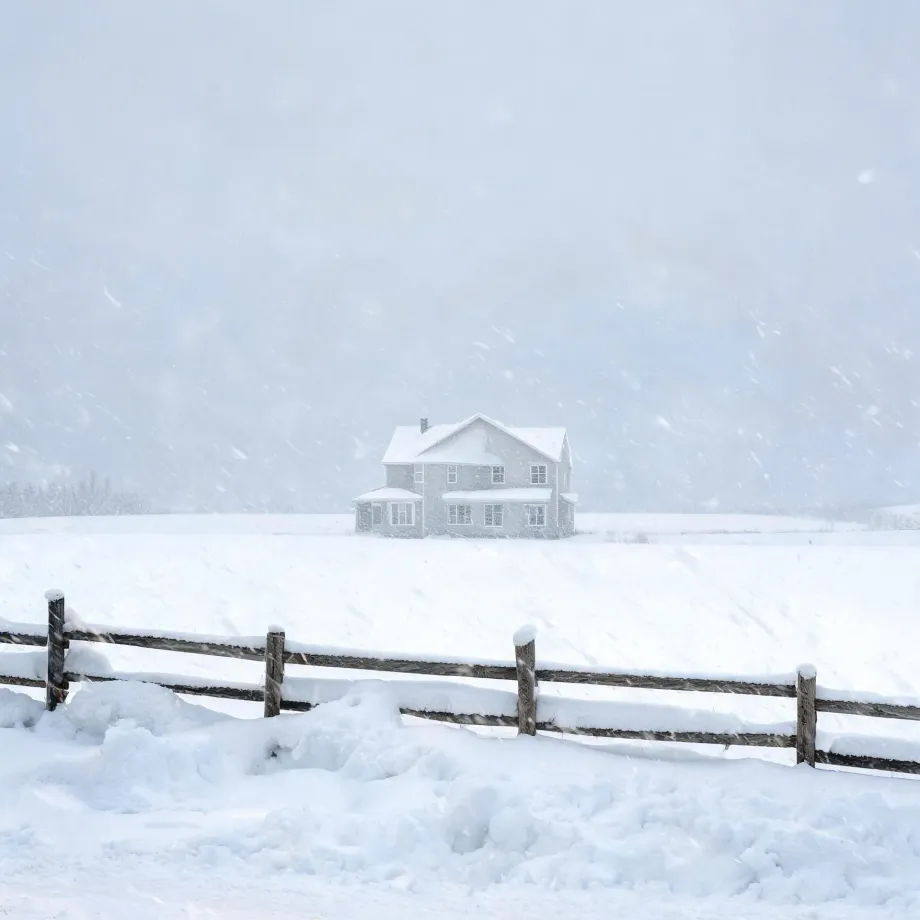
A furnace repair call in Washington County tells a contractor more than which part quit. Homes in Washington County, NE run heat about eight months a year, from October through May. The burner cycles through that entire stretch, and so does the ignition system and the heat exchanger. By the time a component fails visibly, the ones adjacent to it have been running the same load for the same years. A contractor who quotes only the broken part sends the homeowner back to the phone before the next season ends.
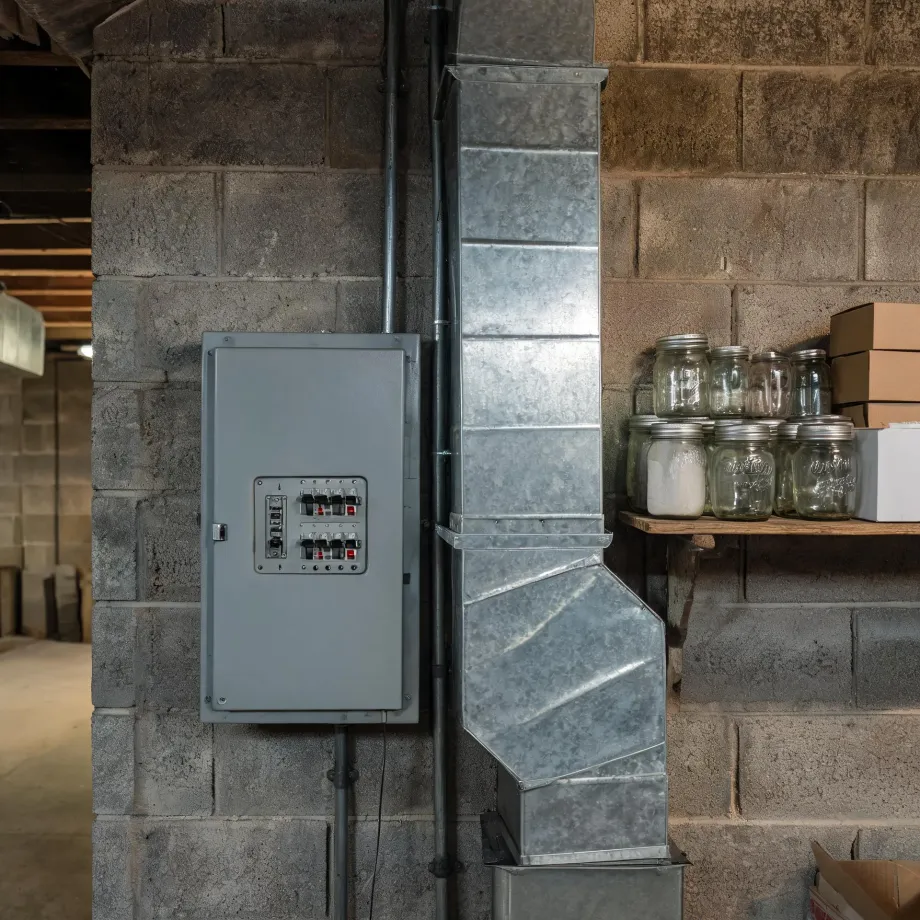
Furnaces running in a lot of this county's homes have been doing it for a long time, and what a contractor finds once the unit is open depends heavily on that history. Half the homes in Washington County, Nebraska were built in 1976 or earlier (2020-2024 ACS 5-year). Stock that old carries equipment whose replacement parts a contractor has to hunt for, and a repair that looks straightforward from the outside can stall on a discontinued heat exchanger or a control board no longer in production. That sourcing question is often what drives the final cost and timeline, more than the labor itself.
The Parts of a Furnace a Contractor Checks First
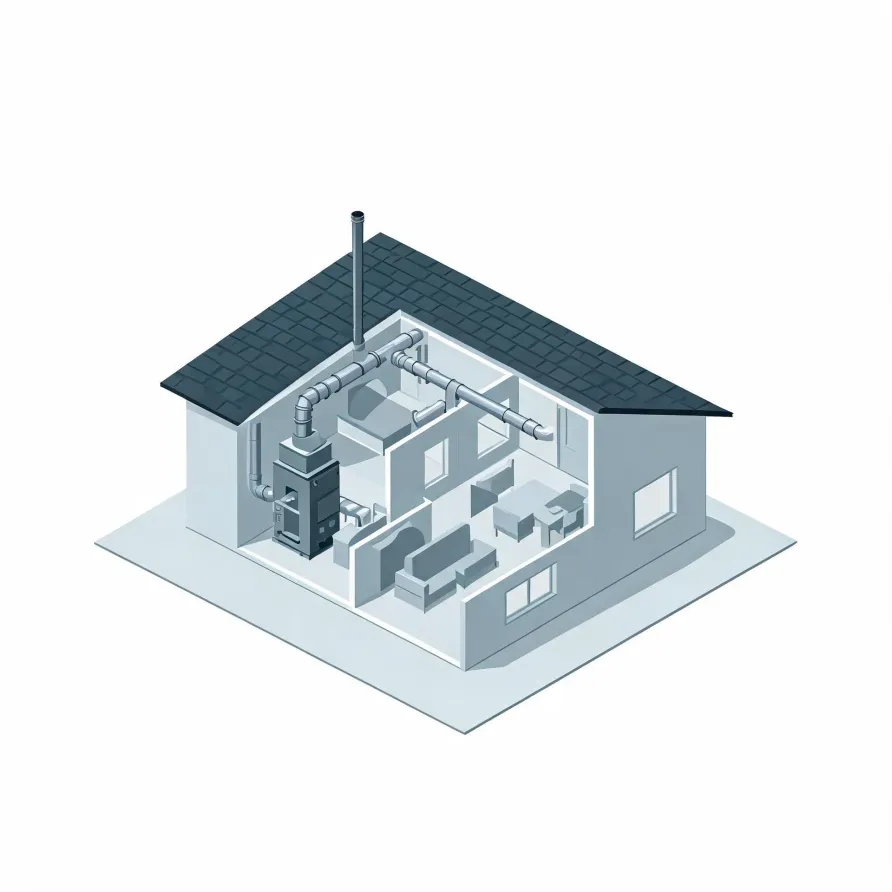
The furnace itself sits in the basement, utility room, or closet and is the piece a contractor goes to first. Inside it, the heat exchanger is the part most worth understanding: cracks or corrosion there are what stop a furnace from running safely. The burners, which fire inside that exchanger, are checked for buildup and uneven flame.
The blower motor sits at the base of the furnace cabinet and pushes conditioned air into the supply ducts. The flue pipe runs from the top of the furnace to an exterior vent and carries combustion gases out of the house. The thermostat on the wall is the starting point when a system stops responding, because a wiring or sensor fault there can mimic a furnace failure.
The drawing shows a typical furnace layout, and a licensed contractor will assess which components apply to the specific setup in your home.
Get matched in Washington CountyWashington County, Nebraska, by the numbers
87 severe weather events were recorded in Washington County, Nebraska between 2015 and 2024.
NOAA National Centers for Environmental Information, Storm Events Database, bulk CSV export, events 2015-01-01 through 2024-12-31.Half the homes in Washington County, Nebraska were built in 1976 or earlier (2020-2024 ACS 5-year).
U.S. Census Bureau, 2020-2024 American Community Survey 5-Year EstimatesWashington County, Nebraska holds 8,711 housing units (2020-2024 ACS 5-year).
U.S. Census Bureau, 2020-2024 American Community Survey 5-Year EstimatesOwners occupy 83.2% of the occupied homes in Washington County, Nebraska (2020-2024 ACS 5-year).
U.S. Census Bureau, 2020-2024 American Community Survey 5-Year EstimatesCodes & Standards Governing Furnace Repair in Washington County, Nebraska5 sourced rules and standards
What Happens When a Contractor Comes Out
Non-weatherized gas furnaces manufactured on or after November 19, 2015 must reach 80.0 percent AFUE.
Non-weatherized oil-fired furnaces manufactured on or after November 19, 2015 must reach 83.0 percent AFUE.
Mobile home gas furnaces manufactured on or after November 19, 2015 must reach 80.0 percent AFUE.
Non-weatherized gas furnaces manufactured on or after December 18, 2028 must reach 95.0 percent AFUE, up from the 80.0 percent minimum that applies to units manufactured before that date.
Licensing and Legal Requirements in Washington County, Nebraska
Nebraska requires registration rather than a licence: a contractor must be registered with the Department of Labor before performing any construction work, though anyone earning less than five thousand dollars a year from construction services is not a contractor under the Act at all.
Severe Weather Events in Washington County
Weather puts real load on heating equipment. Hard conditions accelerate wear, push systems to run longer, and bring repair needs that are specific to what this part of Nebraska actually sees.
87 severe weather events, 2015–2024. Source: NOAA National Centers for Environmental Information, Storm Events Database.