Tell us about the job
Takes about a minute. No obligation.
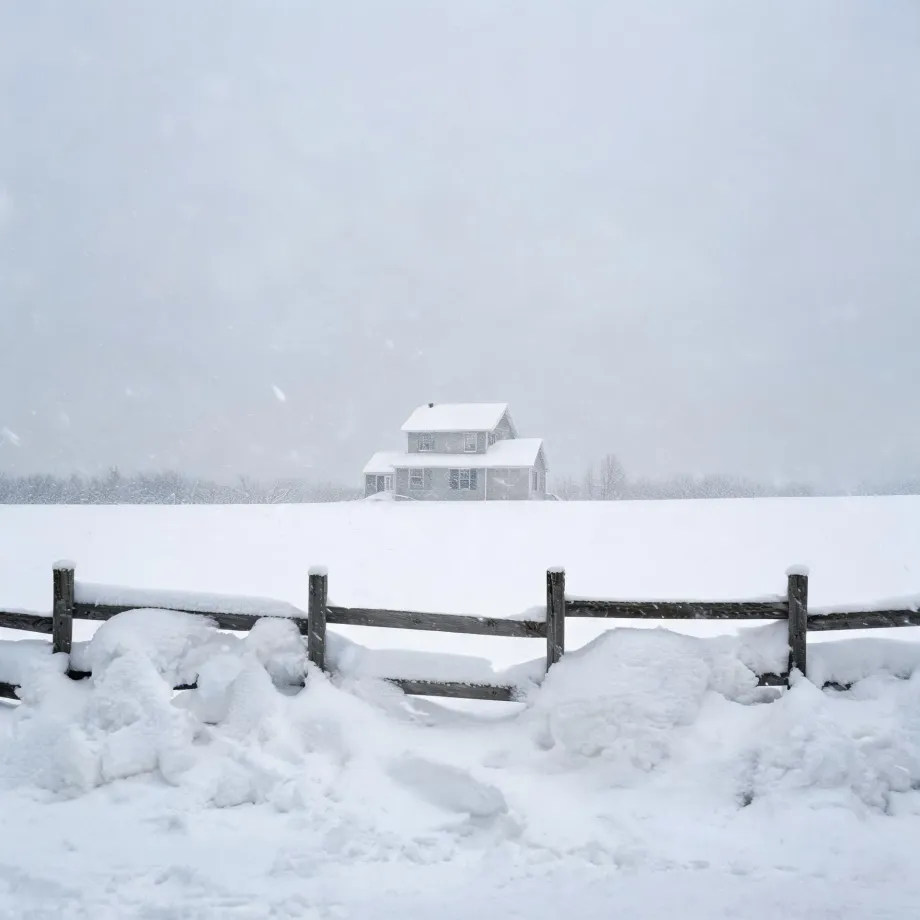
Sizing a furnace for this house demands more from a contractor than pulling a model number off a shelf. Homes in Cass County, NE run heat about eight months a year, from October through May. The burner and heat exchanger spend the better part of the year cycling on and off, and a unit that is even slightly undersized runs longer per cycle to meet demand. That extra runtime accumulates in the ignition system and the heat exchanger faster than most homeowners expect. A contractor doing the load calculation here is setting the ceiling on how long the equipment lasts.
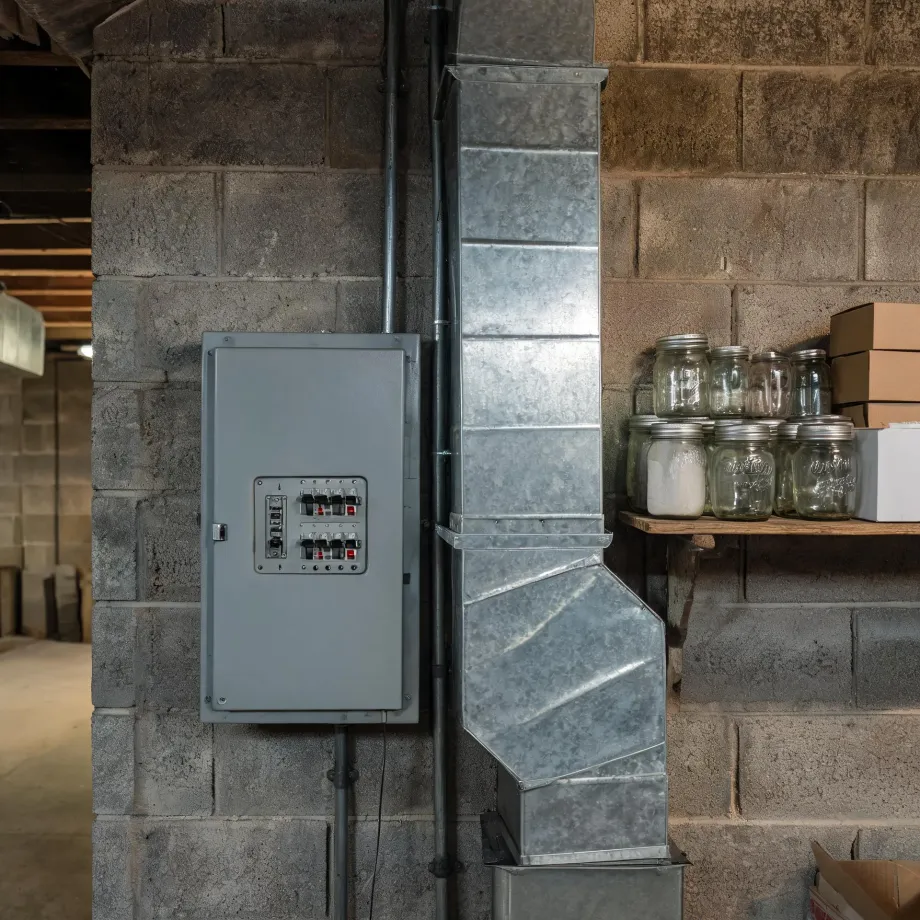
Existing ductwork is what a furnace installation in Cass County turns on. Half the homes in Cass County, Nebraska were built in 1977 or earlier (2020-2024 ACS 5-year). Duct runs laid out for a previous generation of equipment carry different volumes and distribute air differently than what a modern furnace demands, and a contractor has to assess that before the new unit is ever ordered. If the trunk lines are undersized or the branch runs were configured around a system with a different output, the ductwork gets modified alongside the equipment, not after it.
What Gets Installed With a New Furnace
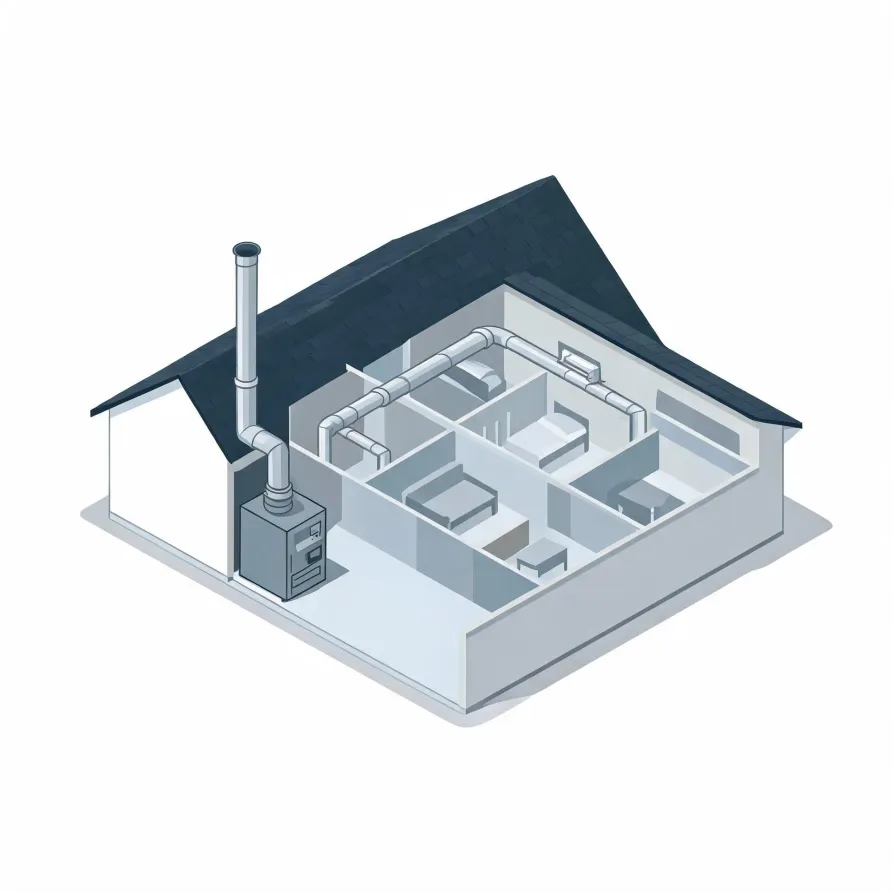
The furnace itself sits in the basement, utility room, or crawl space and is the core of what a contractor installs. Inside it, the heat exchanger and burner assembly do the work of producing heat, and the blower motor pushes conditioned air into the supply plenum above.
The flue pipe runs from the furnace up and out of the house, carrying combustion gases away. Near the furnace, the contractor also installs the gas valve, the control board, and the filter housing, each of which has to be set in place and connected before the system can run.
The drawing shows the general layout of these components, and a licensed contractor determines exactly what applies to your house and its existing setup.
Get matched in Cass CountyCass County, by the numbers
144 severe weather events were recorded in Cass County, Nebraska between 2015 and 2024.
NOAA National Centers for Environmental Information, Storm Events Database, bulk CSV export, events 2015-01-01 through 2024-12-31.Half the homes in Cass County, Nebraska were built in 1977 or earlier (2020-2024 ACS 5-year).
U.S. Census Bureau, 2020-2024 American Community Survey 5-Year EstimatesCass County, Nebraska holds 11,875 housing units (2020-2024 ACS 5-year).
U.S. Census Bureau, 2020-2024 American Community Survey 5-Year EstimatesOwners occupy 85.4% of the occupied homes in Cass County, Nebraska (2020-2024 ACS 5-year).
U.S. Census Bureau, 2020-2024 American Community Survey 5-Year EstimatesFurnace Installation Rules for Cass County, Nebraska5 codes, standards, and laws
What the Installation Looks Like
Non-weatherized gas furnaces manufactured on or after November 19, 2015 must reach 80.0 percent AFUE.
Non-weatherized oil-fired furnaces manufactured on or after November 19, 2015 must reach 83.0 percent AFUE.
Mobile home gas furnaces manufactured on or after November 19, 2015 must reach 80.0 percent AFUE.
Non-weatherized gas furnaces manufactured on or after December 18, 2028 must reach 95.0 percent AFUE, up from the 80.0 percent minimum that applies to units manufactured before that date.
Licensing Rules for HVAC Work in Cass County, Nebraska
Nebraska requires registration rather than a licence: a contractor must be registered with the Department of Labor before performing any construction work, though anyone earning less than five thousand dollars a year from construction services is not a contractor under the Act at all.
Severe Weather History in Cass County
Weather puts real hours on heating equipment. A furnace working through hard winters and volatile storm seasons wears differently than one in a mild climate, and what contractors spec for Cass County reflects that.
144 severe weather events, 2015–2024. Source: NOAA National Centers for Environmental Information, Storm Events Database.