Tell us about the job
Takes about a minute. No obligation.
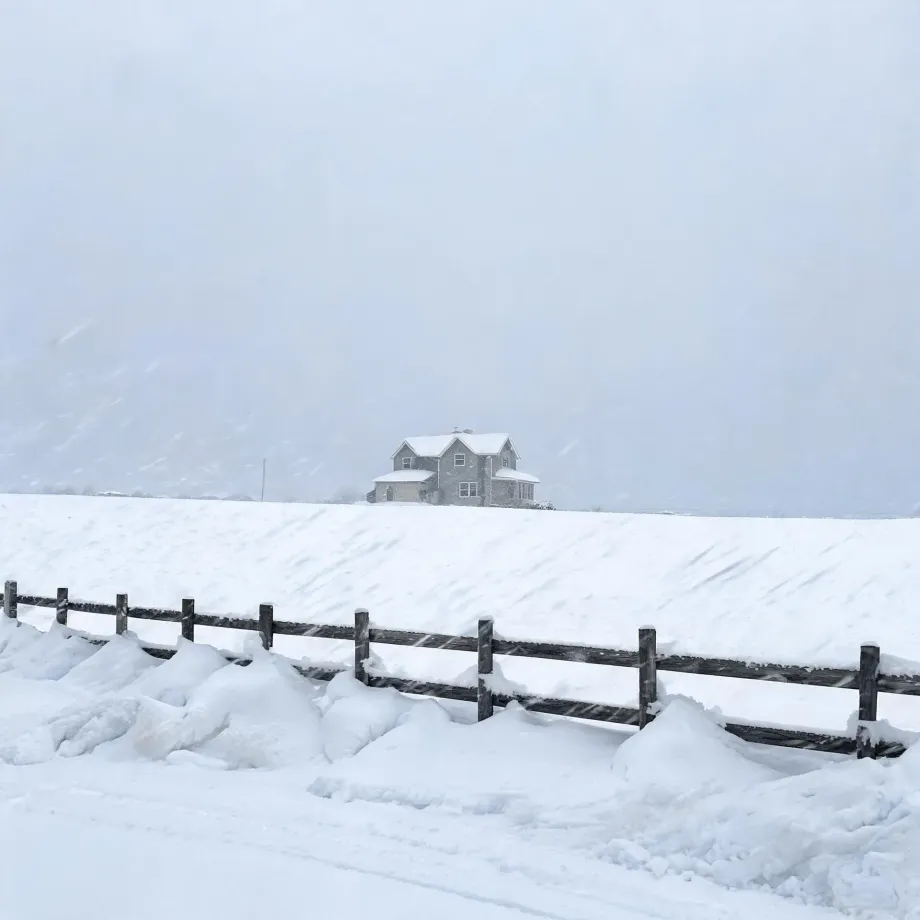
A contractor quoting a furnace installation in Hall County has to get the sizing right before anything else. Homes in Hall County, NE run heat about eight months a year, from October through May. The burner and heat exchanger carry that load across most of the calendar without meaningful downtime, so a unit that runs slightly short of what the house demands will cycle harder and longer than one that was matched to the actual load. That extra cycling reaches the ignition system and the heat exchanger first. A correct load calculation and a tight installation are what keep those parts from wearing ahead of schedule.
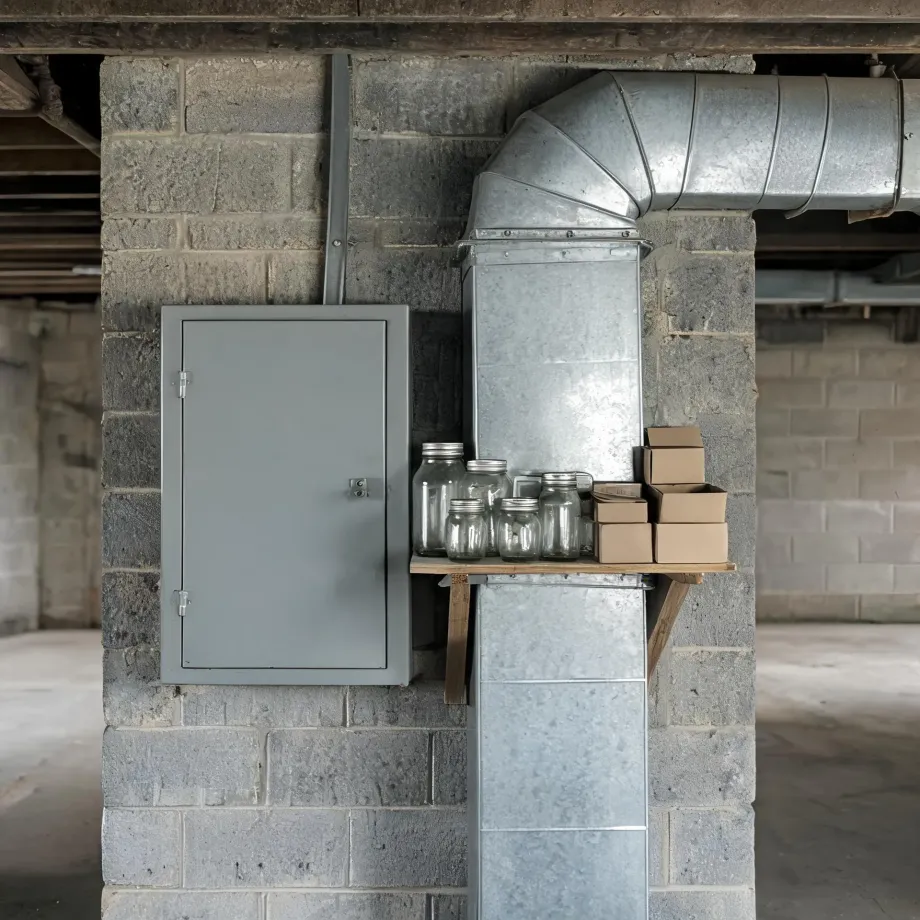
Ductwork sized and routed for a system that is long gone decides more about a furnace installation here than the new unit itself does. Half the homes in Hall County, Nebraska were built in 1975 or earlier (2020-2024 ACS 5-year). That puts a contractor in houses where the trunk lines, branch runs, and return paths were designed around a load calculation nobody uses anymore. A furnace can be ordered in a day; whether the existing duct layout will carry it without pressure loss or cold rooms is what a contractor has to measure before the job can be quoted honestly.
What Gets Installed With a New Furnace
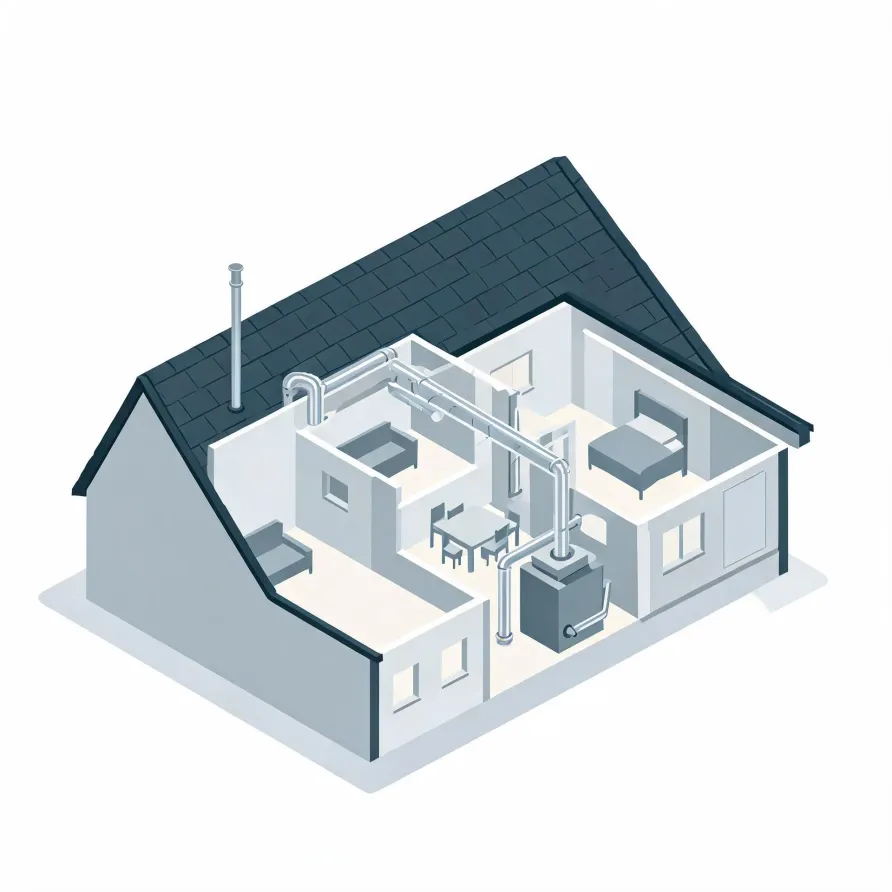
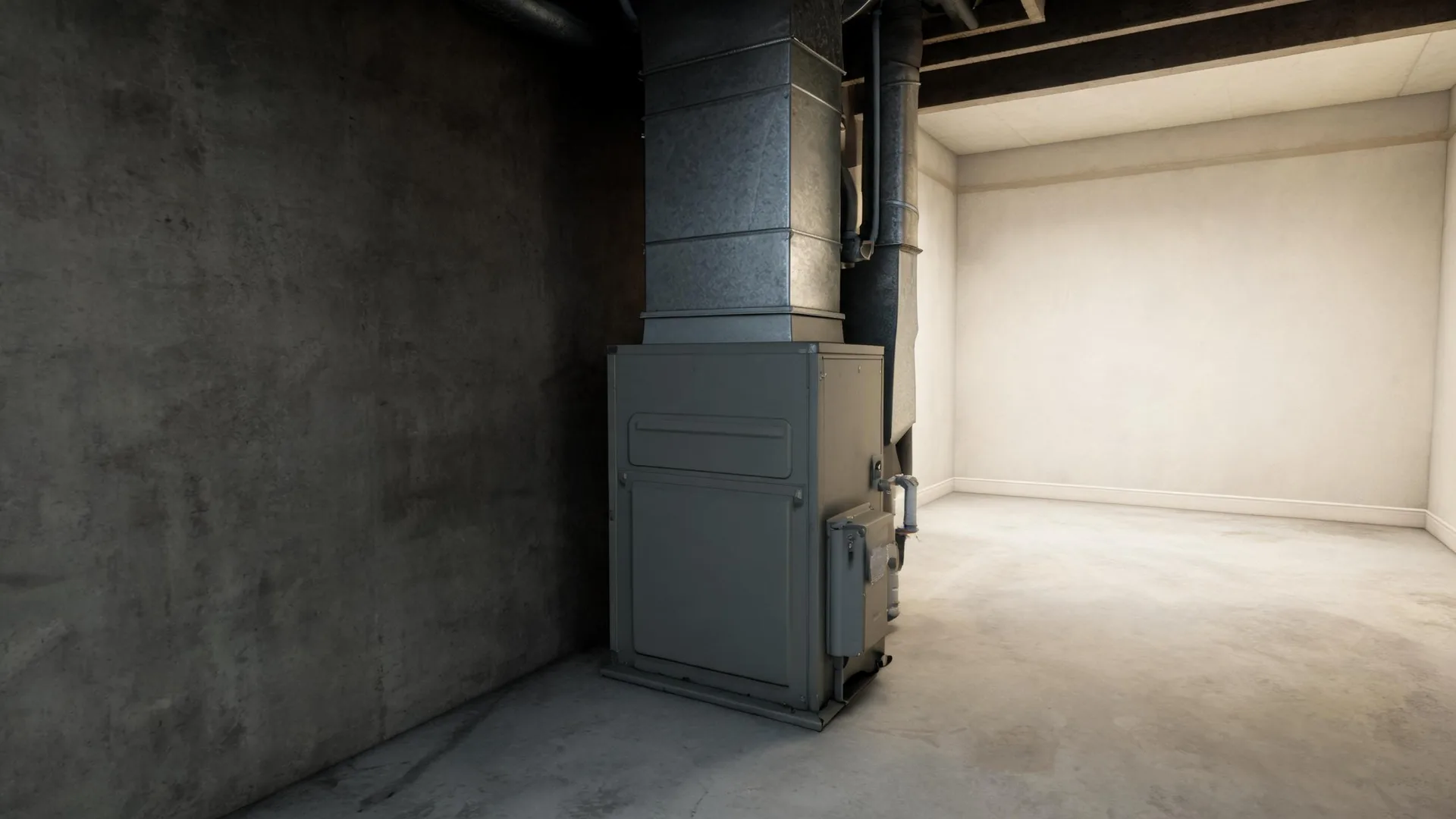
The furnace itself sits in the basement, utility room, or closet and is the piece that generates the heat. A contractor sets it on a level surface with clearance for service access on all working sides. The heat exchanger lives inside that cabinet, transferring combustion heat to the air that will move through the house.
The flue pipe runs from the furnace up and out through the wall or roof, carrying combustion gases away from the living space. The air handler and blower assembly, housed inside or directly beside the furnace cabinet, push conditioned air into the supply side of the duct system. The thermostat mounts on an interior wall and gives the homeowner a single point of control over the whole system.
The drawing shows a typical layout, and a licensed contractor determines exactly what goes where based on the specifics of your home.
Get matched in Hall CountyHall County, Nebraska, by the numbers
208 severe weather events were recorded in Hall County, Nebraska between 2015 and 2024.
NOAA National Centers for Environmental Information, Storm Events Database, bulk CSV export, events 2015-01-01 through 2024-12-31.Half the homes in Hall County, Nebraska were built in 1975 or earlier (2020-2024 ACS 5-year).
U.S. Census Bureau, 2020-2024 American Community Survey 5-Year EstimatesHall County, Nebraska holds 25,569 housing units (2020-2024 ACS 5-year).
U.S. Census Bureau, 2020-2024 American Community Survey 5-Year EstimatesOwners occupy 62.0% of the occupied homes in Hall County, Nebraska (2020-2024 ACS 5-year).
U.S. Census Bureau, 2020-2024 American Community Survey 5-Year EstimatesFurnace Installation Rules & Codes for Hall County, Nebraska5 sourced rules and standards
What the installation looks like
Non-weatherized gas furnaces manufactured on or after November 19, 2015 must reach 80.0 percent AFUE.
Non-weatherized oil-fired furnaces manufactured on or after November 19, 2015 must reach 83.0 percent AFUE.
Mobile home gas furnaces manufactured on or after November 19, 2015 must reach 80.0 percent AFUE.
Non-weatherized gas furnaces manufactured on or after December 18, 2028 must reach 95.0 percent AFUE, up from the 80.0 percent minimum that applies to units manufactured before that date.
Licensing Rules for HVAC Work in Hall County, Nebraska
Nebraska requires registration rather than a licence: a contractor must be registered with the Department of Labor before performing any construction work, though anyone earning less than five thousand dollars a year from construction services is not a contractor under the Act at all.
Severe Weather Events in Hall County
Hall County's weather puts real strain on heating equipment over time. How hard a furnace has to work, and how long it holds up, is shaped by what the climate here actually delivers.
208 severe weather events, 2015–2024. Source: NOAA National Centers for Environmental Information, Storm Events Database.