Tell us about the job
Takes about a minute. No obligation.
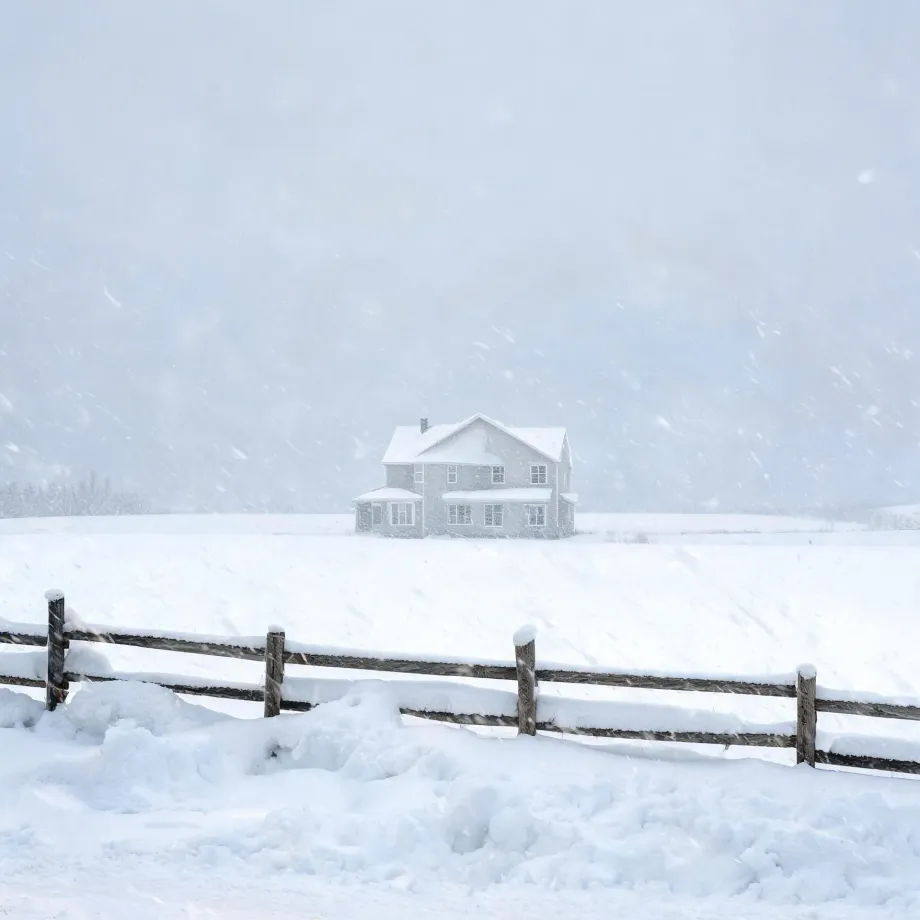
A furnace here earns its keep from the first cold snap and keeps working until late spring. Homes in Butler County, NE run heat about eight months a year, from October through May. The burner and ignition system cycle through that span without meaningful rest, so undersizing or a poor installation shows up in the components that repeat the most work: the heat exchanger, the flame sensor, and the draft inducer. A contractor quoting a replacement in this county has to account for that sustained load when selecting equipment capacity and specifying installation quality, because a unit that might last adequately in a milder climate will run short of its rated life here.
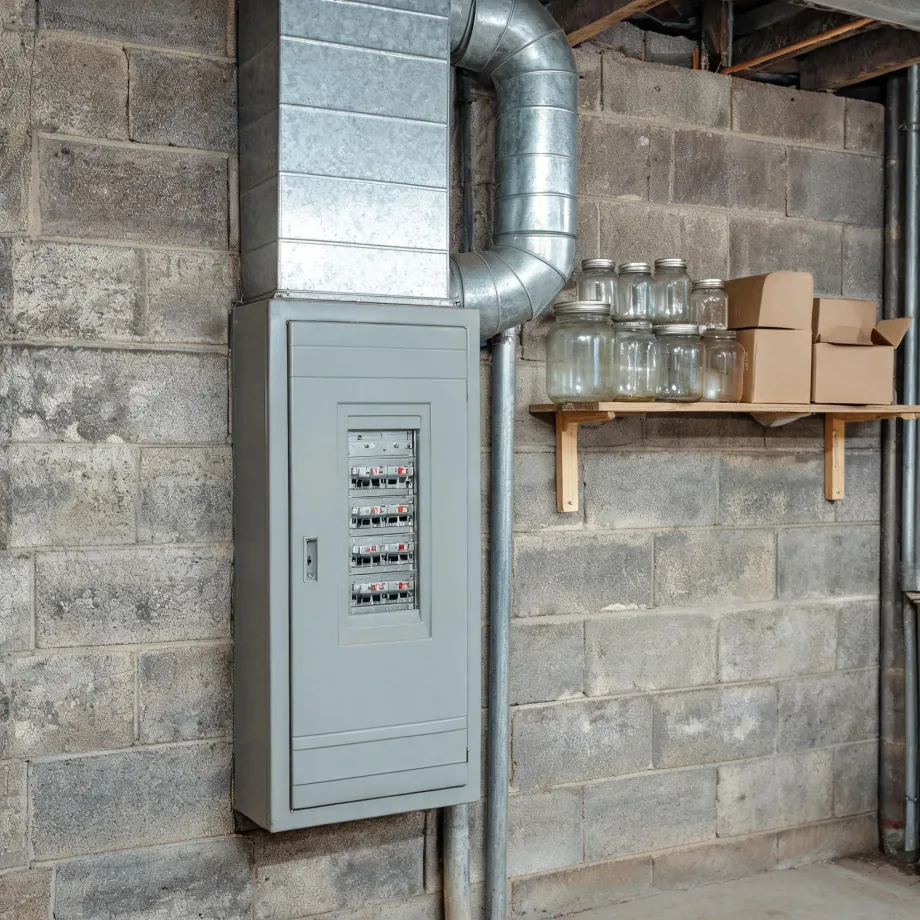
Ductwork laid out for one furnace generation rarely moves air the way a newer unit expects it to. The runs may be the right length but the wrong size, or routed in ways that made sense for equipment the house stopped running years before today's contractor arrived. Half the homes in Butler County, Nebraska were built in 1968 or earlier (2020-2024 ACS 5-year). That vintage of construction means the duct layout a contractor finds is built around something gone, and whether those runs can carry what a new furnace puts through them is the question that has to be answered with a tape measure and a look at the actual trunk lines before anything gets quoted.
What Gets Installed With a New Furnace
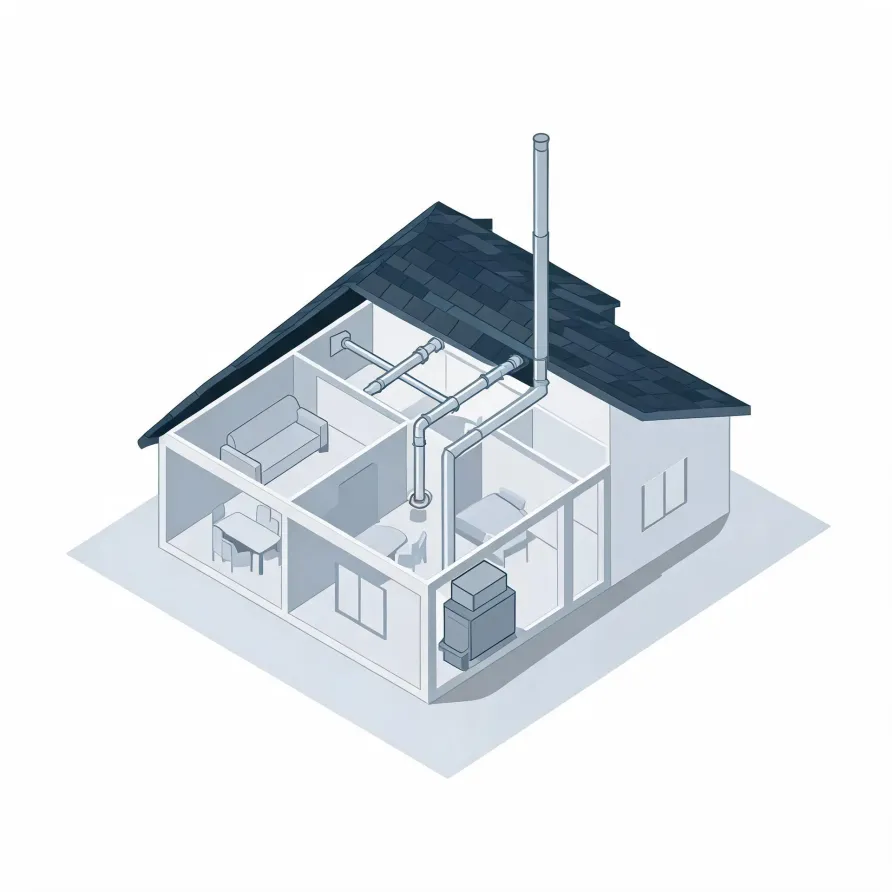
The furnace itself sits in a basement, utility room, or mechanical closet and is the piece doing the heating work. A burner assembly inside the cabinet burns the fuel, a heat exchanger transfers that heat to the air passing through, and a blower motor pushes the warmed air out into the house.
The flue pipe runs from the furnace cabinet up and out of the house, carrying combustion gases away. Sitting alongside the furnace, the air handler or blower cabinet and the filter housing get set in place at the same time, and the thermostat goes on an interior wall where it reads the temperature of the living space.
The drawing shows a typical layout, and a licensed contractor determines exactly what applies to your home.
Get matched in Butler CountyButler County, by the numbers
89 severe weather events were recorded in Butler County, Nebraska between 2015 and 2024.
NOAA National Centers for Environmental Information, Storm Events Database, bulk CSV export, events 2015-01-01 through 2024-12-31.Half the homes in Butler County, Nebraska were built in 1968 or earlier (2020-2024 ACS 5-year).
U.S. Census Bureau, 2020-2024 American Community Survey 5-Year EstimatesButler County, Nebraska holds 4,039 housing units (2020-2024 ACS 5-year).
U.S. Census Bureau, 2020-2024 American Community Survey 5-Year EstimatesOwners occupy 79.9% of the occupied homes in Butler County, Nebraska (2020-2024 ACS 5-year).
U.S. Census Bureau, 2020-2024 American Community Survey 5-Year EstimatesCodes & Standards Governing Furnace Installation in Butler County, Nebraska5 sourced rules and standards
What the Installation Actually Looks Like
Non-weatherized gas furnaces manufactured on or after November 19, 2015 must reach 80.0 percent AFUE.
Non-weatherized oil-fired furnaces manufactured on or after November 19, 2015 must reach 83.0 percent AFUE.
Mobile home gas furnaces manufactured on or after November 19, 2015 must reach 80.0 percent AFUE.
Non-weatherized gas furnaces manufactured on or after December 18, 2028 must reach 95.0 percent AFUE, up from the 80.0 percent minimum that applies to units manufactured before that date.
Licensing and Legal Requirements in Butler County, Nebraska
Nebraska requires registration rather than a licence: a contractor must be registered with the Department of Labor before performing any construction work, though anyone earning less than five thousand dollars a year from construction services is not a contractor under the Act at all.
Severe Weather Events in Butler County
Butler County weather puts real demands on heating equipment, from the load a hard winter places on a furnace to the recovery a system has to make after an extreme weather event. A furnace sized and installed for local conditions handles those demands differently than one that was not.
89 severe weather events, 2015–2024. Source: NOAA National Centers for Environmental Information, Storm Events Database.